|
| Ruddy Darter |
It started like a typical Wednesday morning for me. I arrived early for my walk, this time searching for willow emerald damselflies (which I failed in seeing) and swallowtail caterpillars (finding just the one) at the other end of the reserve. I even found one of my hoverfly targets, at least I hope I have. However, after my walk, my schedule was a bit different today. For one day only, I have swapped my Reception Hide shift for a very special survey.
 |
| Azure Damselfly |
 |
| Swallowtail Caterpillar |

 |
| Great Pied Hoverfly (one of my targets) |
 |
| A large Hoverfly (not sure which though) |
 |
| Fen Raft Spider surveying |
Back in 2012, I remember a day when I was on duty at the Reception Hide, when journalists and local news crews suddenly started flooded in as well as zookeepers from London Zoo and The Deep (an aquarium from Hull) all asking where to meet up. It became a bit of a media circus and I had no idea what was going on. Later that night, I watched the local news and found out that they were reintroducing fen raft spiders to a secret location elsewhere in the Yare Valley. The staff at Strumpshaw have been keeping a close eye on their progress ever since with summer surveys. Today, I was lucky enough to go on one of these surveys and see these rare spiders for the first time.
 |
| Fen Raft Spider (right) with nursery web |
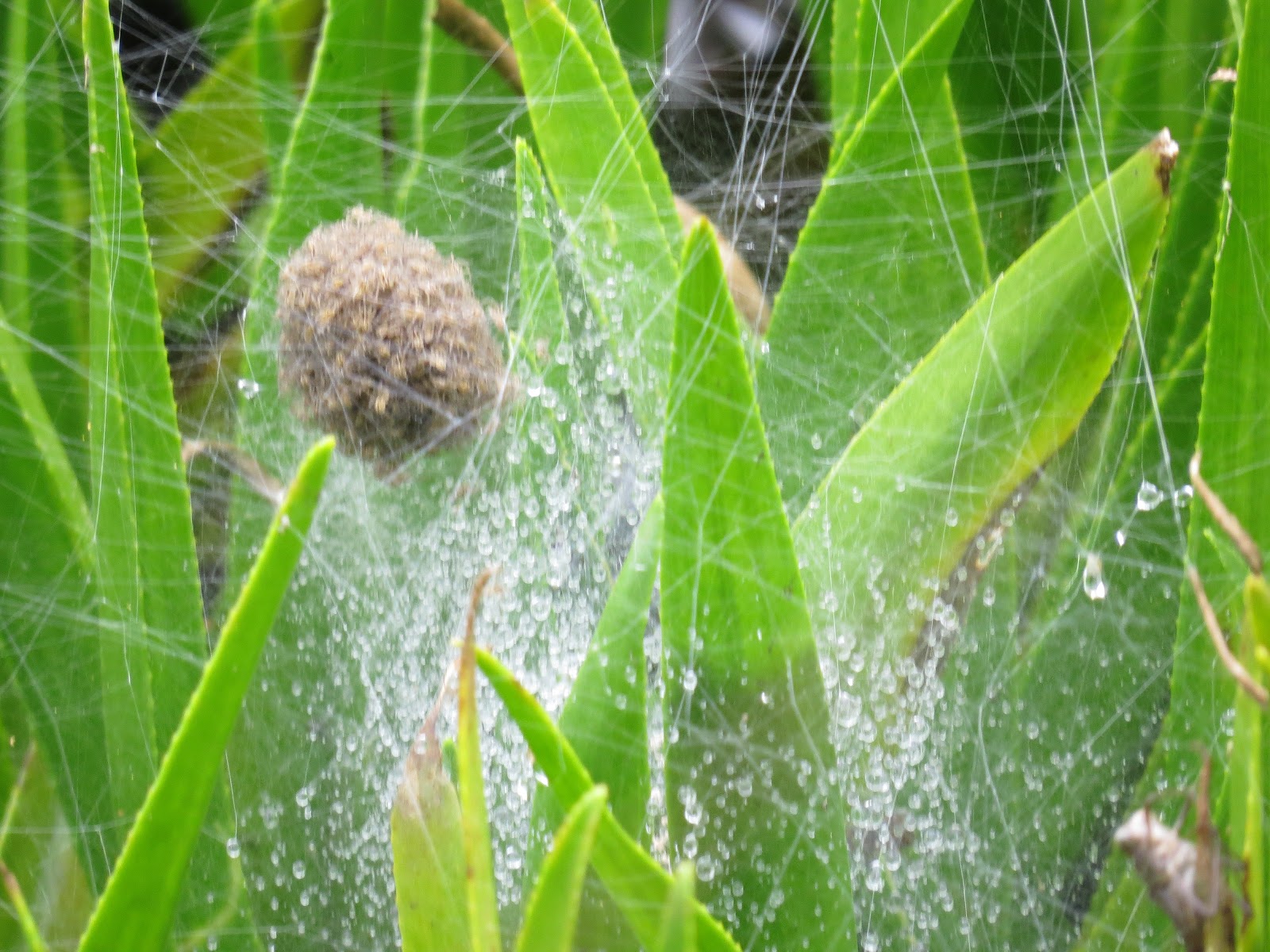
The fen raft spider is not only one of Britain's rarest spiders, its also one of Britain's largest too. The females, especially, can grow between 13-22mm! And that is what we are looking for during our survey today, large females and any nursery webs we can find within a network of water soldier-covered ditches at a location that I have to keep a secret. It took a while to get my eye in on the spiders themselves (some carrying egg sacs!), but the nursery webs were easy enough to spot. These spiders do not make webs to catch prey, instead make large silken structures amongst the water soldiers to protect the balls of baby spiders (thousands of them clumped together) for a few days. These nursery webs were everywhere, though not all of them were active. A good sign that it might be time to move some of them elsewhere in the near future, maybe even Strumpshaw Fen, who knows.
 |
| A Fen Raft Spider's nursery web |
 |
| The clump you can see is a ball of baby spiders! |
 |
| Female Fen Raft Spider carrying an egg sac |

 |
| The largest female spider I saw today! |

Once I was able to get my eye in, I was seeing spiders hiding here, there and everywhere. Many of them were male fen raft spiders, which are half the size of the larger females, but they are still ferocious predators capable of tackling prey as big as damselflies and even fish the size of sticklebacks. These spiders can float and dive underwater with special hairs that trap air like a special oxygen tank! There are other similar looking species of spider here too, but I'm not sure which exactly, especially when there are younger stages of fen raft spiders to add to the confusion as well. Fen raft spiders have striking white and yellow stripes down their bodies, but these stripes can vary from one individual to another, making it even more confusing. Luckily, their size helps a lot.
 |
| A male Fen Raft Spider |
 |
| This one is eating an emerald damselfly! |

 |
| A small Fen Raft Spider (left) with a larger one (right) |
 |
| A pale Fen Raft Spider (I think) |
 |
| A different species of spider that I'm not sure of yet |
 |
| And another one |
 |
| A smaller species with an egg sac |
 |
| Common Darter freshly emerged from it's exuviae case! |
As well as spiders, there were also a lot of dragonflies and damselflies, including common and ruddy darters, migrant and brown hawkers and common emerald damselflies. I even found a few dragonflies that were only just emerging from their exuviae cases! We also found a large water beetle, which I think is a great silver diving beetle, one of my other targets this year. Unfortunately, I was on the wrong side of the ditch to really get a clear view of it without the vegetation distorting my shot. Oh well, at least I saw it, though it could never upstage the fen raft spiders which were worth the aching feet and the walk across a thin plank over the ditch at one stage near the end of the survey. It was one for the memories for sure.
 |
| Dragonfly nymph climbing up to become a dragonfly! |
 |
| Emerald Damselfly |
 |
| Brown Hawker |
 |
| Migrant Hawker |
 |
| Great Silver Diving Beetle (though not a great photo) |




 Once I was able to get my eye in, I was seeing spiders hiding here, there and everywhere. Many of them were male fen raft spiders, which are half the size of the larger females, but they are still ferocious predators capable of tackling prey as big as damselflies and even fish the size of sticklebacks. These spiders can float and dive underwater with special hairs that trap air like a special oxygen tank! There are other similar looking species of spider here too, but I'm not sure which exactly, especially when there are younger stages of fen raft spiders to add to the confusion as well. Fen raft spiders have striking white and yellow stripes down their bodies, but these stripes can vary from one individual to another, making it even more confusing. Luckily, their size helps a lot.