|
| Felbrigg Hall |
I was at Felbrigg Hall today for a walk around the grounds and lake with my parents. It was threatening to rain, but it managed to hold out to our relieve. The ground was rather muddy underfoot in places, rarther autumnal conditions. There were other signs of autumn all around us as we set off on our walk. On the trees, the various seeds from acorns of oak trees, chestnuts of sweet chestnut trees and the 'helecopter' seeds of sycamore trees have developed and were looking close to dropping to the ground. Meanwhile on the ground, parasols of toadstools have started to emerge, some forming clusters and circles in the grazing pastures.
 |
| Acorns on an English Oak |
 |
| Sweet Chestnuts |
 |
| Sycamore 'helecopter' seeds |
 |
| Parasol toadstool |
 |
| Another Parasol (I think) |
 |
| Puffballs |
 |
| A 'circle' of toadstools |
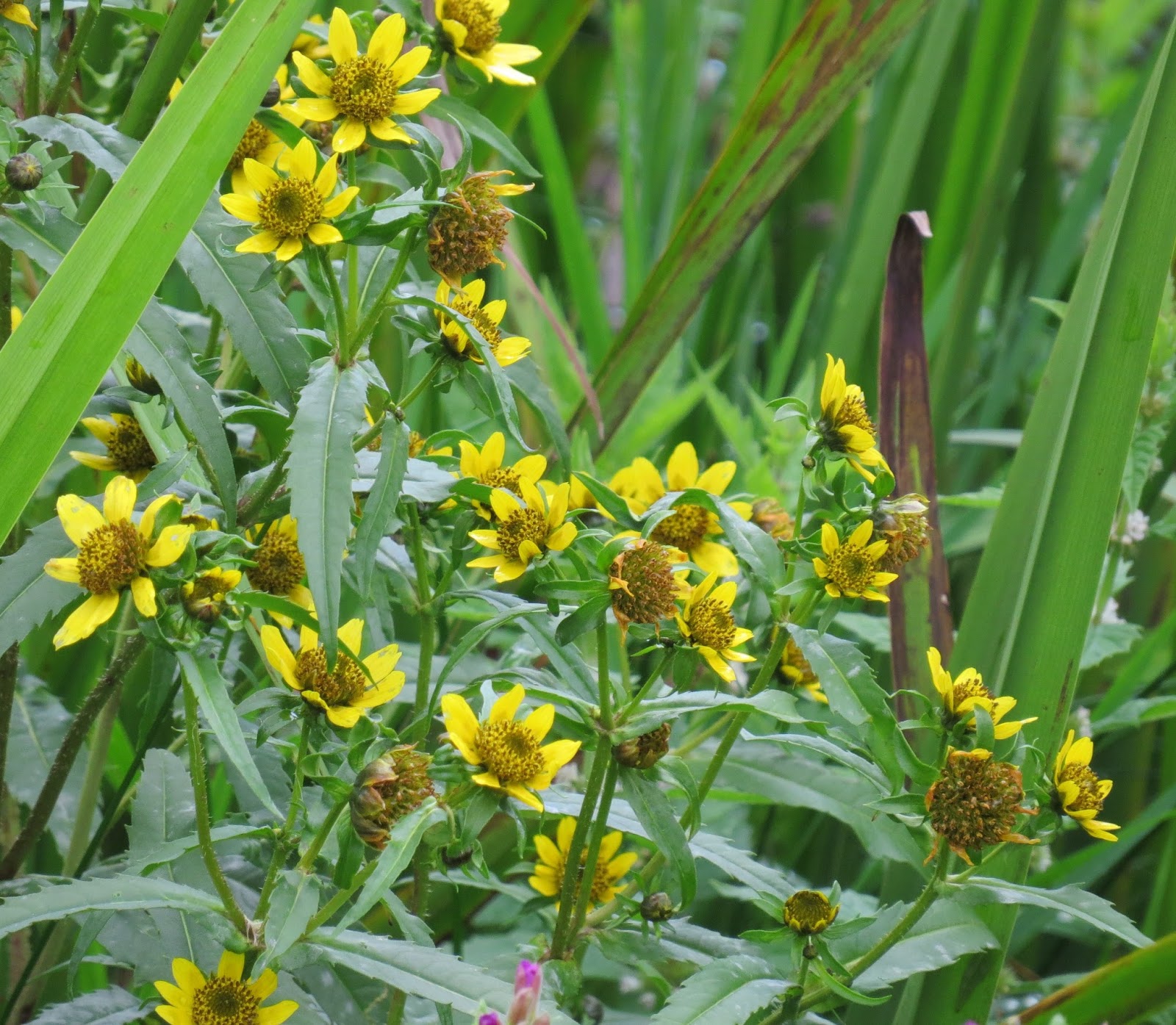
On the lake, swarms of swallows and house martins skimmed low over the water, fueling up on insects for the epic journey south to Africa. The video below shows them in action with a swan unfazed with them whizzing around it. Around the lake, there was one last floral display of various plants in a wet meadow field. This was mainly dominated by a yellow flower that I have been informed that its nodding bur-marigold.
 |
| A display of Nodding Bur-marigold and Bullrushes |
 |
| Nodding Bur-marigold |
 |
| Knapweed |
 |
| A Slug |
 |
| Another Slug |
 |
| Mute Swan |
In the distance of a field, we watched a charm of goldfinches perform what can only be described as a murmuration display. I had no idea that these birds did such performances! They swirled in the air in a large ball of birds. It may not be as grand as a starling display, but it was still amazing to watch.
 |
| Goldfinch murmuration! |
 |
| Lamb |
 |
| Oak Tree |
 |
| Sheringham |
After our walk, we went for lunch at Sheringham in a shelter overlooking the sea. I come here annually during the autumn to sea watch. So, while inbetween bites into my lunch, I was scanning the sea with my telescope for anything flying over the waves in the distance. I was not the only person watching over the sea as the shelter had a mini crowd of other sea watchers sitting on the benches in a row with their eyes glued to the eyepiece of their scopes. There wasn't much about today, but I did see a few gannets and cormorants.
 |
| Cormorant |
 |
| Herring Gull |
 |
| Black-headed Gull |
 |
| Look out below!! |
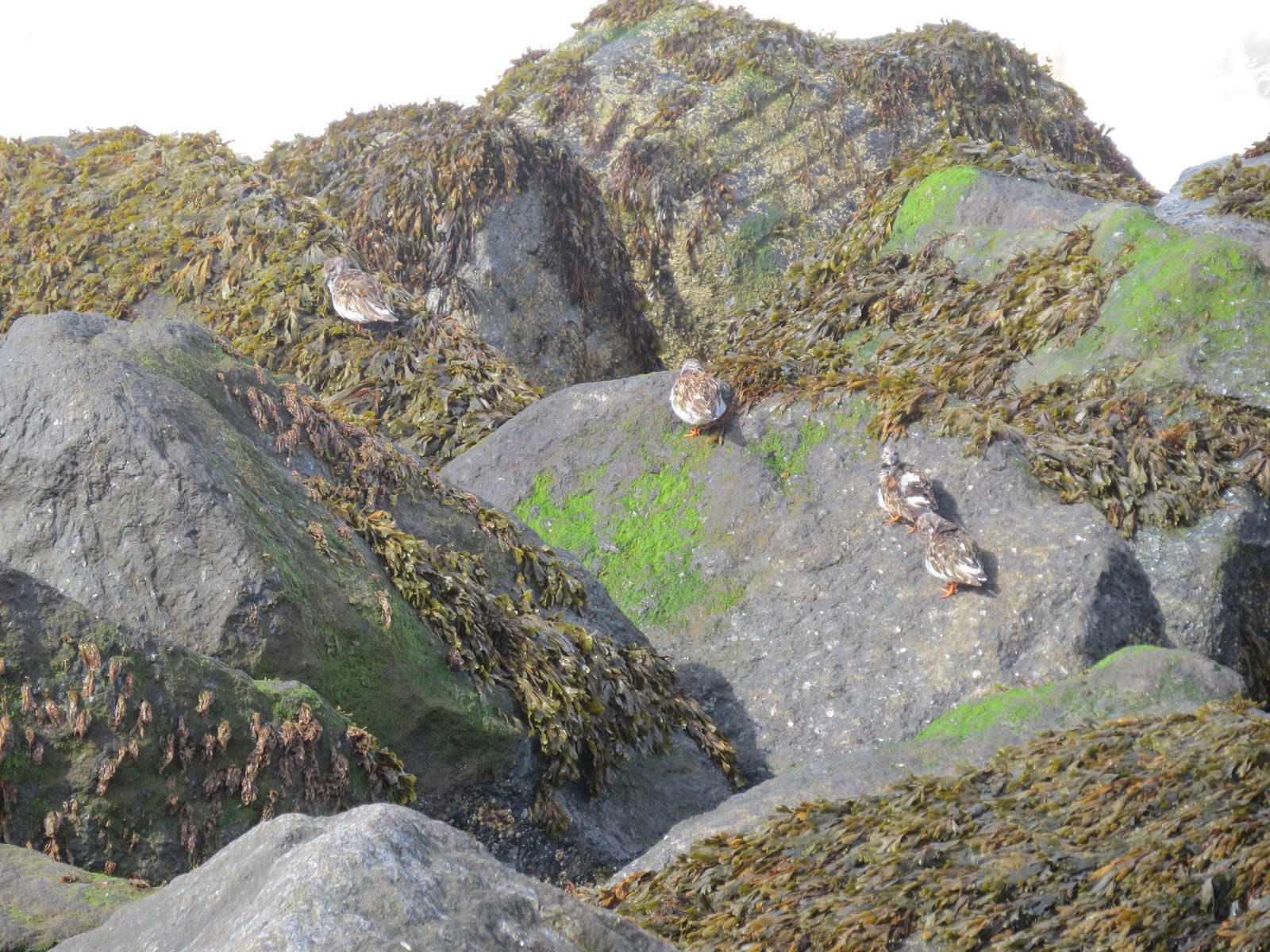
I soon had had enough of staring out at sea and we decided to have a stroll along the seafront. The local gulls were being fed from a generous person with chips from a tier above us and they gave me great shots of them hovering over my head. On the rocks that forms as the town's sea defences, turnstones were seeking for their own lunch within the crevices and under the seaweed. These waders are very approachable here at Sheringham and can be seen throughout the year, but in the autumn you may come across a similar looking wader tagging along with them.
 |
| Queuing up for lunch |
 |
| Turnstone |
 |
| Purple Sandpiper |
Purple sandpipers have longer bills than turnstones and are plain grey all over with a few streaking on the breast. Normally, these birds occur around November and at this time, in the right light conditions, the plumage have a slight purple sheen. The individual hanging with the turnstones today was a juvenile bird, exploring the Norfolk coastline for the very first time since leaving its hatching site in Iceland or Scandinavia.
 |
| Flowers by Peter Coke |
We got to the end of the seafront and were making our way back to the car. As we got to the lifeboat museum, my parents decided to make a detour to visit a 'shell museum' round the corner. When they told me this, I thought they were having me on. But actually, this was a small art gallery displaying the works of late artist Peter Coke (1913-2008), who created sculptures and reliefs out of seashells. These were incredible! To see flowers made out of shells was amazing. At a glance, they look like real flowers, but look closer and you can see each shell portraying a petal. The artist also used other things he found stranded worldwide for his art work from exoskeletons of seahorses to seafans and corals. It wasn't a big exhibition, but I highly recomend a visit to see for yourself. Here are a few other art pieces he created, including the centrepiece of a large castle made up of thousands of shells.
 |
| Take a closer look and be amazed! |