Tuesday, 5 July 2016

July 4th Buxton Heath

Buxton Heath
I was invited by my Strumpshaw colleague, who man the Reception Hide with me, to join her and her friends at Buxton Heath for an evening of nightjar watching. There was no way I would refuse such an offer. So she picked me up and arrived at the heath around 9pm. The light was already starting to fade as we began to explore a different part of the heath to where I was with my Aunt Barbara last year.  The poor light meant my camera was having a tough time focusing on things such as this yellowhammer which was singing its 'little-bit-of-bread-and-no-cheese' song from atop of a bush.
Yellowhammer

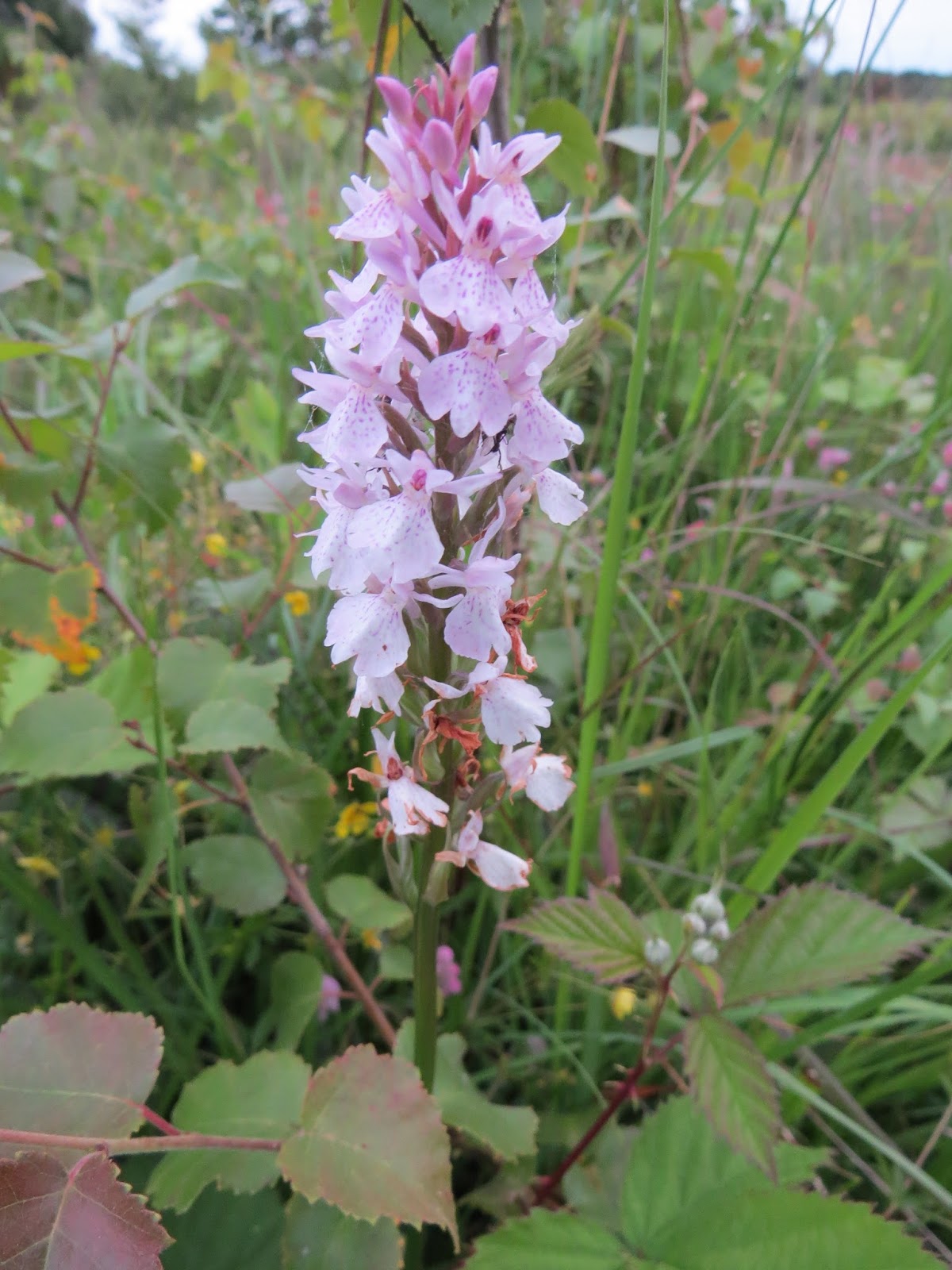
Either a Common Spotted or a Heath Spotted Orchid
 The two of us went exploring the heathland flora of this reserve while we waited for her friends to show up. If you know and love your wild plants, then Buxton Heath is a great place to be. As well as your typical heathland species like heathers and gorses, it is home to some special species like the marsh gentian and several orchid species. And while exploring, we saw plenty of orchids dotted all over the place (but sadly no gentians). I'm no expert on orchids as a lot of them look very similar to each other, but I do know that there are common spotted, heath spotted, southern marsh and marsh fragrant orchids growing here. If I had to guess, most of what we can see were either common spotted or heath spotted as their leaves were very spotty.


Southern Marsh Orchid


Bell Heather

After re-joining the main path, we waited for our companions for the evening to arrive. But just before we received a call from them, we spot a strange bird swoop close by. It had disappeared by the time I figured out what it was, a nightjar! The light was still light enough to see it, but it was definitely a nightjar. It was the size of a kestrel, dark brown with the head of a swift and was gliding so quickly that it was gone before I could even point my camera at it.


Marsh Helleborine
Our two late arriving companions eventually joined us and we went exploring again in the heath to show them the orchids. We found some marsh helleborines this time round. We were admiring these pink and white flowers, when suddenly, a herd of semi-feral horses started galloping towards us from nowhere! These horses are here to graze this habitat as part of conservation management and are not fully tame. So when surrounded by a herd of these large animals all of a sudden was a bit intimidating and I got slightly nervous. Thankfully, they did not trample over us as I first feared, but had a quick look at us and went on their way. Phew!

Horses!


Sunset over Buxton Heath
It was time to head back to the path and wait for the nightjars to emerge. The light was now fading fast. The sky was clear above us and the clouds in the horizon were forming various shapes with the light of the setting sun highlighting them. From one side of us we could see Mars and we could see the bright planet of Venus in the other direction. The song of the song thrush was replaced with squeaking croaks of woodcocks as they began their roding flight displays above the woodland canopy in the dark. Then, as it was starting to get late (well after 10pm), the nightjars began chirring. They were on and off, one minute chirring, then the next they were silent for some time. My companions managed to spot one briefly, but I missed it. The sound of chirring soon surrounded us and I was able to record the sound in the video below. It is such an eerie sound that you could understand that in the past people use to believe that they were the sound of ghosts or evil spirits. It is an unforgettable and unmistakable sound that I never tire of listening to.


Glow-worm
Today was July 4th, Independence Day. Though, as a Brit, I don't celebrate it, but somewhere in the distance, someone was. Fireworks (and a bit of distant lightning) were lighting up part of the night sky. Not to out compete the fireworks, there was a natural light show on the heath. Tiny green lights were shining brightly amongst the heather and brambles. These were the bioluminescent lights of female glow-worms. I went over to pick one out of the vegetation to show my companions. We had a good look at her with her abdomen still glowing bright green. Only females glow and they are also flightless. They use their light to attract the much smaller, winged males to mate with them. Once we had finished looking at her, I left her where she was to continue shining her light in the undergrowth. What a magical night it has been!

Glow-worm light!

Monday, 4 July 2016

July 4th A Secret Location and Harrison's Wood

Lizard Orchid
Lizard orchids are extremely rare in the UK. There are only a small number of them found in only a dozen sites mainly dotted across southern England. So when word came to me about a single individual plant growing in a location somewhere north of Norwich, I really wanted to see it. The only thing is, the location was being kept a secret and it took me some asking around until I finally got directions to it. As this is the only lizard orchid (that I know of) in Norfolk, I am not allowed to tell you where the location is to prevent illegal orchid collectors from finding out.


Lizard Orchid (up close)
Thanks to a friend's directions, Norfolk's only lizard orchid was surprisingly easy to find. It stands out like a sore thumb, standing tall and alone in the short grass next to a large bush. From afar, it looked like a dried up weed. Up close, however, it looks more interesting. Lizard orchids are so called because the florets look like little lizards. Using some imagination, the 'hood' at the top of each floret is the head of the lizard, below that is the body with some legs and the long spur twisting downwards is the tail. It also has purple spots and streaks, adding a splash of colour to this mostly green plant. After a few photos, we decided to leave. We were only there for a matter of minutes, but it was enough time to reflect on how privileged we were to see this single plant. It is like finding the Holy Grail in the most unlikely of locations, it is that precious.


Harrison's Wood
Leaving the lizard orchid behind, Mum then took me to Harrison's Wood, a new site that was recently open to the public a couple of months ago. We obviously have never been here before, but we do drive past it a lot as it is located not far from the Tesco's supermarket we go to and a garden centre near Sprowston. It isn't a big place, just enough for a short walk. Though sited next to a busy road, it seems peaceful and full of trees that makes you feel like you're in a natural place, making you forget what is just outside its boundaries. It was a nice day and I decided to wear shorts, but this turned out to be a bad idea at this place. I was trying my best to identify what was possibly a spotted flycatcher darting about amongst a curtain of needles of a fir tree alongside some long-tailed tits, when I felt my exposed legs being ravaged by biting insects. It was unbearable! I forgot to bring any insect repellent, so I decided to abandon the walk and made a hasty retreat. On the way out, I saw a jay and I believe heard a tawny owl calling (not hooting) as if it was disturbed by the jay squawking.

Woodpigeon
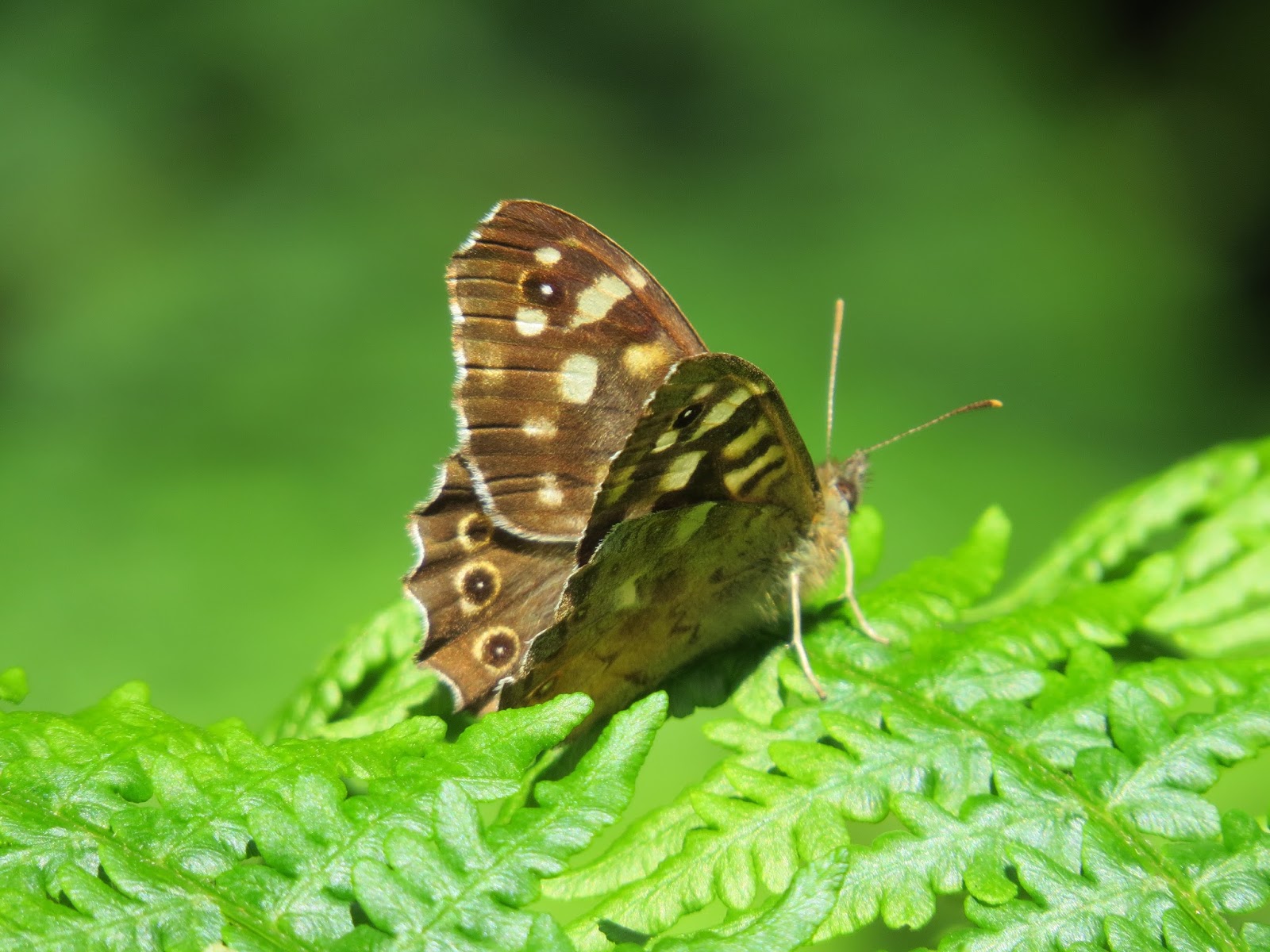
Speckled Wood
Large Red Damselfly
The site's pond
Red Admiral
A scruffy Robin

Sunday, 3 July 2016

July 3rd Strumpshaw Fen

Pond dipping at the new pond
There was a family event at Strumpshaw today. It involved pond dipping at two of our ponds. As water scorpions are still high on my 40 challenge list, what better opportunity for me to tick it off. And so, I have decided to help out. Surely, with an army of willing children with nets at two ponds, there was no way for me to fail now, right?

Within the last couple of years, the staff of Strumpshaw had created a new pond for dipping near the entrance of the meadow trail. It has been left untouched until now so that life could establish itself in and around it. Today we christen it by plunging the first nets into it for the very first time. What we could haul out is anyone's guess. The children were happy to find out for us and they were finding all sorts of great things. It is amazing how quickly an ecosystem can establish itself as they found water boatmen, dragonfly and damselfly nymphs, even stickleback fish!

Water Boatmen, Dragonfly Nymph, Stickleback and Pond Snails

Diving Beetle Larva
Then suddenly, the children hauled up something that baffled my colleagues. They thought it was a large dragonfly nymph that looked even more monstrous and it had a water boatman clutched between its deadly fangs. My colleagues had no idea what it was. For me, however, I took one glance at it and I knew what it was. This was the larvae of one of our larger species of diving beetle, most likely of the great silver diving beetle. Despite being a monster in size already, this was still just a baby. Its adult form, when fully developed, can be as big as the palm of my hand! The children weren't finished yet and they were hauling up several more of these monsters. Someone ended up sticking them in the display tank with all the other highlight findings where we can show passers-by what we had found. Big mistake! They ended up eating nearly everything in the tank! They were relentless hunters!


Pond dipping at the old pond
At the other pond, which we've been using for many years, there were no monstrous beetle larvae, but there was an adult newt, several baby ones (called efts) and the usual other things. Oh, and there was a rather friendly duck there, too. Sadly, as with the new pond, no one could find a water scorpion. I don't understand why that is, but it is rather frustrating that, even with plenty of children pond dipping, I still can't tick one off. They shouldn't be this difficult to find, so something must have effected them on the reserve in some way. I have learned from my colleagues that only a handful have been caught so far this year. What has happened to Strumpshaw's water scorpions?

Mallard

Diving Beetle Larva (of a smaller species)
Sticklebacks
Caddisfly Larva
Smooth Newt
Newt Eft

Honey Bee
I have also been looking out for my other two insect targets today. The brambles by the new pond seemed a great place to see hornets and common blue butterflies as it was buzzing with life. Meadow browns, ringlets, large skippers, a painted lady, sawflies, hoverflies, crickets and a number of species of bees and bumblebees were all attracted to the rich nectar provided by the bramble flowers, but neither of my targets showed up. I walked along Sandy Wall, but could only find lizards. As the event came to an end and everything was being cleared up, I met up with everyone at the office and guess what? I saw a hornet briefly on the roof of the building! No photo of it though, so it is still on my list, but at least I know where the best place to find them is now.

Brimstone
Large Skipper
White-tailed Bumblebee
Speckled Bush-cricket
Hoverfly
Meadow Brown
Painted Lady
Lesser Black-backed Gull
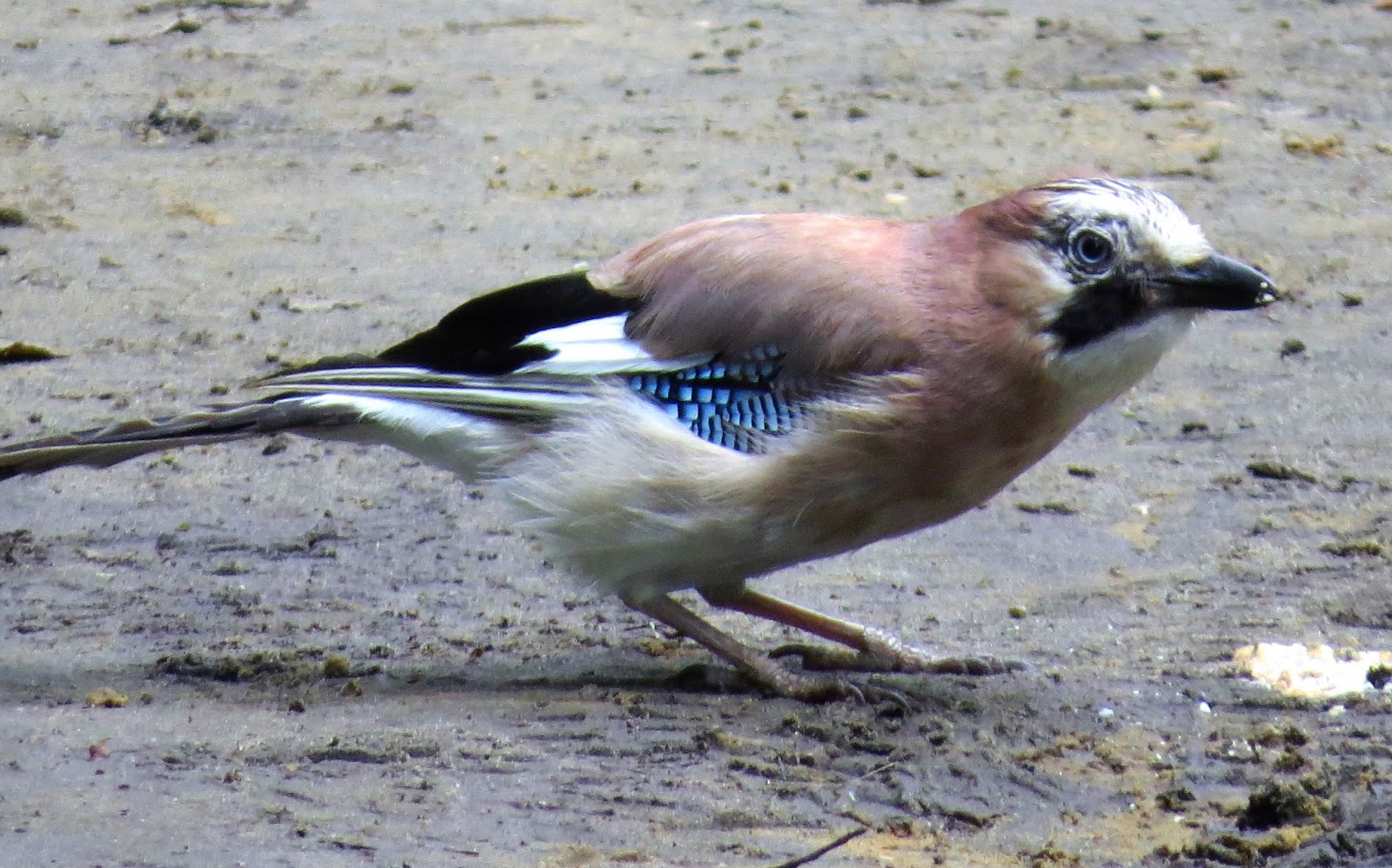
Jay eating a biscuit that someone dropped
Common Lizard