Monday, 5 December 2016

Dec 5th Horsey Gap


Grey Seal pup
Imagine being a seal pup born on a beach with your mother beside you. The milk from her is good, making you grow bigger and fatter in just a few weeks. You grow fast from a small white, helpless baby under the watchful eye of your protective mum to a plump, spotty grey individual that is more independent enough to be left alone during that short space of time. You're adored by visiting humans for being cute and fluffy like a playful puppy. But you are not alone. Not only are there other seal pups being born all around you on this stretch of Norfolk coastline to steal the limelight from you, you are also constantly in danger from the elements and from being squashed or attacked by the other adult seals besides your mother. It is not always an easy start in life for a baby seal.
Feeding time!

Grey Seals at Horsey Gap
It is the pupping season for the local grey seals at Horsey Gap and the latest count is 574 pups being born this winter so far. There's also about 721 adult seals on the beach and in the sea. It is becoming another good year for the seals at Horsey and as always is attracting many people to the viewpoints along the dunes to see them. Today, Mum and I have joined the crowds to make our annual visit and with so many seals around, there was a lot to take in.

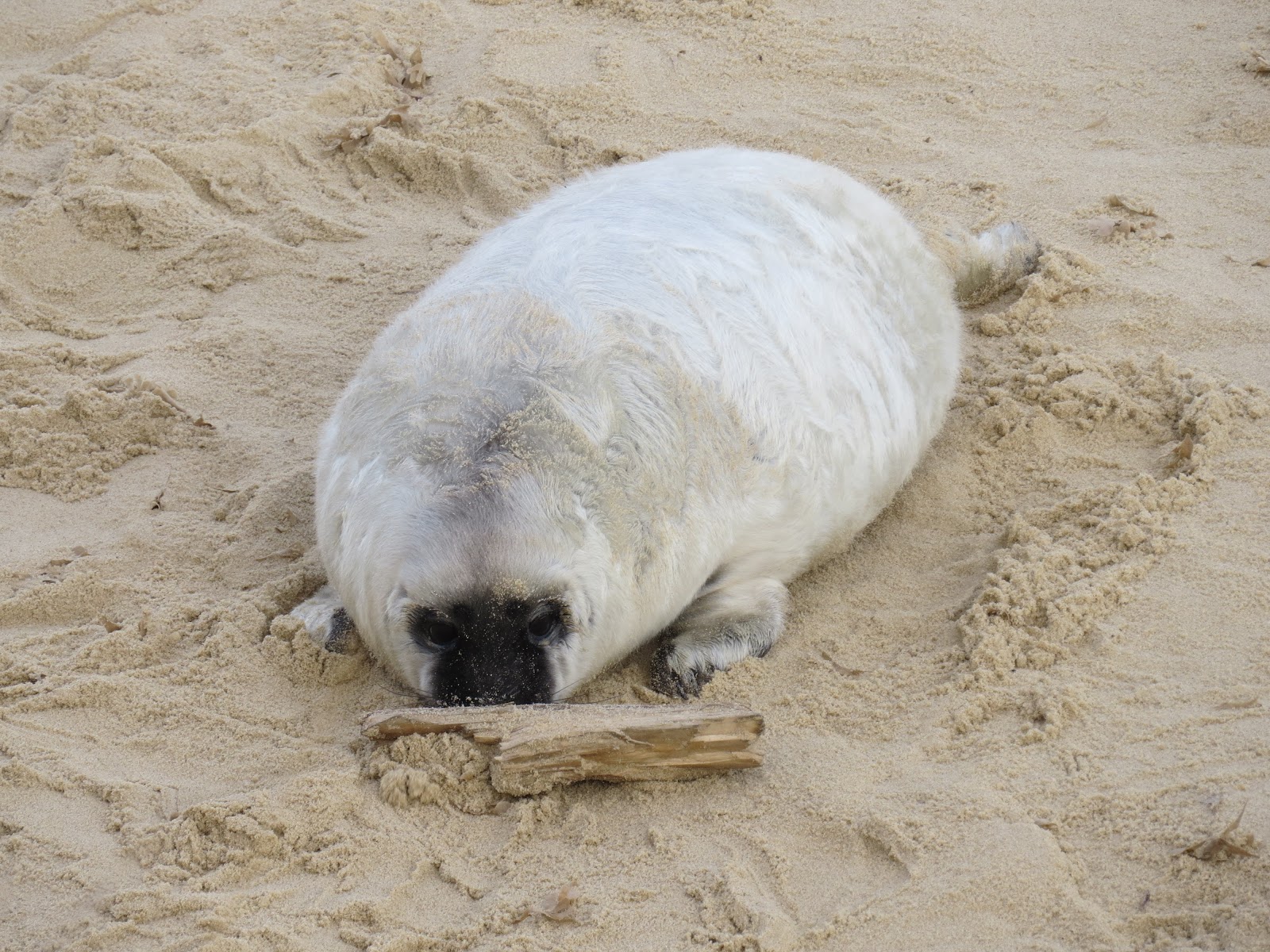
Playing with a stick!
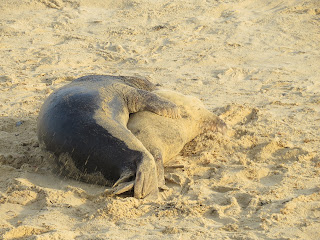
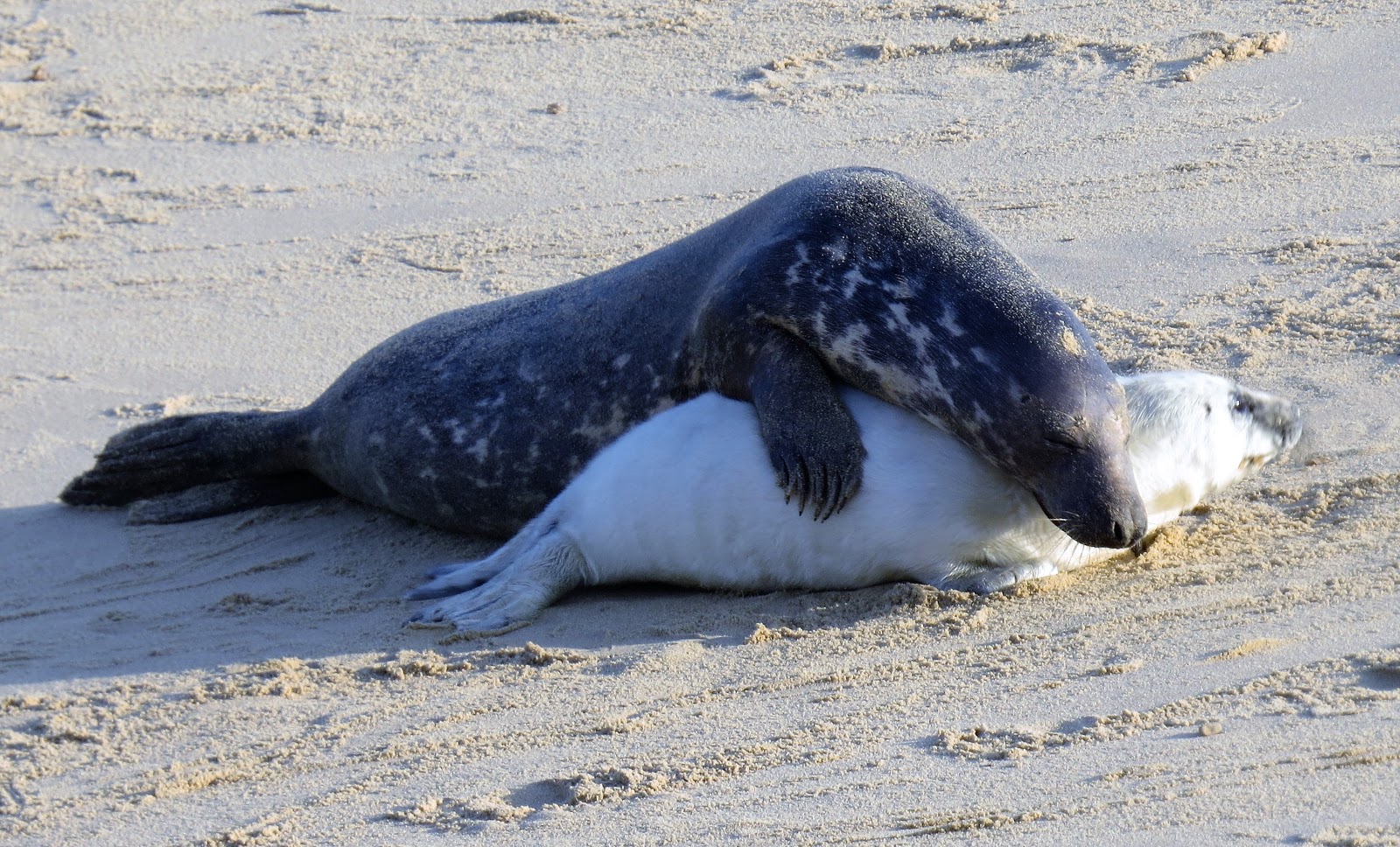
Cuddle from mum!
"Help me out with this itch please mummy!"


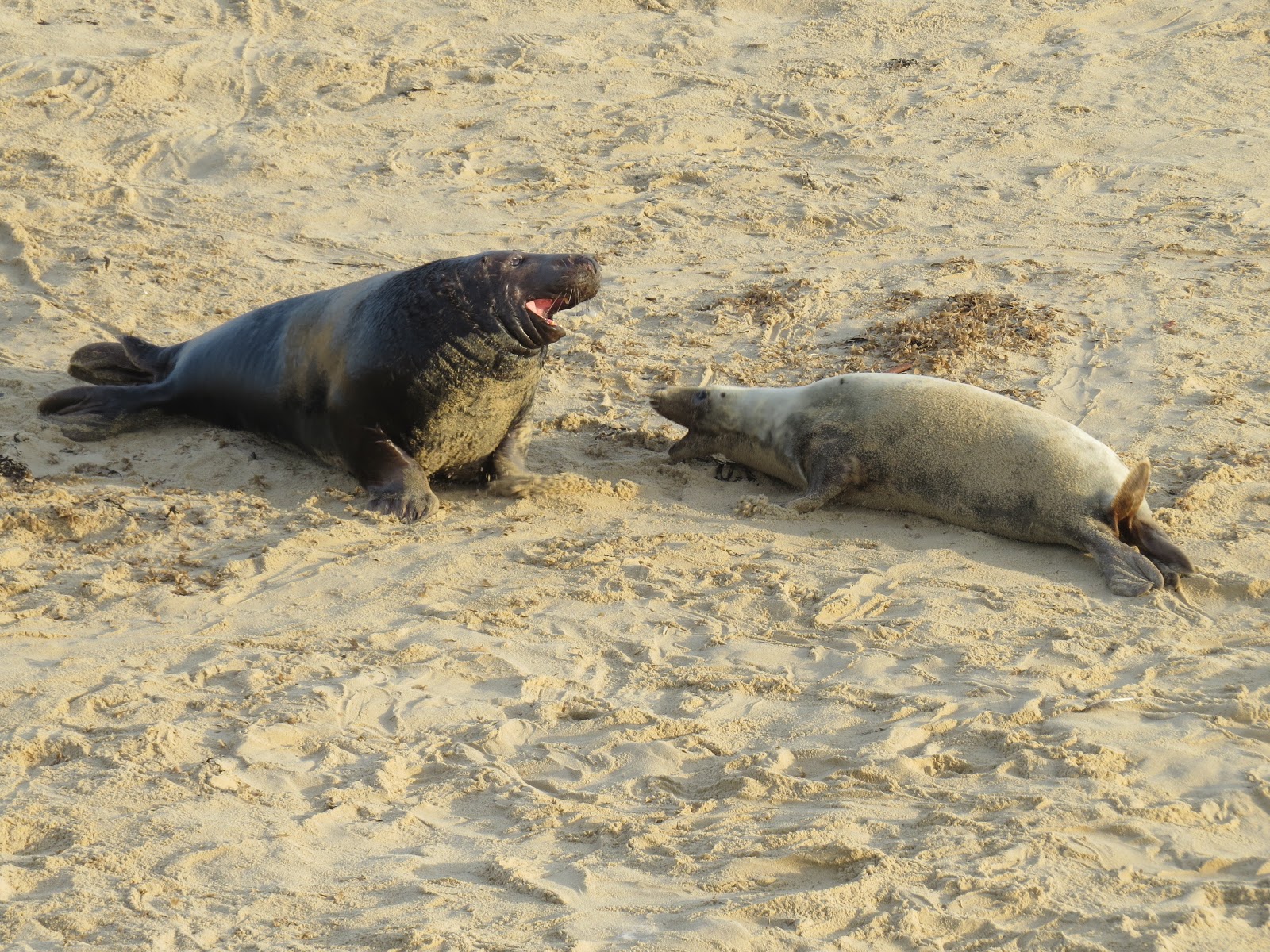
Fighting Grey Seals
Though the pups were adorable in their many growth stages, it was actually the behaviour of the adult seals that was more fascinating to watch. Though at first glance the beach appears to be a nursery, and though this is true, on closer observation, this stretch of beach is also a battleground. Seals were on the move in every direction, moving like blubbery slugs being propelled along the sand at a surprising speed by their two front flippers. All this movement brought them into conflict with their defensive neighbours who were often females protecting their pups and a fight would break out. Fights amongst females were short and scrappy with a lot of snarling and a few moments of biting before one backs down and moves away. However, when it comes to the dominant bull seals in the group, no one messed with them without drawing blood. Most of the other males would rather run than stand and fight these heavyweights!
A bull seal chasing off a rival!
When boy meets girl in the seal world! Its quite brutal!
The whole reason that these enormous bull seals are here is to defend his group of females and chase off the competition by force. A charging bull seal is quite a formidable sight and if I was a rival male seal, I would probably leg it too! I wouldn't want to be a female seal either as when it comes to mating, it looks rather brutal. During our visit today, we witnessed a few matings and they appear more like scenes of rape to me. When the dominant bull approaches a female, she snarls and bites him as if in defence. She clearly does not want him, but as he is much larger and more powerful than she is, he forces himself onto her. She struggles for a few minutes, trying hard to fight him off, but eventually she gives in to him and he mates with her. The mating itself is long with not a lot of movement. They just seem to lay there on the beach together side by side with his manhood just visible between them within his forceful embrace. Not the prettiest thing to witness, but vital in making sure that he is the father and no one else.
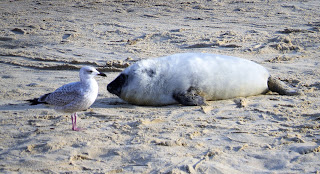
Herring Gull meets seal pup
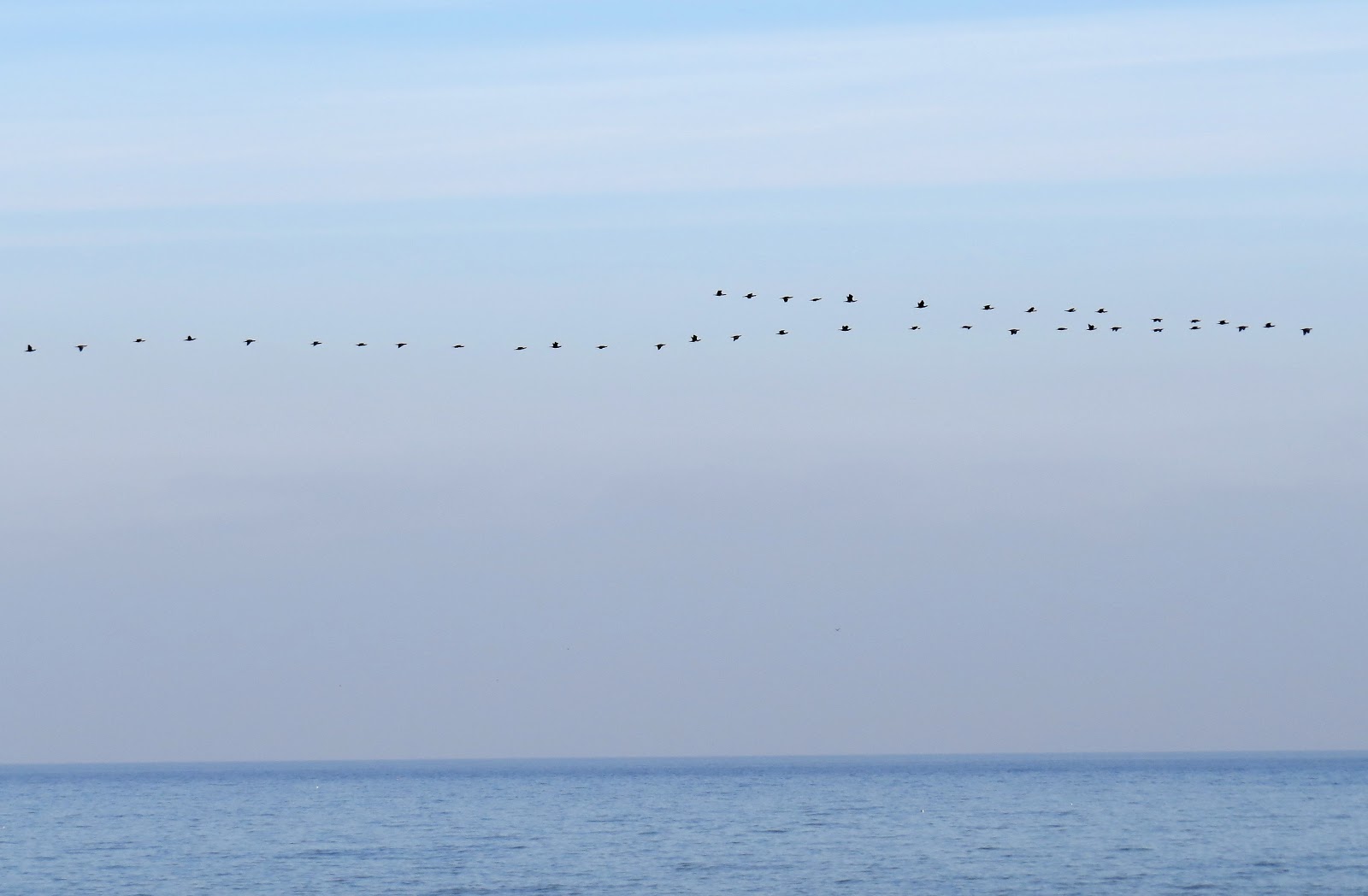
As well as seals, there were also a few birds scurrying around them. Most of them were herring gulls that were busy pestering the pups, but I also saw a couple of sanderlings, a ringed plover and a turnstone, too. Meanwhile, flying over the sea was a skein of cormorants following one another in a V-formation just like geese do. But of course, it was the adorable seal pups that truly stole the show today.

Sanderling
Ringed Plover
Turnstone
Cormorants

Sunday, 4 December 2016

Dec 4th Waterloo Park

Jay
It has been a nice sunny morning and with not much to do, I went out for a walk around my local park for some fresh air. Apart from the families and dog walkers, it was fairly peaceful at Waterloo Park today. The birds were very active during my walk, though slightly camera shy as they spent most of their time behind cover that obstructed my camera's focus.


Blackbird
Blackbirds appeared to be everywhere I looked during my walk. It seemed like there were at least four or five of these birds in nearly every bush or tree. This behaviour could only mean that they are not from around here. The majority of these birds are more than likely from across Continental Europe, especially from Scandinavia as they have dark or black bills. The yellow-billed residents are more territorial, so I guess they are not too happy about their European cousins for popping over to escape the harsher winters for our more milder ones and to feast on their berry supplies. Confrontation was inevitable and I saw a few chases around the park, not that these invaders took any notice as they continued to flock together.
Also seen today were blue tits, great tits, a coal tit, dunnocks, a song thrush, collard doves, magpies, carrion crows, a pied wagtail, a jay, a couple of starlings and a squirrel.
Starling

Courting Feral Pigeons
Magpie
Dunnock
Pied Wagtail
Blossom
Grey Squirrel
Collard Dove


Friday, 2 December 2016

The Ultimate Bug Hunt 2017 (Help Needed!)


Seven-spot Ladybird
As 2016 is nearing an end and as I had so much fun looking for the 40 species for the Strumpshaw 40 challenge (with the weasel still evading me), I have decided to start a new challenge for 2017. What I am going to do next year is pretty much a bug hunt, the Ultimate Bug Hunt. Throughout the year, I want to explore the world of the invertebrate like I've never done before. I will try to visit as many habitats within and just beyond Norfolk's borders in search for as many species of minibeast as I can and understand more about them.


Swallowtail
So why have I decided to do this? Well, I believe a lot of us misunderstand them and choose to squish them under a shoe rather than to learn about what they are and what they do. Invertebrates are creatures without backbones and are a diverse group ranging from insects, spiders, snails, crabs, octopuses and so many other small animals that live just below your feet. They are extremely important to the world we live in, from recycling dead animals and plant matter to fertilizing the soil and to being food to the furry and feathery critters that we all love. Though I am not a complete expert on all these creatures or know the name of every single species (which is impossible as there are thousands of species of invertebrate out there), I want to learn a bit more about them and to cure a few phobias that I have as well as to try and promote awareness of them to you, the viewer.


Hairy Dragonfly
As well as exploring the various habitats that they live, I also have a list of target species I want to find next year. All of them are chosen for either being beautiful to look at, have fascinating behaviours, are important to the ecosystems that they live in or just because I have never seen them before. Many of them are common and easy enough to find, but others are more local and only appear at certain times of the year, making them harder to find. Its these scarcer species that I want your help with.


Garden Spider


My target list contains about 30 species, but most of them I know where to find them and have some people who can help me look for some of the others that I don't. However, I have at least two species that I have know idea where to even look and I am hoping that you can help me.


Stag Beetle

The stag beetle and the emperor moth are both extremely beautiful, large, iconic and impressive insects. They are also increasingly scarce and localised. I have always wanted to see them but I don't know where to find them. I do know, however, that a stag beetle hotspot is Colchester in Essex, so if you are from there or if you know where to find them in Norfolk, please let me know! As for emperor moths, I once saw a caterpillar of one in north Norfolk a few years ago but never the adult which I really want to see. If you want to help me out or have any other suggestions of species to look for that I would have never had thought of within the East Anglian region (preferably in Norfolk), let me know in the comments below. Thank you!

Garden Snail and Black Slug