|
| Pheasant |
Springwatch may have moved away, but Minsmere is still a popular place to visit. The reserve has plenty of great wildlife to see today and you don't need any nest cams or miles of wires to beam images to a TV screen to enjoy them. Why, just from the visitor centre you have ant-lions and hungry pheasants that come up to you hoping that some food is thrown their way. This individual even peered through the window of the reserve's café, staring at us inside with eyes on Mum's cheese scone.
 |
| Ant-lion |
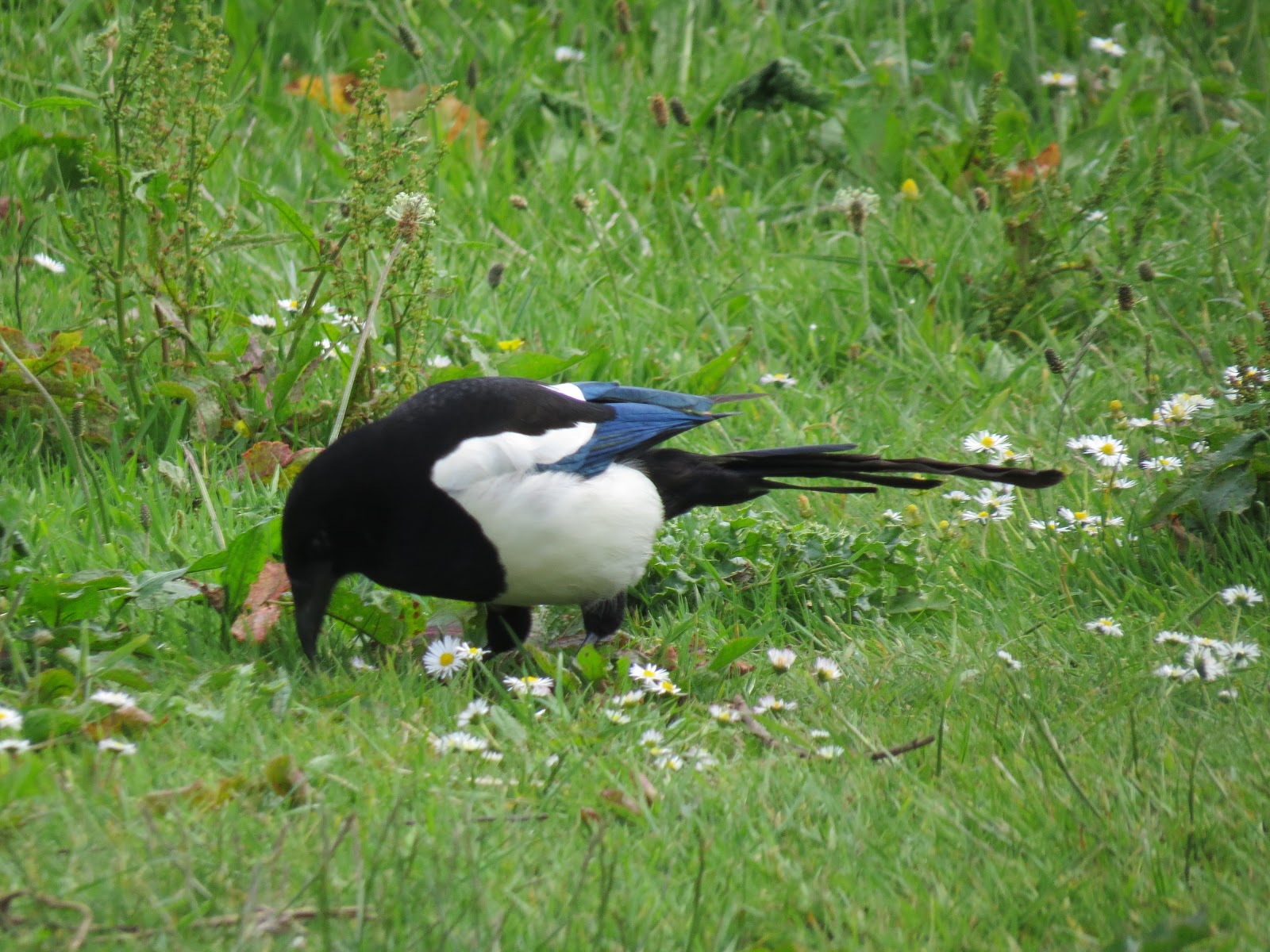
This year, Minsmere is celebrating it's 70th anniversary and have followed in Strumpshaw's footsteps by coming up with a spotting challenge sheet. There are 70 species to look for throughout the year plus 5 bonus species. I thought it would be a great way in finding some of them with Mum. Though I'm not expecting to find all of them like I did with Strumpshaw's 40 species last year as I'm not here as often, but there are some interesting species on the list that I wouldn't mind searching for at some point. Today, we actually did extremely well as we managed to get just over half of them in one day. Mum even saw a bittern on two occasions briefly, which I actually missed both times!
 |
| Mallard duckling |
From the hides overlooking the scrapes, Mum was in baby heaven as there were baby birds everywhere. There were ducklings, goslings and plenty of fluffy gull chicks to melt your heart with adorable cuteness. I remained as professional as I could though and tried to ignore all the cute stuff and focus on the bigger, cooler birds. Top of the highlights here were two spoonbills feeding together, scooping up morsels with their spoon-shaped bills. And for the gull enthusiasts amongst us, there were several Mediterranean gulls within the colony of black-headed gulls and the odd Caspian and yellow-legged gull hidden within the crowd of lesser black-backed and herring gulls. Oh, and not forgetting the kittiwake, the common terns, redshanks, avocets and black-tailed godwits.
 |
| Black-headed Gull chick |
 |
| Canada Goose |
 |
| Canada Goslings |
 |
| Barnacle Goose with gosling |
 |
| Spoonbills |
 |
| Mediterranean Gulls |
 |
| Caspian Gull |
 |
| Yellow-legged Gull (right) with juvenile Great Black-backed Gull |
 |
| Lesser Black-backed Gulls |
 |
| Kittiwake |
 |
| Avocet |
 |
| Common Tern |
 |
| Redshank |
 |
| Digger Wasp (not sure which) |
Of course, as well as the 70 species Minsmere wants us to find, I also want to find some invertebrates to fulfil my own challenge this year. Though, I wasn't really looking for any of my main targets today, I was, however, hoping to add to it with other great species. Unfortunately, I couldn't find the red-veined darter (a scarce dragonfly migrant) during my walk around the scrapes, but I did manage to find this small digger wasp that I am unsure of which species it is. If you know, get in touch. There were also plenty of damselflies and dragonflies about, including these four-spot chasers, but, surprisingly, I didn't see many butterflies.
 |
| Four-spot Chaser |
 |
| Variable Damselfly |
 |
| Azure Damselfly |
 |
| Speckled Wood |
 |
| Drinker Moth caterpillar |
 |
| Ant |
 |
| Thrift with Bumblebee |
 |
| Whitethroat |
 |
| Reed Bunting |
 |
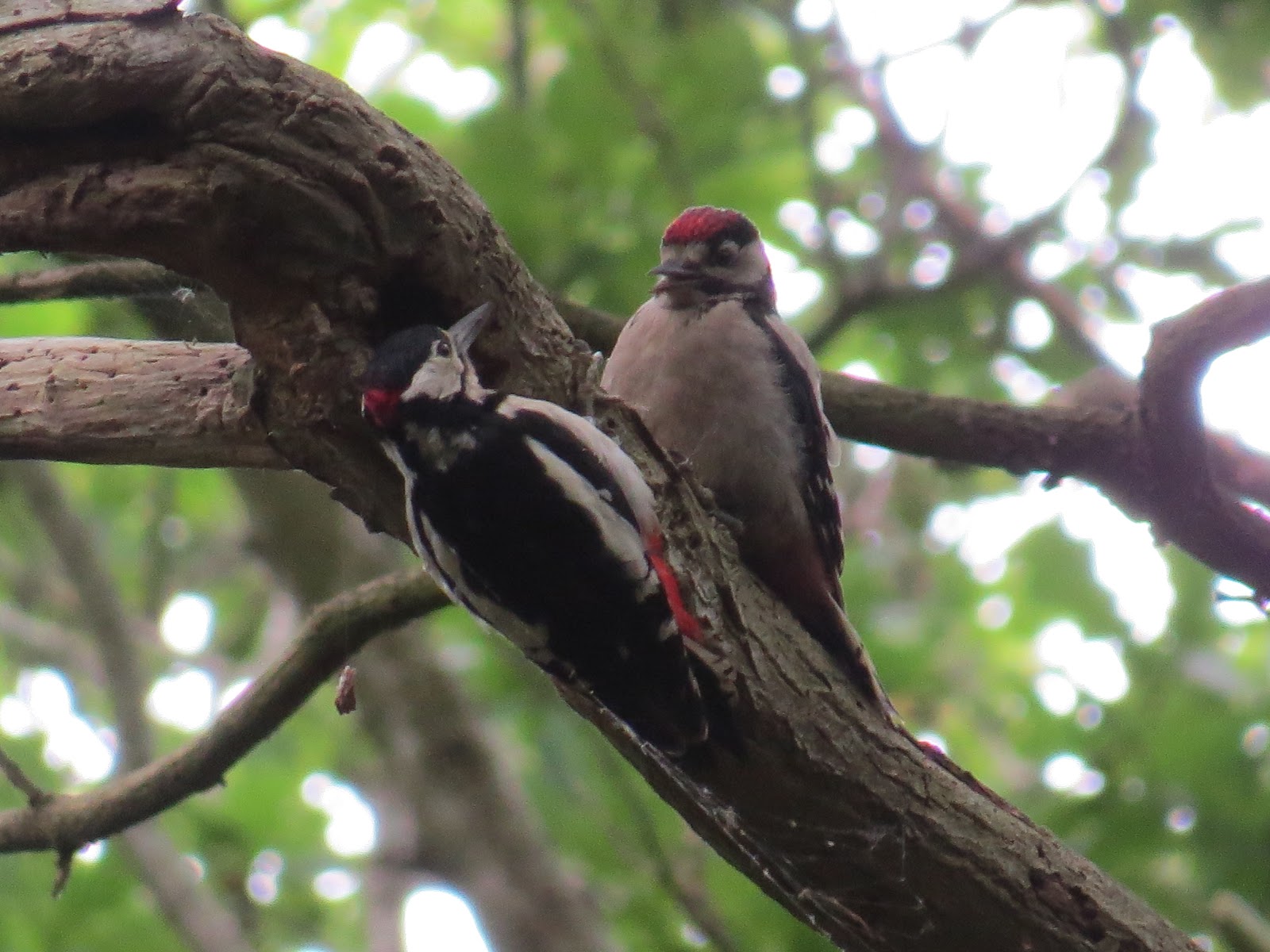
| Great Spotted Woodpecker with fledgling |
After having lunch at a bench on the boardwalk over the pond, we made our way through the woods and to the Bittern and Island Mere hides. On the way, we were distracted by a family of great spotted woodpeckers high in the upper branches of a couple of trees. From Bittern Hide, we saw a couple of marsh harriers soaring over the reed beds and a heron half submerged in water, successfully catching a fish as we watched it. Southern marsh orchids and shoals of sticklebacks greeted us as we crossed the elevated boardwalk to Island Mere Hide and once inside, we saw some hobbies catching some dragonflies on the wing, sharing the airspace with the comparably larger marsh harriers. A fantastic way to end a nice day at this famous reserve on it's 70th year.