|
| Grayling |
It was looking promising on the ride up to Cley this morning, but when we eventually arrived, thick clouds covered the bright blue skies. The bright, cheery scenes gave way to a dull, gloomy one instead. The fear of rain was on my mind while walking down to the shingle ridge along the beach via the East Bank. Thankfully, the rain didn't come and I was able to search for one of my favourite butterflies; the grayling. Graylings are sun loving insects and also have rather good camouflage, often closing their wings when they land and can even hide the orange upper wing like a camera shutter to make it much harder to spot, so I was a little worried that I wouldn't find one for two reasons. But there was no need to worry. I managed to find one after a bit of searching, mainly because I nearly stepped on it by accident!
 |
| Gatekeeper |
 |
| Small Tortoiseshell |
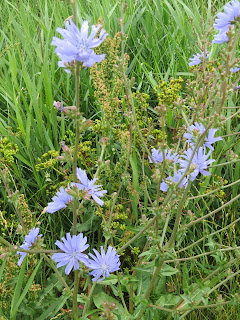 |
| Chicory |
 |
| Yellow Horned Poppy |
 |
| Cinnabar Moth caterpillar |
 |
| Large White |
 |
| Spoonbill |
I returned to Mum, who was waiting for me at the shelter on the East Bank, with a smile on my face and a few stones in my shoes. But graylings were just the start of what was to become one of my best visits to Cley for some time. Not only did I see sandwich terns, parachuting meadow pipits, reed buntings and sedge warblers, I also had a spoonbill and a bittern fly over our heads while making our way back to the visitor centre for lunch. The spoonbill flew to the far pool at the back end of the field to my left, while the bittern went the opposite direction into a reed bed beyond the three main central hides. Annoyingly, through, I was fumbling with my camera too much to get any decent shot of the bittern, but at least the spoonbill was nice enough to stick around for me to get a few distant photos.
 |
| Sandwich Terns |
 |
| Little Egret |
 |
| Reed Bunting |
 |
| Collard Dove |
 |
| Lapwing chick |
 |
| Otter |
Once lunch was over, we made our way to the hides to see what else was about. We entered Teal Hide (the one on the right) and were just plonking ourselves down onto one of the benches inside, when the man sitting beside me called out and pointed to an otter that was swimming in the ditch between the pools in front of us. It didn't stay for very long, but I did manage one quick photo before it disappeared completely. We had only been in the hide for less than a moment and we had already seen something memorable!
 |
| Marsh Harrier |
While in Teal Hide, we watched a pair of marsh harriers perform food passers to their three hungry, recently fledged chicks. As they waited for their parents to show up with their next meal, these dark-coloured, ginger-headed juvenile birds were sitting on bushes and even in the long grass of the furthest island on Pat's Pool with it's head poking out. We also saw ruff, godwits, avocets and shelducks, but despite the pool being full of water, most of these birds were more abundant at Simmond's Scrape, where it is almost completely dried up.
 |
| Young Marsh Harrier hiding in the grass! |
 |
| Shelduck |
 |
| Mallard with ducklings |
 |
| Ruff |
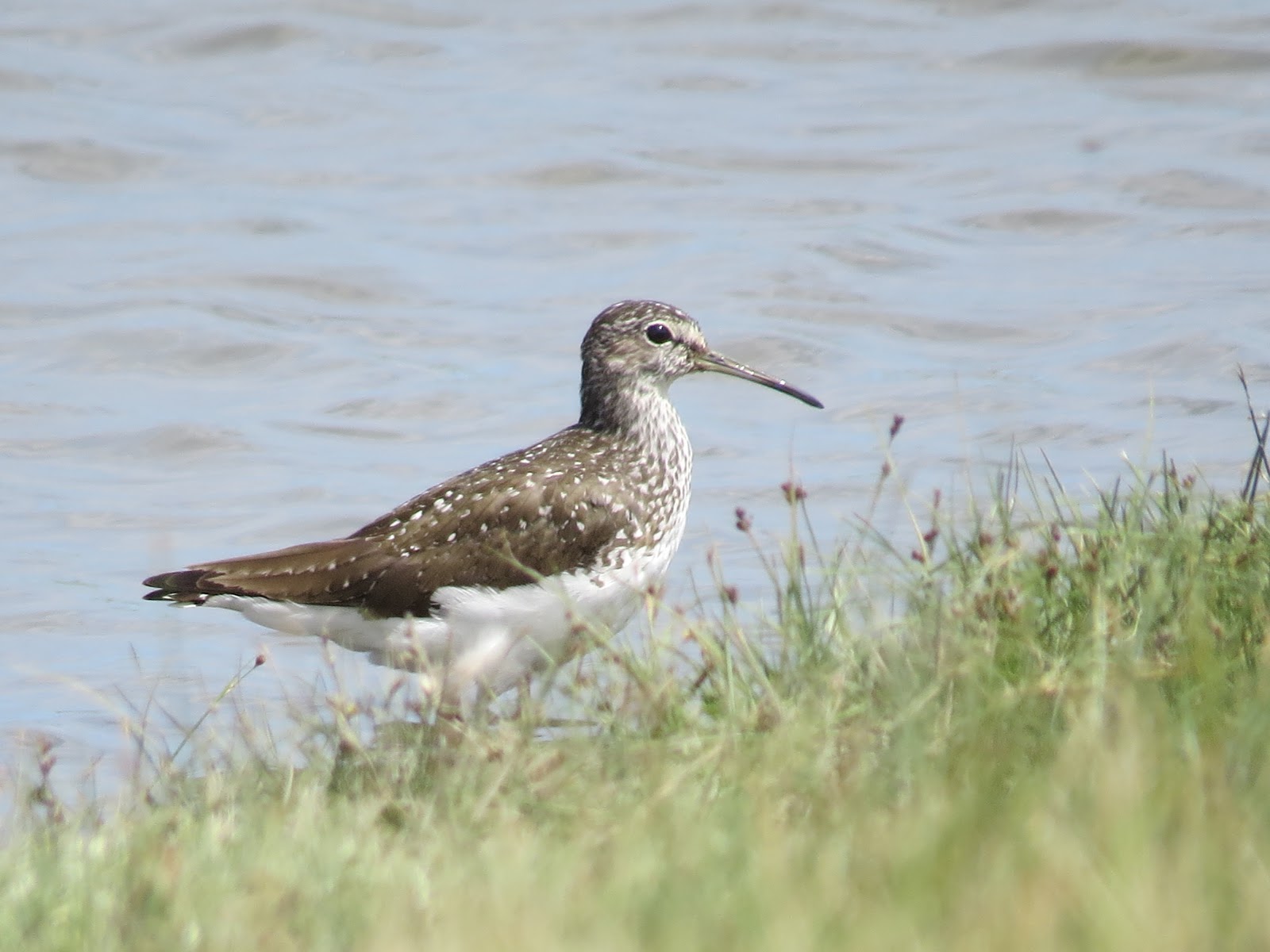
So, we moved over to the middle hide (Dawke's Hide) and from here, the birds were much closer. There were plenty of male ruffs feeding along the edge of the nearest island, each flaunting it's own different coloured ruff display feathers. Just as in hair colour in humans, the ruffs vary in colour, some being white, while others ginger or brown. This one island also had a family of at least seven little ringed plovers patrolling it with most of them being juvenile birds. A green sandpiper also made a short appearance this afternoon.
 |
| Ruffs with a Little Ringed Plover |
 |
| Little Ringed Plover |
 |
| Green Sandpiper |
 |
| Black-headed Gull |
 |
| Avocet |
 |
| Black-tailed Godwit |
 |
| Grey Heron |
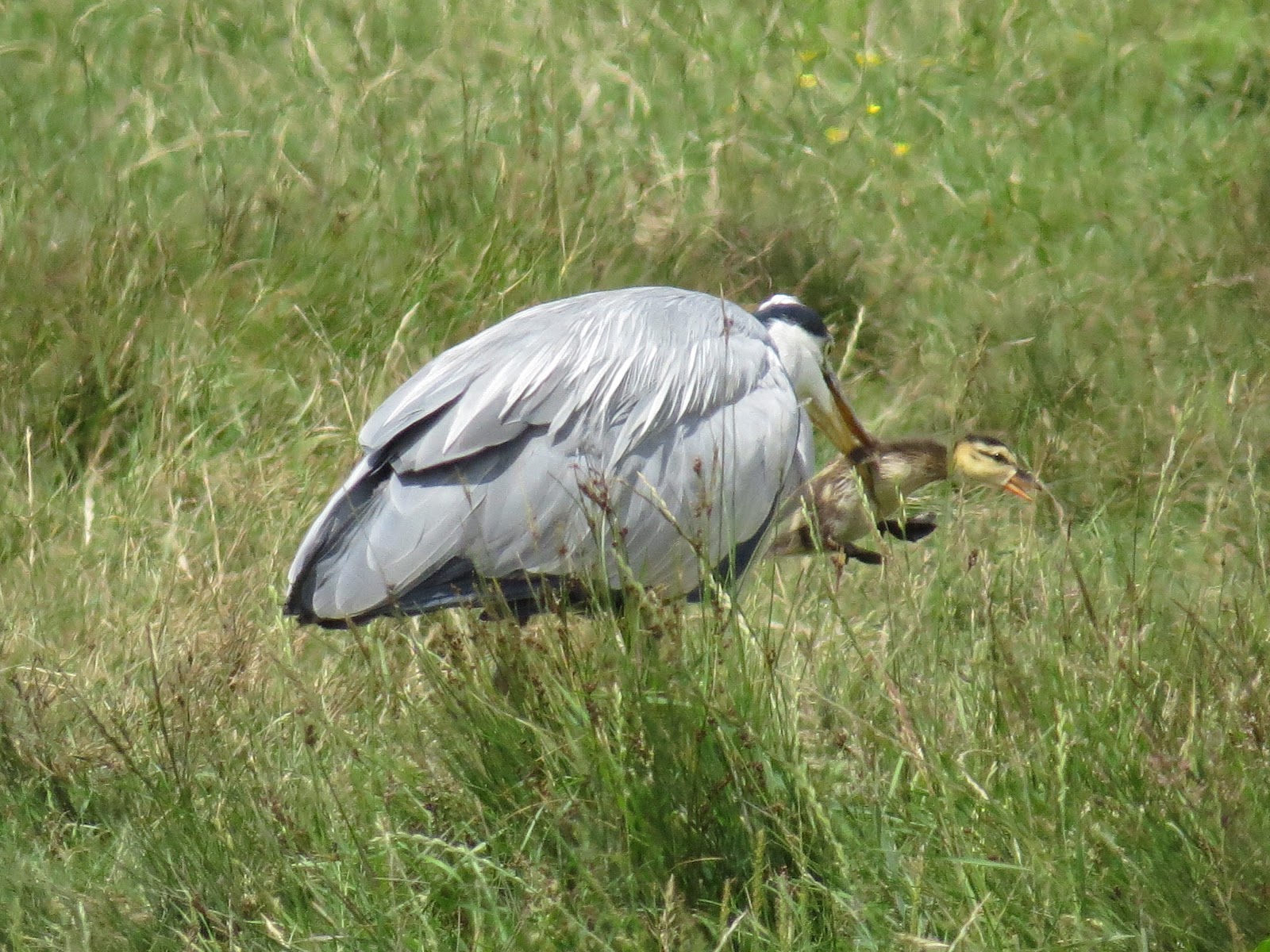
Finally, a warning. These next images are not for the faint hearted! This is because they all feature a cute, fluffy duckling being gobbled up by a heron. Trust me, it was not an easy thing to watch and the distressful sounds the duckling was making was a bit off putting. Mum couldn't stand watching it for long as the heron continued to struggle positioning the baby bird wiggling in it's bill, trying it's best to escape. It took several minutes until the heron finally gulped it down. Not a pleasant thing to witness, but that's nature for you. Only the fittest survive.
 |
| Grey Heron trying to eat a duckling! |