|
| Black Darter searching at a pool near Roydon Common |
Last year, as part of my East Anglian bug hunt (in which I set myself a challenge in finding a selection of invertebrates across Norfolk and Suffolk), my friend David and I went to some pools that I was given directions to behind Roydon Common to find black darter dragonflies. It was a bit of a failure in the end as there were no sign of them. Today, we decided to try again. Thanks to this heatwave, the pools have almost dried up completely. The heavy rains and thunder storms of last weekend have obviously made very little impact in refilling them. However, for black darters, these pools are still suitable to their needs. That was what I expected anyway. For some unexplained reason, they were just not showing here today.
 |
| Keeled Skimmer |
Though we were unlucky in not seeing black darters, there was a consolation prize here for me. These boggy pools of water dried to mere puddles were still a haven for other species of dragonfly. Most of them were keeled skimmers, which I believe is a new one for me on British soil. Keeled skimmers are small bright blue dragonflies that live in boggy heathland. When they land, they tend to point their wings downwards and pointing forward. Their population is very scattered across the UK and in Norfolk, this north-west region is the only place to see them. Not a black darter, but still a good find.
 |
| Emerald Damselfly |
 |
| Common Darter |
 |
| Ruddy Darter |
 |
| Field Grasshopper |
 |
| Small Copper |
 |
| More searching at Dersingham Bog |
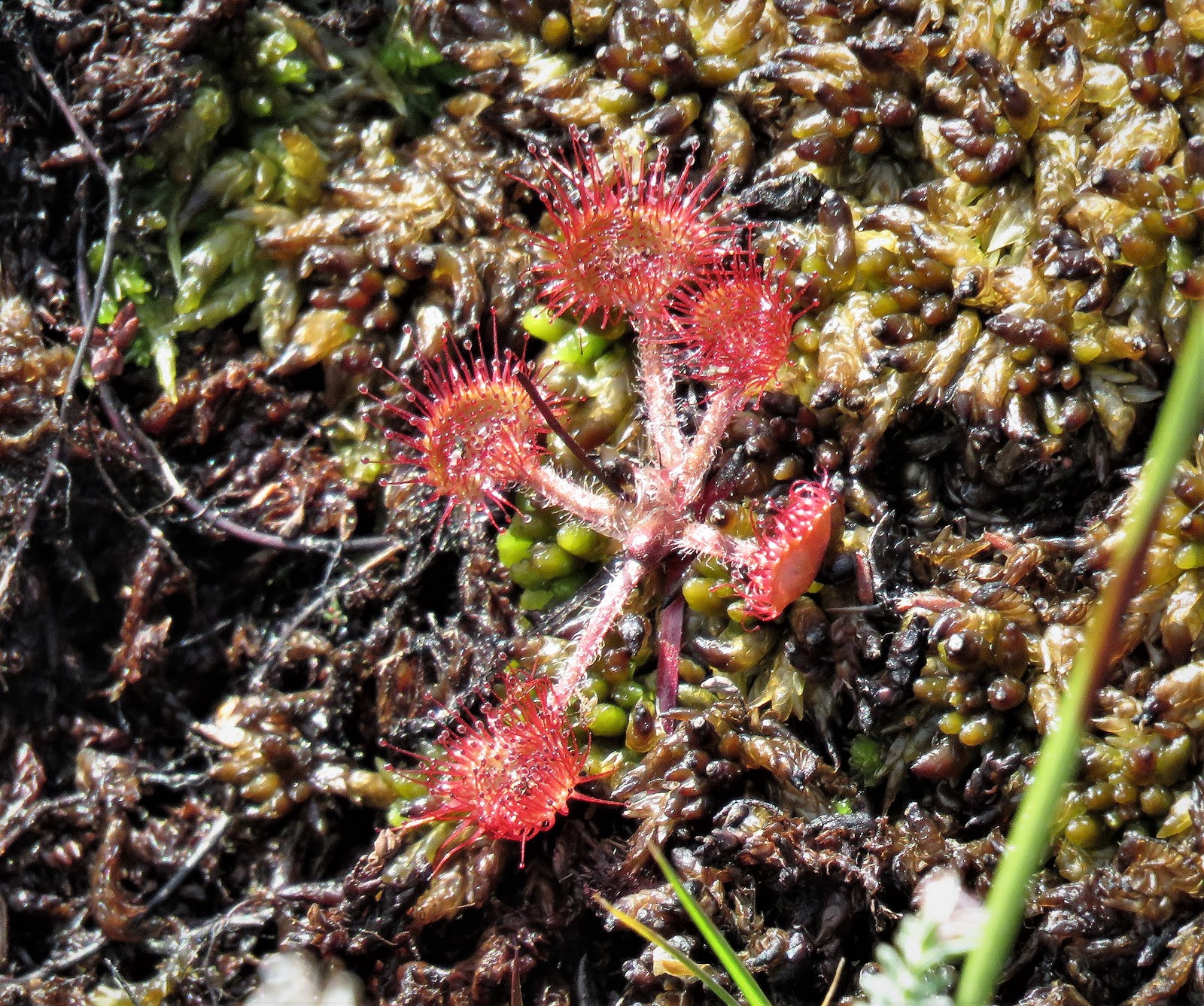
After a black darter-less hour or two at these pools, we moved our search to Dersingham Bog. We had lunch under the shade of a pine tree before making our way down the steep steps to the boardwalk that brought you closer to the acidic bog without getting your feet wet and smelling like the bog itself. Yet again the black darters were nowhere to be seen. In fact, after one loop of the boardwalk, we didn't see any dragonflies at all, only sundews and wild cranberries. Then on the second attempt at the circuit, we came across some more keeled skimmers.
 |
| Sundew |

Eventually, we gave up our search for this clearly elusive black darters and we decided to drive to Titchwell to look for birds instead. On our arrival, we noticed a crowd of people scanning the canopy by the reserve's entrance. They were looking at two juvenile pied flycatchers with a spotted flycatcher joining them. They were constantly flitting about within the dense cover of leaves and I only managed to get a few glimpses of them before they disappeared again. Believe it or not, I have never seen a pied flycatcher before. These birds only pass through Norfolk during their migration to and fro from Africa and Western England and Wales. At this time of year, many of them are juveniles and though these were great to see, I would have loved to see one of them as an adult male in his eye-catching black and white plumage.

Along the way to the Island Hide, we came across another crowd staring at one of the pools beside the path. It wasn't a bird they were looking at this time, though, but a rare dragonfly. Southern migrant hawkers are normally found throughout the Mediterranean, so this hot summer that we are having must make them feel more at home. It is another small blue dragonfly, but this one appeared bigger to me due its fierce territorial loops around the algae covered pool with such speed that it was almost a bluish blur in my vision. Just like the keeled skimmer, this species also have a notable quirk in its body parts. Studying this individual as much as I could through my binoculars, I could just make out the slight downward curve in the abdomen. Not the easiest thing to make out while it was flying around like this, but it was certainly there.
 |
| Birds galore! |
The freshwater pool outside the Island Hide was like a mosaic of feathered bodies as hundreds of birds of many species covered the pool from one end to the other. They mainly consisted of avocets, godwits, dunlin, ruff, oystercatchers, shelduck and a variety of gulls, including a yellow-legged gull, but there were so many other 'goodies' amongst them too.
 |
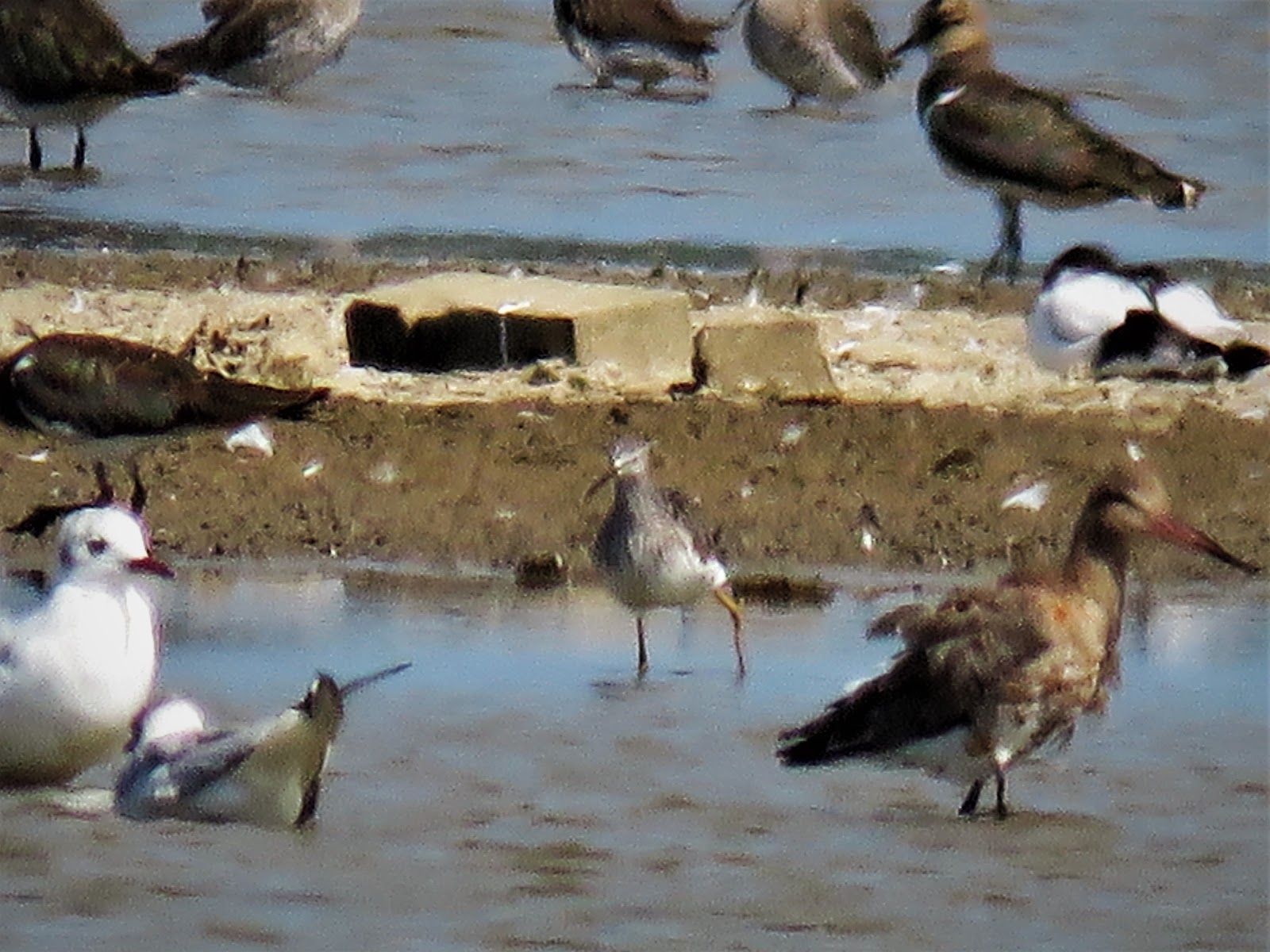
| Lesser Yellowlegs |
Along the reedy edges, bearded tits were showing really well out in the open, but everyone's attention seemed to be on the lesser yellowlegs that was still here, though a bit distant than it has been and it was often hiding amongst the masses of the other waders, adding a bit of confusion now and then. A whimbrel was doing the same, but even further to the back of the pool, while curlew sandpipers were the worst culprits in this ornithological game of hide and seek. At least the group of spoonbills didn't cause any headaches when it came to locating them. When we returned to the car to drive home, we had one last look at the pied flycatchers, not that I would call it much of a look as they were still extremely flighty. So though I failed to see a black darter yet again, it was still a very successful day full of unexpected new things that I've never seen before.
 |
| Bearded Tit |
 |
| Avocet |
 |
| Ruff |
 |
| Black-tailed Godwits |
 |
| Whimbrel (the bird with the curved bill) |
 |
| Spoonbill |
 |
| Reed Warbler |


 Eventually, we gave up our search for this clearly elusive black darters and we decided to drive to Titchwell to look for birds instead. On our arrival, we noticed a crowd of people scanning the canopy by the reserve's entrance. They were looking at two juvenile pied flycatchers with a spotted flycatcher joining them. They were constantly flitting about within the dense cover of leaves and I only managed to get a few glimpses of them before they disappeared again. Believe it or not, I have never seen a pied flycatcher before. These birds only pass through Norfolk during their migration to and fro from Africa and Western England and Wales. At this time of year, many of them are juveniles and though these were great to see, I would have loved to see one of them as an adult male in his eye-catching black and white plumage.
  Along the way to the Island Hide, we came across another crowd staring at one of the pools beside the path. It wasn't a bird they were looking at this time, though, but a rare dragonfly. Southern migrant hawkers are normally found throughout the Mediterranean, so this hot summer that we are having must make them feel more at home. It is another small blue dragonfly, but this one appeared bigger to me due its fierce territorial loops around the algae covered pool with such speed that it was almost a bluish blur in my vision. Just like the keeled skimmer, this species also have a notable quirk in its body parts. Studying this individual as much as I could through my binoculars, I could just make out the slight downward curve in the abdomen. Not the easiest thing to make out while it was flying around like this, but it was certainly there.