|
| Great White Egret (with Grey Heron) |
As I only managed to get a brief glimpse of one flying past last week, today before my shift I made my way down to Tower Hide (not via the Lackford Run this time) to see if the great white egrets were more obliging. As soon as I entered the hide, there it was. Its large white body stood out of the crowd of herons, snipe, ruffs, lapwings, and eclipse-phased mallards, teal and gadwall. There was no way I could mistake it for anything else. Its dagger-like yellow bill also helps in indicating that it was what it was, but you would have to be bird-blind to confuse it for a little egret. Throughout my short visit to the hide, it didn't really do much, just standing there looking pretty. That was easy, I thought.
 |
| Ruff |
 |
| Snipe |
 |
| Ruff and Common Sandpiper |
 |
| Gadwall |
 |
| Little Egret |
With success with the great white egret and with plenty of time to spare, I made my way back to see what the Fen Hide had to offer. More egrets was the answer. Little egrets. Five of them, standing around by the island of reeds surrounded by more mud than water. A grey heron towered above them all standing amongst them. Then, for no reason at all, five became one as the other four decided that it was time to move on. The sound of hungry young marsh harriers continued to fill the air as they beg for food to be dropped to them by their parents.
 |
| Snail |
 |
| Great White Egrets |
Pre-shift walk over, I made my way to join my colleague at the Reception Hide. As I was about to walk through the door, I noticed 6 more white bodies of egrets standing out like a sore thumb. One of them was far larger than the other 5. It was another great white egret! Then a second one joined it and the little egrets a short while later, making it my third great white of the day. I was having an egret fest! For the rest of the morning, they didn't move very far from the reedy islands. Occasionally, they would explore, but in truth, they didn't do very much at all. They were far from boring though.
 |
| Little Egrets |
 |
| Kingfisher |
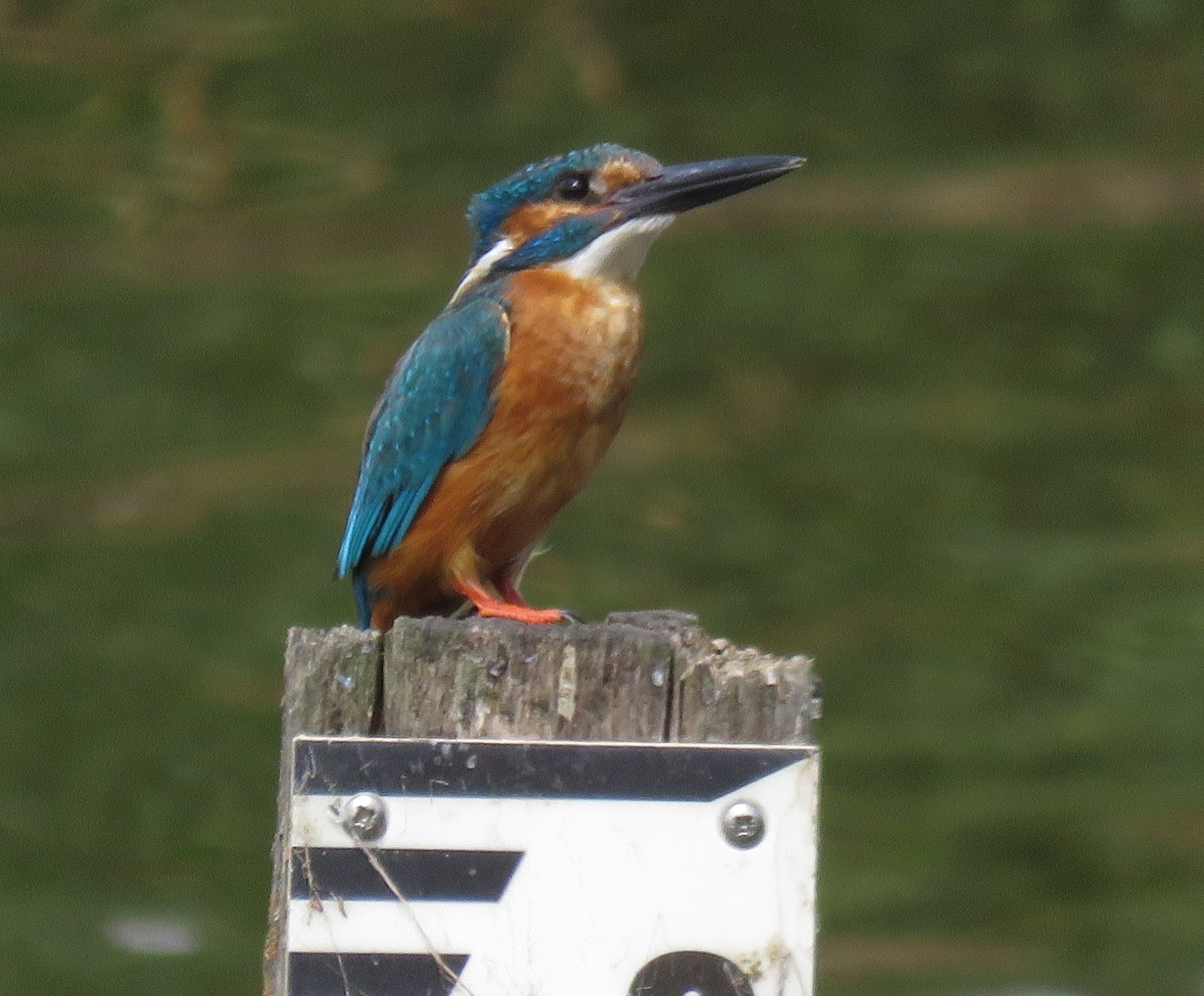
Ben (one of Strumpshaw's wardens) arrived as I was writing up today's sightings up on the board. He managed to spot a pair of garganey out on the broad, but they were behind the reedy islands and out of sight by the time I was able to join him. Typical! I kept a watchful eye out for them, hoping that they would reappear, but to no joy. I did, however, had more luck seeing a swallowtail fly over the broad and over the egrets. With such a warm summer, it has brought out the second brood of these fantastic butterflies. I was also lucky enough to see a kingfisher making two visits to the perches and post at the water's edge at the front of the hide.
 |
| 'Fish Graveyard' |
One corner of the broad has become a bit of a fish graveyard. Large bodies of pike float at the surface. While these hot conditions are good for insects, swallowtails included, it has different impact on fish. This broad is full of pike, most of them are really big and these large individuals prefer living near the bottom. As the water heats up for many weeks in the continuous summer sunshine, most of the oxygen in the water collects closer to the surface, leaving the water near the bottom of the broad to stagnate and for these larger bottom-dwelling fish to suffocate to death. It is a sad sight, but there is a plus side (hopefully). In previous years in which many of these predatory fish died out due to similar conditions, it left many of the smaller fish to thrive and by the following year, a boom in numbers of birds such as bitterns happened. Maybe this is just what we need?
 |
| One of the dead Pikes |
 |
| Mallard feasting on a dead Pike? |
While staring at the dead pike, I noticed that it was attracting the curiosity of the local mallards. The more I watched, the more I took note that these dabbling ducks were in fact feasting on the fish. Were these largely vegetarian wildfowl trading their diet for a fishy one? I doubt it. Their bills are not designed to tear off flesh. However, I think what they were eating were the scales not the fish itself. Just like giving a cuttlefish bone to a pet budgie, I think these ducks were pecking off the scales for calcium. Calcium is an important ingredient in developing new feathers and as these mallards were moulting, appearing rather scruffy, this could be a better guess than any.