Friday, 2 July 2021

My 2021 Bird List So Far (Update)

It has been a while since I last updated my bird list that I've been doing this year. There wasn't too many birds around in Norwich that I hadn't added to the list already. Though, there were a few I missed out on since my last update, such as a corncrake (that was heard only), a rosy-coloured starling (briefly), ospreys, a black-tailed godwit, lesser whitethroats, a ring ouzel and black terns to name a few. However, since lockdown lifted a couple of months ago and that we could travel the country more, I decided to make an extension list to include birds outside of Norwich. So below is my Norwich list followed by a Norfolk+ list that continues my tally.

Norwich
  1. Mute Swan
  2. Pink-footed Goose
  3. White-fronted Goose
  4. Greylag Goose
  5. Canada Goose
  6. Barnacle Goose
  7. Egyptian Goose
  8. Mandarin
  9. Gadwall
  10. Teal
  11. Mallard
  12. Shoveler
  13. Pochard
  14. Tufted Duck
  15. Scaup
  16. Goldeneye
  17. Smew
  18. Pheasant
  19. Little Grebe
  20. Great Crested Grebe
  21. Grey Heron
  22. Little Egret
  23. Cormorant
  24. Red Kite
  25. Sparrowhawk
  26. Buzzard
  27. Kestrel
  28. Hobby
  29. Peregrine
  30. Water Rail
  31. Moorhen
  32. Coot
  33. Oystercatcher
  34. Lapwing
  35. Snipe
  36. Woodcock
  37. Curlew
  38. Common Sandpiper
  39. Kittiwake
  40. Black-headed Gull
  41. Little Gull
  42. Common Gull
  43. Lesser Black-backed Gull
  44. Herring Gull
  45. Yellow-legged Gull
  46. Great Black-backed Gull
  47. Common Tern
  48. Rock Dove/Feral Pigeon
  49. Stock Dove
  50. Woodpigeon
  51. Collard Dove
  52. Ring-necked Parakeet
  53. Cuckoo
  54. Barn Owl
  55. Tawny Owl
  56. Swift
  57. Kingfisher
  58. Green Woodpecker
  59. Great Spotted Woodpecker
  60. Magpie
  61. Jay
  62. Jackdaw
  63. Carrion Crow
  64. Blue Tit
  65. Great Tit
  66. Coal Tit
  67. Long-tailed Tit
  68. Skylark
  69. Sand Martin
  70. Swallow
  71. House Martin
  72. Cetti's Warbler
  73. Chiffchaff
  74. Willow Warbler
  75. Sedge Warbler
  76. Reed Warbler
  77. Grasshopper Warbler
  78. Blackcap
  79. Garden Warbler
  80. Whitethroat
  81. Goldcrest
  82. Wren
  83. Nuthatch
  84. Treecreeper
  85. Starling
  86. Blackbird
  87. Song Thrush
  88. Redwing
  89. Mistle Thrush
  90. Robin
  91. Black Redstart
  92. Whinchat
  93. Stonechat
  94. Dunnock
  95. Yellow Wagtail
  96. Grey Wagtail
  97. Pied Wagtail
  98. Meadow Pipit
  99. House Sparrow
  100. Chaffinch
  101. Greenfinch
  102. Goldfinch
  103. Siskin
  104. Linnet
  105. Lesser Redpoll
  106. Bullfinch
  107. Reed Bunting
Norfolk+

108. Brent Goose
109. Shelduck
110.Wigeon 
111. Red-legged Partridge
112. Spoonbill
113. Bittern
114. Great White Egret
115. Marsh Harrier
116. Crane
117. Avocet
118. Ringed Plover
119. Sanderling
120. Dunlin
121. Black-tailed Godwit
122. Redshank
123. Turnstone
124. Sandwich Tern
125. Rook
126. Marsh Tit
127. Bearded Tit
128. Spotted Flycatcher
129.Wheatear
130. Corn Bunting
131. Roller

Obviously, there had been more birds outside of Norwich that I've missed than in Norfolk. But when you don't have a car and rely on public transport and others offering lifts, like I do, it is really difficult to get around to see them. If I did, I expect I'd have reached 200 species by now. As much as I would have loved to have seen the marsh warbler at Kelling or the bee-eaters in Great Yarmouth, they will have to remain on 'Missed Out On' list like many other species. Hopefully, I will get back into continuing this list very soon (especially once the Euros are over!) and reach my goal of 200 species (inside or outside of Norwich) by the time the year ends. 

Wednesday, 30 June 2021

Summer Of Colour

 June 2nd Strumpshaw Fen

Swallowtail season was upon us. Visitor numbers has grown significantly at Strumpshaw, all after this rare British butterfly. I've already lost track on how many times I've been asked about how and where to find them. However, they have been late this year due to the cold spring we have had. There has been frosts well into May and this has set the swallowtails back by a couple of weeks than normal. And it isn't just swallowtails, the meadow trail has only just opened up to the public and there's barely any flowers in bloom there. The ditches, broads and the river were only beginning to stir with dragonfly life. It has been a rather strange spring indeed and possibly a rather worrying sign of things to come in this ever warming world.

Grasshopper Warbler, Marsh Harrier & Mallard and ducklings (June 2nd)
and Sunrise at Catton Park (June 6th) 

The birds were fairly active at least. At Fen Hide, I watched marsh harriers bringing in clumps of vegetation to build their nests with the males passing it over to their mates. Meanwhile, bearded tits were busy pinging away and providing the odd glimpse of themselves before vanishing back into their reedy world. Leaving the hide, I encountered two male cuckoos fly over me chasing one another into some trees left of the hide. Not far away near the alternative entrance to the meadow trail, the sound of the long-winded reeling of a grasshopper warbler resonated from some shrubs and after some searching, I managed to find this secretive bird. It was showing rather well and long enough to get a few photos of it. 

Back at Reception Hide, it was a very busy and at times, stressful morning as I tried to keep up with the orders of coffees, teas and snacks. When I did have time, I did manage to spot a few bearded tits, marsh harriers, a brief flash of a kingfisher, a common tern, cormorant, herons, swallows, swifts and a family of mallards with 10 ducklings.

June 6th Catton Park & Whitlingham Broad

My 6th dawn chorus of the year and I decided to return to my local park to experience it. Arriving at 4:30am, it was already light with blue skies despite the sun still rising above the horizon. The birds weren't quite as loud as they have been in the last few months, but there were still plenty singing. Wrens, blackbirds and song thrushes were the most vocal, but there were also blackcaps, goldcrests, dunnocks, blue and great tits, goldfinches, chaffinches, stock doves, a white throat and a drumming great spotted woodpecker.


The real highlight of the morning though occurred while I was sitting on a bench by the pond when suddenly I heard a commotion in a group of oak trees very close by. Many corvids, including jackdaws, magpies and carrion crows, were mobbing something and were making quite a raucous. At first, I thought it was a bird of prey, but when I went to take a better look, I noticed a fox with something like a pigeon or something in its mouth trotting casually through the long cover of buttercups all the while withstanding the attacks of the bombarding corvids. I have never seen a fox at this park before and it was making the most of the quietness as there wasn't a single dog walker or runner in sight at this early time in the morning.

Returning from what was a fun dawn chorus walk, I wasn't done just yet. A few hours later, I went out with Mum for another walk, this time around Whitlingham Broad. I heard more than what I could see with a calling cuckoo being the main highlight out of the mini chorus that included about 6 species of warbler. However, the walk was overshadowed by the weather as the hot, sunny spell was suddenly replaced by approaching black clouds that blocked out the clear blue sky and threatened to turn stormy. Thankfully, the rain held off until we got home.

June 9th Strumpshaw Fen

Another hot Wednesday and the chances of swallowtails was pretty high. People across the country were making their way to Strumpshaw, though maybe not as many as previous years due to Covid restrictions. It took until after my morning walk for me to actually see one myself as it briefly flew over the nectar garden without stopping. That was pretty much it though. These butterflies were proving very elusive and few and far between this year. 

Before the sighting though, I had 2 hares on a field on my way to the reserve, my first tweyblades of 2021and a single southern marsh orchid on the meadow trail. At Fen Hide, a cuckoo was singing from a dead tree close to the hide, producing some interesting 'bubbling' sounds. I also saw bearded tits and marsh harriers there as well. At Reception Hide, a bittern flew by from right to left over the back of the broad. 

June 16th Strumpshaw Fen

The hot weather continues to soar and the chances of swallowtails grew even more than it was the week before. This time I was fortunate to see one by the river at the top of Sandy Wall and I nearly stepped on it as it snuck in without me noticing to bask on the ground! At the end of my shift, another turned up at the nectar garden and I was lucky enough to get one good photo of it.

Swallowtail & Poppy Field (June 16th), Roller (June 27th) & Otter (June 30th)

Dragonflies were everywhere this morning. I lost count of how many species, but they include Norfolk hawker and red-eyed damselfly. Southern marsh and common spotted orchids were starting to dot the landscape of the meadows and the sand cliff area, but not in great numbers just yet. On the way back to Brundall to catch my train, I had just a little bit of time to admire the magnificent display of red poppies planted in a field.

June 23rd Strumpshaw Fen

Not one of my best days at Strumpshaw. I was looking for a barn owl that was apparently hunting by the pumphouse and I wanted to find it for my Strumpshaw 45 challenge. I made my way through the meadow trail and along the river to find it, finding a cuckoo along the way. However, whilst making my way there, the horseflies began to swarm around me and were landing on my body. My trousers and fleece were protecting me from their bites for the most part, but they were still making me panic and in the end, I abandoned my search for the owls and legged it into the woods.

I made a quick change into shorts before my shift as it was a nice day (the first decent day in a week) and I made sure to dose my legs with repellent to keep the horseflies at bay. But the horseflies were soon replaced with coffee hell as I was in charge with making the hot drinks and gathering the snacks. By lunch time, I didn't really had time to look for wildlife as the orders were coming in fast. The supplies were extremely limited and running out really quickly. There was a point where I had to make a new batch of coffee, but forgot to put a flask under the machine to fill it up. So in a panic, I picked up the nearest flask, which happened to have a little bit left instead of the clean, empty one beside it and the coffee overflowed onto the counter! This is why I don't drink or make coffee at home! The few highlights during a very busy shift was a common tern, a very fleeting glimpse of a swallowtail, marsh harriers, marsh tit and a variety of bees, wasps and a longhorn beetle in the nectar garden.

June 27th Lackford Lakes

In the past week, the east of England has been invaded by colourful, exotic-looking birds. A flock of nine bee-eaters were attracting a lot of attention in Great Yarmouth, while a collard pratincole (a beautiful plover-like wader) was at Hickling Broad. Down in Suffolk, meanwhile, a roller had been staying just south of Icklingham for a few days. I would love to have seen either three of these species, however the bee-eaters had moved on and the pratincole was also likely to have disappeared on the one free day I could travel. The roller was the one I really wanted to see though. I managed to convince my parents to take me on the long drive into Suffolk to see it and as soon as we got to the spot, it wasn't long until we found the crowd indicating its presence.

The scene was like a mini music festival, with the roadside to a field jam packed with people and cars. We somehow found a spot to park right by the crowd of twitchers armed with cameras and scopes and as soon as I got out of the car, I found the roller sitting on a wire immediately! Despite being slightly distant, I could still make out its colourful blue-lilac plumage. It was also the size of a jay, which made it easier to spot. Rollers are scarce migrants to the UK that winters in Africa and breeds in southern and eastern Europe and is easily a crowd pleaser. This was the 4th day this bird has been here and I was thankful that it was still around so that my journey wasn't a wasted one.

After the roller, we moved on to Lackford Lakes just down the road and spent the rest of the visit to Suffolk there. I noticed that on the sightings board that a glossy ibis was around. Sadly, when I went to the area where it supposedly was a couple of times, I kept missing out as it kept hiding behind vegetation whenever I turned up. No ibis, but I was more fortunate in seeing a hobby, oystercatchers, lapwings, little and great crested grebes, tufted ducks, cormorants, common terns, beautiful displays of biting stonecrop and viper's bugloss and heard a cuckoo and a kingfisher.

June 30th Strumpshaw Fen

The last day of June and it was a bit rubbish with dull, grey clouds and some rain. Despite this, I did get to see a few cuckoos this morning as well as an otter catching an eel in front of Reception Hide and marsh harriers and a sparrowhawk. After what happened last week, I was surprised to see that there was a new addition in the hide as there is a brand new coffee machine on the counter. This means we now serve lattes, flat whites, etc with a simple click of a button. We still have the filter coffee as an option, but as everyone wanted the fancier stuff, I didn't have to worry in making a mess like I did last Wednesday.

Monday, 31 May 2021

Good To Be Back (Again)

 May 2nd Whitlingham Broad

For this year's International Dawn Chorus Day, Dad and I got up at 3:30 am to experience it at Whitlingham Broad. The moon was magnificent when we arrived at 4am as the sunrise was just a dim glow in the east and a thick mist covered the broad. The wildfowl, including the Mandarin duck, were like silhouettes by the broad's shoreline, disturbed by my sudden appearance. 

Dawn Chorus Day at Whitlingham with Common Sandpiper

Reed warblers, sedge warblers and reed buntings were singing in the dark alongside the sounds of ducks, geese and the wrens, robins and thrushes. However, the star of the show at this early hour were tawny owls. Walking along the river, several owls were hooting close by. I managed to make out a silhouette of one perched amongst the branches of a tree. The light gradually got brighter as I continued down the river and more and more birds added their voices to the chorus like chiffchaffs, blackcaps and willow warblers. In one bush, I could hear a bird that sounded similar to a blackcap but with longer phrases and wasn't quite as loud. I believed this was a garden warbler.

We stopped to watch the sun rise out behind the largest cloud like a glowing crown of gold above the heavily misty lake of Thorpe Marshes. The Great Broad of Whitlingham behind us was, in comparison, was extremely thick with mist but was soon blasted away by the blinding light of the rising sun. Following the light's direction as we made our way back to the car, common terns emerged from the gloom, a kingfisher perches right in front of us and a heron blocks our path. To end things full circle, a pair of common sandpipers were feeding by the shore, but the Mandarin was now gone after completing its nap. 


This was a good 5th dawn chorus of the year, providing me with three new birds for my list (reed warbler, garden warbler and common sandpiper), taking me to 102 species in and around Norwich. I was a little disappointed that I didn't hear any cuckoos, but the tawny owls more than made up for it. Seven more dawn choruses to go.

May 3rd Earlham Marshes

I was informed that a blue-headed wagtail and a little ringed plover had shown up at Earlham Marshes. It was just too good for me to miss, so I went for a look. To my surprise, my birder friend, David, was there as well as a couple of other birders. There was no sign of the birds I was after, but together, we did find a yellow wagtail. Blue-headed wagtails are just a race of yellow wagtails anyway and either way, it was still a new one for my list. 

Yellow Wagtail & Whinchat (May 3rd), Sandwich Tern (May 9th) & Garden Warbler (May 10th)

David was telling me that a whinchat and a ring ouzel had been seen in a field behind the marshes. I followed a young birder down to a group of his young birder friends and a couple of more senior birders at the spot the whinchat was last seen. It wasn't long though until I managed to spot the bird and it posed for me atop of some small trees like a Christmas tree angel with its striking white supercilium quite visible above its eye. Sadly, there was no sign of the ring ouzel, but there were plenty of linnets, stonechats and whitethroats. Back at the marshes, the young birders pointed out a hobby and some swifts, both new to my list. I also saw 2 common gulls, a couple of mallard families with many ducklings between them, 2 little egrets and swarms of swallows and house martins. 

May 6th Strumpshaw Fen

A horrid morning to visit Strumpshaw again as it was throwing it down with rain. Dad had dropped me off while he went to the recycling plant nearby, but would eventually catch me up during my walk with his umbrella in hand. I, on the other hand, didn't have an umbrella and was absolutely soaked. Because of the awful weather, there wasn't too much to see. Continuing my Strumpshaw 45 tick list, I only managed to tick off a cuckoo that I could hear calling in the woods. The bluebells weren't quite in full bloom yet to create the dazzling display that I had on my list, so I couldn't tick it off just yet. The only other highlight of this soggy walk was herding a pair of swans that were in the way at the sluices as we made our way to and from the Tower Hide like a pair of shepherds.

The next day after this forgettable walk, I had a very important visit to a clinic to get my second Covid jab. So, I am pleased to say that I am fully vaccinated!

May 9th  Titchwell

A glorious day after a week of almost constant rain. It was so nice that my parents decided to take me out to Titchwell for the first time since November. When we got there, I could hear a bittern booming from the car park. The hides were all closed still, but the benches overlooking the pools were the next best thing. The sky was full of birds including a hobby, a red kite (we also saw 2 on the drive up to the reserve), marsh harriers and swarms of house and sand martins, swallows and swifts. The reed beds was buzzing with the sound of reed, sedge, willow and Cetti's warblers and reed buntings, while the pools themselves had avocets, sandwich and common terns, 2 black-tailed godwits, 2-3 redshanks, shelducks, brent geese, gadwall, linnets and a mother mallard with ducklings.

On the beach, a gathering of turnstones, dunlin, sanderling and oystercatchers were making the most of the exposed seaweed before the incoming tide covered it up once again. I also saw a siskin, a Chinese water deer and a possible bearded tit. Before heading home, we made a short stop at Choseley Barns in the hope of dotterels, but only saw hares, and red-legged partridges and heard a corn bunting instead.

May 10th Thorpe Marshes

I was intrigued to find out if there were anything new to see at Thorpe Marshes since my last visit. As I made my way across the railway bridge and halfway down the steps to get onto the reserve, I discovered a garden warbler singing in a bush that was beside the bridge. It moved around quite a bit, but I still managed to get a couple of great photos of this elusive warbler that's usually tricky to see in full view. Nearby, a grasshopper warbler was reeling somewhere close by but failed to show itself. A kestrel was busy hunting over the marsh, while the swifts, swallows and martins swirled high above. There was one new addition to my list in the form of a cuckoo flying past me. The lake was fairly quiet with nothing too out of the ordinary other than 2 common terns, tufted ducks, a pochard, swans, a great crested grebe, gadwall and a cormorant.

May 12th Strumpshaw Fen

My final visit to Strumpshaw as a visitor before I am allowed back to volunteer in another week's time. It was a vast improvement in the weather compared to the previous week in the rain as it was rather summer-like. The hides are yet to reopen to the public, so I was glad that it wasn't raining this time around. 

From Reception Hide, I was greeted with the sight of 4 hobbies hunting insects on the wing together. In the woods, the bluebells were finally in full bloom, forming a mini blue carpet in one small corner of the reserve. Whilst admiring the bluebells, a small bird perched atop of a long stump-ended trunk of a double-trunked tree. It was a spotted flycatcher! This was the best view I've had of one at Strumpshaw and I was able to get a couple of photos of this charming little bird with a squeaky wheelbarrow-like call. Now I just want to find one in Norwich for my main list.

Spotted Flycatcher (May 12th), Marsham's Nomad Bee (May 18th), Ruby-tailed Wasp (May 19th), Wheatear (May 22nd) & Blue Tit (May 26th) 

I added more ticks to my Strumpshaw 45 challenge sheet, though the majority of them were birds that I only managed to hear this time, which included treecreeper, bearded tit and kingfisher as well as a cuckoo, water rail, a garden warbler and a grasshopper warbler (the latter two not actually on the list). Also seen today was a great white egret, common terns, marsh harriers, lapwings, a Chinese water deer, common terns, a pair of swans with cygnets and many butterflies and damselflies.

May 18th Mousehold Heath

It had been a long time since the last group walk to be held at Mousehold. I was handpicked for an experimental walk today. I joined a small group led by Will (the warden) and Peter (our wildlife guide) and three other very familiar faces. We spaced ourselves out a bit to meet the social distancing guidelines, but was still able to enjoy the wildlife together.

Highlights include; a bank vole (that ran in front of me on the way to meet up with the group), a Marsham's nomad bee, buzzards, hearing a garden warbler and seeing a red kite soaring high in the clouds (the 2nd ever recorded at the site). The weather was good up until a rumble of thunder suddenly threatened our walk out of nowhere. It then started to rain during our lunch break and as we had to keep outside, we got a little damp. I had to leave due to this as I had to walk home before it got extremely worse, but while making my way home through the heath, the rain stopped and the sun came out with very warm sunshine that dried me out fairly quickly.

May 19th Strumpshaw Fen

I have returned! My first shift at Strumpshaw since just before New Year's and before lockdown came into place. This was my 10th year as a volunteer here and it was good to be back. With this being the week that many indoor public places such as theatres were allowed to open again, so too were the reserve's hides. Fen and Tower Hide have now reopened, though to a limited capacity and you need to wear a mask inside. For now, Reception Hide operates like it did when I was last volunteering here with me and my colleague the only ones allowed inside. I was back on coffee making duties once more.

It was nice to pre-shift routine once again. Travelling on the train, walking to the reserve, walking around the reserve, sitting in the hides and filling up the bird feeders, I had missed it all! The birds were more active at this early time of day and I enjoyed hearing several cuckoos and grasshopper warblers singing all over the place in what seems to be a bumper year for these two species at Strumpshaw, while bearded tits and marsh harriers were making themselves known from Fen Hide. I watched a pair of harriers do a food pass, which reminded me that life continued here while I was away. I also saw a linnet and had good views of a Cetti's warbler. 

My back was in agony from a long shift at work at the Royal Mail sorting centre a couple of days ago, in which I believed to have pulled a nerve and during my first shift inside the Reception Hide in ages, it really was playing up. Just sitting and scanning with my binoculars was enough to annoy my back. Despite the pain though, I continued to make the coffees and watch the wildlife outside. Around lunchtime, the sky suddenly turned black as a storm was approaching. The air felt cold and as if it was being sucked upwards and many rumbles of thunder were heard, getting louder and louder and there was even the odd flash of lightning. During the storm, swallows, swifts, house martins, black-headed gulls, a common tern and 2 hobbies swooped and swirled over the broad and once the storm calmed, I saw a cuckoo sitting on a stump on the far side. This scene was was like a good representation of how I felt returning to volunteering today and the way my back was feeling.

May 22nd Cley

While my back was feeling slightly better, I went out to Cley with my parents. It was still causing some discomfort, so we didn't stay for too long. Only one hide was open due to a pair of marsh harriers nesting nearby to the three central hides. There wasn't much on the pools anyway other than a few avocets, shelducks, a large swarm of swifts, swallows and sand martins and a herd of cattle. Apparently, there were 3 whimbrels and a short-eared owl at Arnold's Marsh. All I could find were a flock of curlews, a couple of turnstones, dunlin, redshanks, sandwich terns, a wheatear and some nesting avocets, but no whimbrels or owls.

May 26th Strumpshaw Fen

I was having a week off work to give my back some time to recover. It is now much better than it was, though a little bit of pain still lingers. Today's shift at Strumpshaw was my first big test for my back  and by the end of my shift, it was achy but not giving me too much agony. The morning started really nicely with bright sunshine, though a tad chilly. On the way to the reserve, I startled a hare into running on a nearby field, but as it was not on the reserve itself, I couldn't tick it off for my Strumpshaw 45 challenge. At the reserve itself, I managed to spot a cuckoo, a few bearded tits and had a very brief glimpse of a grasshopper warbler that was reeling in a bush close to Sandy Wall. 

When I returned to Reception Hide, I learned that there had been a white-spotted bluethroat (pretty much a robin with a blue throat) that had been seen or heard for the last 3 days and apparently it was still around this morning. However, it was all rather hush hush and no one was telling me anything when I met a few groups of people who seemed to be returning from looking for it. By the time I went to check for it myself, the weather turned and was a bit blustery. Most of the birds at this point were now less vocal with birds like the grasshopper warblers and cuckoos being mostly silent. It seems this bluethroat is most likely more active during dawn and dusk if I wanted to see it. The best I could muster was a lizard, hobbies, marsh harriers and another cuckoo.

May 28th Thorpe Marshes

The weather was too nice to go to waste and so I went over to Thorpe for a few hours. I was here on my own, but I ended up unintentionally tagging along a guided group walk that I met along the way round. The highlights being a family of stonechats, a pair of common sandpipers, buzzards, a heron, lapwing, a couple of tufted duck and great crested grebes, swifts, whitethroats, reed, sedge and Cetti's warblers and, after leaving the group for a second walk around the reserve, linnets and little egrets. There were also a few interesting plants in flower such as ragged robin and yellow flag iris.

Friday, 30 April 2021

The Quest For Bird 100

 April 5th Whitlingham Broad

The end of March was very summer-like with what was like a mini heatwave. The start of April was the complete opposite as it became winter again with light snow and hail showers and strong chilly winds. A very strange time to look for spring migrants at Whitlingham Broad. I began the month on 90 species of bird on my Norwich year list, needing only 10 more for my 100th. Could anything be arriving in these wintery conditions, I wondered. However, within the first few minutes of scanning the broad, that I was in for quite a surprise. Flying over the broad in great numbers was a swarm of swallows, house and sand martins. Three species that recently travelled from the heat of Africa only to arrive into Arctic-like conditions. How alien must it feel to them? 

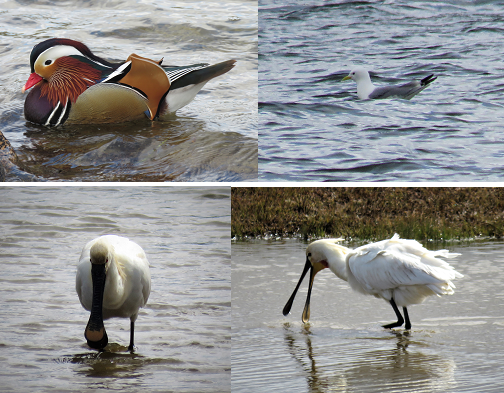
My list grew to 93 already and after I turned from the view of the hirundine (that's the family swallows and martins are from) swarm, I made it 94. Amongst the swans, ducks and geese that hang around near the car park area was a male mandarin duck. I've never encountered this exotic bird here before despite hearing it regularly comes in to roost most days. Despite being non-native, I was delighted to add it to my list. A chilly walk around the broad later, we met up with another birdwatcher who pointed out my 95th bird out on the broad. Actually, it was two, as two kittiewakes floating on the broad's surface that appeared similar to that of the sea these birds were more accustomed to. I've never thought I'd find these gulls this close to Norwich. It left me with 5 more to go and the month had only just begun. Other highlights of this visit included a kingfisher, siskins, buzzards, great crested grebes and tufted ducks.

Mandarin & Kittiewake (April 5th) and Spoonbill (April 11th)

April 9th Thorpe Marshes

On the day that Prince Philip died, I was out at Thorpe Marshes wading through ankle-height flood water. That's right, it had flooded again. And though the floods weren't as bad as it was over winter, I still went home with some damp pair of boots. At least the weather was warmer, though it did end up drizzling with rain. On the plus side, I did hear my first willow warbler of the year, making it 96 species. I also heard sedge warblers, blackcaps, chiffchaffs and a water rail and saw a few swallows, 3 buzzards, a little gull, 2 courtship displaying great crested grebes, an oystercatcher, a heron, tufted ducks, teal and gadwall.

April 11th Cley

For the first time since December, I was finally out of Norwich. With lockdown restrictions easing, I was allowed to visit the coast without the fear of being handed a fine. Cley was technically still closed to the public and was a day away from actually doing so, but you could still could use the car park and walk to the beach. As Mum and I made our way to the beach via the East Bank, the weather suddenly became Arctic-like with icy winds blasting us, causing our faces to feel numb, followed by rain, then hail and then sleet with large snowflakes. We took refuge in the shelter at the opposite end of the East Bank feeling cold and wet. A short while later, it became bright, warm and cheerful again. 

Bird-wise, we had a relatively close encounter with a spoonbill as well as seeing avocets, redshanks, dunlin, 2 ringed plovers, shelducks, rooks and a host of other birds that were already on my Norwich list. Because we were far from the city, these 7 mentioned birds can not go on my official list, but I will include them to an extension list (a side list in other words). So I'm technically on 103 birds seen or heard this year, but only the 96 city species count.

April 16th Thorpe Marshes

A week since my last visit to Thorpe, the floods had completely dried up (which made me feel foolish for wearing wellies this time). However, it was a fairly disappointing visit as there wasn't anything new to add other than a couple of sedge warblers, 2 kingfishers, an oystercatcher, 2 little egrets, tufted ducks, great crested grebes, buzzards and a lot of gulls.

April 19th Norwich and Mousehold Heath

My 4th dawn chorus walk of the year was highly interesting. I decided that my walk for April would be along the River Wensum, taking me through the city before heading north to Mousehold Heath. Basically a big circuit looping back to my flat. I arrived at New Mill Yard at 5:20am, listening to blackbirds, robins, wrens, blue tits and a possible redwing along the way. It was light enough to see when I got to the mill and I was greeted by the sound of a singing grey wagtail. It took a while to actually spot it sitting on the lower side of the river wall. I saw another one further along by Fye's Bridge as well as 2-3 kingfishers, a pair of Egyptian geese with a gosling, a cormorant and several lesser black-backed gulls.

After success along the river, I moved on uphill to Mousehold. Blackcaps and chiffchaffs added their voices to the chorus with the more regular common woodland birds, including drumming woodpeckers. Sadly, there were no willow warblers as I was hoping. On top of that, the majority of the gorse bushes looked rather brown and dead. A very sad sight that reminded me of bleached coral reefs due to global warming. There just haven't been enough rain to keep these bushes green and yellow. A slight downer to what was a great dawn chorus walk, especially while by the river.


April 21st Whitlingham Broad

One group of birds I'd thought I'd see by now were terns. I was starting to wonder when they would show up. So, on this walk around the broad, I was very happy to finally see some sitting on buoys and flying over the water. I think they were mostly all common terns, but there was at least one that seemed to be bigger with longer tail streamers. Could this be an Arctic tern? I know that they have pure red bills and common terns have a black tip to theirs, but I just couldn't get a clear enough view to be certain. I felt it was safer not to include it to my list. 

While the terns were causing me headaches over which was which, there was at least one new addition that was nice and simple to identify with complete confidence. Whitethroats have arrived and I found a couple that were singing their scratchy ditty during this visit. I also came across the Mandarin duck, sedge, willow and Cetti's warblers, swallows, house and sand martins, chiffchaffs, blackcaps, a kingfisher, tufted ducks, great crested grebes, linnets and a heron. A very productive morning, though rather chilly due to a strong, blustery wind.
Common Tern & Little Gull (April 21st) and Crane (April 28th)


April 22nd Mousehold Heath

For the first time since 2019, I helped out Will the Mousehold Heath warden with a bird survey. Around the pitch and putt side of the heath, we noted down on a map all the birds we hear or see and any nest sites we find. Blue and great tits, robins and wrens dominated the survey with blackbirds, blackcaps, chiffchaffs, greenfinches, chaffinches, long-tailed tits, coal tits and the odd dunnock, goldcrest, treecreeper, buzzard, kestrel, and house sparrow also recorded. We also found a sparrowhawk nest site with both adults making a lot of movement in a pine tree and we encountered 4 muntjac deer.

April 23rd Thorpe Marshes

A third visit to Thorpe this month and an improvement to the week before as I heard my 99th bird. Making my way over the railway pedestrian bridge, I instantly heard the distinctive reeling of a grasshopper warbler! These birds are very elusive to see, so I was happy to just hear one at least. At least the whitethroats and sedge warblers were more showy. 

I was hoping to see more terns here, but in the end only one common tern appeared amongst the large gathering of gulls over the broad. Also seen were reed buntings, linnets, mute swans, greylags, Canada geese, 2 lapwings, Cetti's warbler, a great crested grebe swallowing a large fish, tufted ducks, gadwall, teal, a few ducklings and a stock dove.

April 26th Catton Park

Not much to add from the park this month, though I think I heard a whitethroat that was singing in extremely brief outbursts that lasted about a second before going silent again. Buzzards, sparrowhawks, a kestrel and 2 greylags (flying high over) and the yaffle of a green woodpecker were the only main highlights. On the plant side of things, I found a patch of few-flowered garlic that smelt heavily of onions and in the woods, the bluebells are starting to bloom while the wood anemones are now wilting.

April 28th Strumpshaw Fen

Since the end of December, I'm finally back at Strumpshaw. However, I'm only here as a visitor and not as a volunteer. It will be another couple of weeks until I can resume my duties here again. For now, I wanted to do the Strumpshaw 45 challenge I had made a tick sheet for and had planned on doing since the first lockdown last year to celebrate Strumpshaw's 45th anniversary. Just like 5 years ago when we were celebrating the reserve's 40th, I will be searching for the original 40 species I had to find plus 5 more that I have chosen myself. Unlike last time though, I will not try to photograph them all and will just tick them off if I've either seen or heard them.

My Strumpshaw 45 tick sheet  and Common Lizard
Better late than never, I made up for lost time and ticked off 15 of them. These 15 were; jay, marsh tit, water rail (heard only), marsh harrier, goldcrest, Cetti's warbler, teal, Chinese water deer, candlesnuff fungus, scarlet elfcap fungus, water flea (the water of the ponds we so clear that I didn't need to scoop them out to see them), a hobby, great crested grebe, common lizard and ash tree. I left with a great haul, but there were a few bonuses. I startled a grass snake in the woods, heard reed, sedge, Cetti's and willow warblers, saw a whitethroat, swallows and house martins, common terns and, best of all, a crane that flew in front of the Reception Hide and were heard bugling across the reserve. It was good to be back and I can't wait to return to my voluntary duties in time for the swallowtail season.

April 30th Earlham Marsh, Earlham Park & The U.E.A Lake

A rather damp end to the month as I went for a walk around Earlham Marsh, Earlham Park and the U.E.A Lake on my own. As I started my walk into the marshes after being dropped off, it began to rain and continued doing so until after I left for home. The marshes (in which the large pools have now disappeared into muddy marshland) provided most of the bird action of the day, but nothing new to give me my 100th bird. The best I got were 2 little egrets, reed buntings, sedge warblers, swallows and house martins, mallards, mute swans and a moorhen on a nest. I tried really hard to seek for any waders and searched every tree, etc near the marshes and also in the park for little owls, but found nothing. The U.E.A lake had a couple of common terns, swallows and great crested grebes with 4 chicks. 

Plant List Update

And so, here is where my plant list comes to an end. I have made a full year (more or less) of plant hunting around Norwich. There isn't too much to add that I haven't found from last year at this point. The cherry trees near my flat are bright pink with blossom, leaves are starting to appear on most of the trees in my neighbourhood and bluebells are blooming everywhere now. Other than the few-flowered garlic, I've found honesty, cowslip, primroses, groundsel, ground ivy and forget-me-nots.

Wednesday, 31 March 2021

Birthdays & Birds

 March 1st Whitlingham Broad

An early evening walk around the broad in the fading light provided 2 new species for my list to kick off March with. From the river, I could see a flock of shovelers feeding on the edge of the lake of Thorpe Marshes and sleeping on the floating platforms of Whitlingham Broad were two oystercatchers. I also saw siskins, herons, cormorants, little and great crested grebes and the usual wildfowl.

March 4th Norwich

I had a surprise phone call from my friend David who lives around the corner from me. He was calling me because he had a black redstart outside his house. A couple of minutes after the call ended, I arrived on the scene and met up with him. It wasn't long until the bird itself was spotted posing on one of David's neighbour's roof. The bird was female with a more greyer plumage and an orange-red tail, bobbing and tail flicking like its cousin the robin. In Europe, these birds are common garden birds, but here in the UK, they are much scarcer and found more in industrial sites. I have seen black redstarts in the city centre of Norwich, but this is the first time I've seen one this close to home. A very special addition to my list.

Black Redstart (Top two - March 4th) & Stonechat (March 5th)

March 5th Thorpe Marshes

With the floods subsided and the mud dried up, it was a remarkable transformation since the last time I've visited Thorpe Marshes back in January. However, it was a bit of a less memorable visit this time around. Other than a few stonechats, there wasn't much around and nothing new for my list.

March 7th Marston Marshes

This was an eventful weekend. On Saturday (March 6th), my sister-in-law was rushed to hospital to have an emergency C-section and my second niece was born 6 weeks premature. Her name is Willow and will be in an incubator until she is big enough to leave. It was quite a shock when I heard the news and a bit worried for both mother and child. Due to the Covid restrictions, no one other than my brother can go see either of them.

For the time being, there was nothing I could do but to take my mind off things. The best medicine for that is birdwatching. Thankfully, I was told that a new scarce bird had arrived on the other side of the city for me to find. A Russian white-fronted goose was reported at Marston Marshes (a few days after a lesser white-fronted goose was seen at Whitlingham Broad), a very rare bird to be hanging around so close to a city. 

White-fronted Goose & Ring-necked Parakeet

I wasn't sure of where to go as it has been a long while since I've been to this place, but after meeting some helpful people, including a photographer, I was soon pointed in the right direction. I followed the stream until it met the river and met another photographer and the goose itself. This was the closest I've ever gotten to a white-fronted goose. Usually they are shy of humans and often distant, but this one was just standing there on the opposite side of the stream showing no fear of our presence. It seemed too easy! 

As well as the goose, there were a few ring-necked parakeets here (the second site in Norwich that I've discovered so far), a little egret, siskins, reed buntings, mistle thrush, a kestrel, buzzards and a red kite, which was really high and near the sun to the point where I could only make out the shape and briefly saw a fork in the tail, though not so obvious. Apparently, I missed out on a woodcock that was accidently flushed out of the undergrowth 15 minutes before I saw the goose. However, after some thinking through, I've came to a conclusion that I've seen one on Valentine's day flying past us over the frozen flooded marsh by Hellesdon Road and have decided to now include it to my list.

March 9th Mousehold Heath

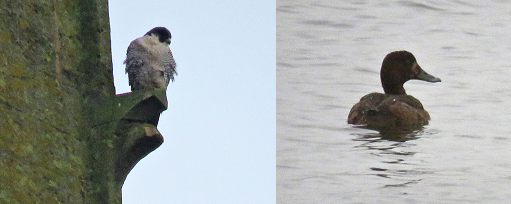
For my 3rd lockdown dawn chorus walk of the year, I decided to change location. This time, I walked over to Mousehold Heath and arrived there as the darkness of night was beginning to fade just before 6am. The bird were already awake and in full voice. To begin with, the chorus was made up of song thrushes, blackbirds, wrens, robins, dunnocks, crows and woodpigeons. Then as it got brighter, other birds joined in such as blue, great and long-tailed tits, green woodpeckers, chaffinches, greenfinches, goldcrest, great spotted woodpeckers, jays, magpies, treecreepers and my first chiffchaff of the year. I also briefly saw a sparrowhawk fly over the Vinegar Pond and a peregrine sitting atop of the weathervane of the cathedral. It was a long but enjoyable walk full of birdsong. The only disappointment was that there were no frogs or frogspawn in the ponds yet.

March 11th Earlham Marshes & Earlham Park

It was my birthday, the first (and hopefully last) under lockdown conditions. As I was pretty limited with places to go and people to celebrate with, I ended up on a long walk around Earlham Marshes and Park with my dad. It was quite the contrast to the freezing conditions of our last visit to these marshes last month as the ice and snow has long since melted away. Instead, we had strong winds and a mix of rain and sunshine. With these blustery conditions, the hope of seeing the little owls I've been told roosting amongst the trees by the river was an expected no show. However, I did add one new species to my list for my birthday, a linnet that was singing in a tree. We also saw an oystercatcher, shovelers, teal, gadwall, mallards and a variety of gull species.
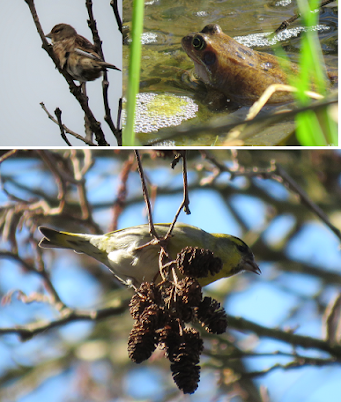
Linnet (Top left - March 11th), Common Frog & Siskin (March 19th)

The sun was out when we started our walk at Earlham Park, though the wind was ever persistent. There were a few really muddy paths too which reminded me of walking along the river trail at Strumpshaw in winter. We made our way to the UEA lake, seeing a kestrel, a sparrowhawk, an Egyptian goose, a great crested grebe and heard a nuthatch and chiffchaffs. I was expecting that I'd see rooks here, but I ended up seeing the four other common crow species instead. Where are Norwich's rooks at?

March 15th Catton Park

It was now a year since the first lockdown happened and I decided to complete my full year of monthly visits to my local patch. I have now experienced all the seasonal changes that happen in this park each month. The signs of spring were starting to show some sort of dominance now with blossom and crocuses. I spotted the odd redwing , which should start to think about heading back north again soon. I also found a nuthatch creeping along the trunk and branches of a couple of trees before vanishing, as well as a goldcrest and a coal tit.

March 16th Norwich

For the last few months now, I've been making several walks along the Wensum in the hope of finding grey wagtails, which I have seen here in the past. However, they are proving to be quite elusive and I'm actually having more luck with kingfishers than my actual main target. While out in the rain, I managed to encounter two of them by Fye Bridge. If I was at Strumpshaw, these birds would have been on everyone's wish list, but here in Norwich, no one seemed to pay them any attention or seemed to care. I found this very odd for such a well loved British bird.

March 17th Norwich & Whitlingham Broad

At around 9:30-ish in the morning, I was looking outside my flat's living room window when something caught my eye. A large bird was soaring over my neighbour's house across the road and was heading towards me. I thought it was a gull at first, but the colouring was darker, the wings longer and the tail had a forked appearance. What I was looking at was a red kite! Possibly the first seen in my neighbourhood! It was so sudden and I was so excited that I tripped on my slipper that I was wearing as I attempted to unlock my mobile to call David and almost fell to the floor. In the end, I was too late to call him and it seemed I was the only person to had seen it without a photo to show for it.

That afternoon, I went for a walk around Whitlingham Broad with Mum. No sign of any new spring migrants, but I did see another kingfisher perched on a bush along the river as well as the usual ducks, geese, swans, grebes and gulls.

March 19th Norwich

Bored and with it being too nice of a day not to be outside, I went for a long walk from my house to Hellesdon Mill via a tow path and Hellesdon Road. The mill was another place I remembered seeing grey wagtails in the past, but despite the effort of getting to the mill, the wagtail remained elusive. I didn't even find the resident parakeets along Hellesdon Road either. I did, however, find mating frogs, siskins, mute swans and mallards. 

March 22nd Thorpe Marshes

A second visit to Thorpe this month and still nothing new to add to my bird list. The best I could find were 2 oystercatchers, a little grebe, tufted ducks, gadwall, teal, cormorants, a great spotted woodpecker and various gull species and heard green woodpeckers and chiffchaffs.

March 24th Whitlingham Broad

After a dull, uninteresting morning, Mum suddenly came over to my flat and suggested if I wanted to be dropped off at Whitlingham out of the blue. Several minutes later and was making my way round the broad to the nature area. I had my first actual sighting of a chiffchaff (was only hearing them before) of the year as well as seeing the barnacle goose, tufted ducks, great crested grebes and the usual other wildfowl.

It was at this point while sitting on the bench overlooking the nature area when I met a birdwatching couple. We talked and they informed me about a flock of lesser redpoll that were feeding on the alder trees along the Little Broad. So, I made my way back to the spot, through swarms of mosquitos. After a short while searching, I eventually found the flock of between 10-20 birds by the small car park and though they moved around a lot, they pretty much stuck to the same few trees long enough for a few photos. This is a finch that often eludes me, so I was very happy to make this my 85th bird species to my Norwich list.

With success with the redpoll, I walked out from the small car park and onto the road to wait for Mum to pick me up. While waiting, I scanned the field nearby. In one of the oak trees on the opposite side, something caught my eye. A white blob was poking out of a hollow. It turned out to be a sleeping barn owl! This was clearly a favourite roosting spot. This was a nice unexpected sight on an unexpected visit to a place that is quickly becoming my replacement for Strumpshaw.
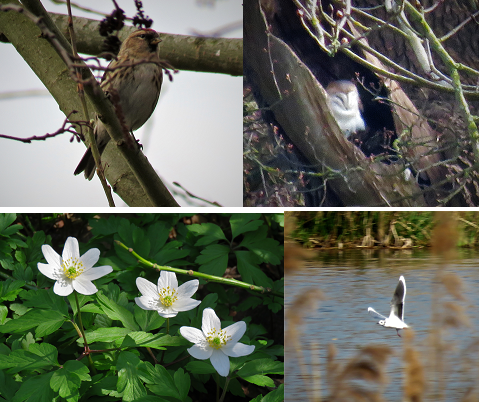
Lesser Redpoll & Barn Owl (March 24th), Wood Anemone (March 30th) and Little Gull (March 31st)

March 29th Norwich

After having an eye test, I popped over to the river by New Mill Road where grey wagtails were reported singing. I've checked this place many times already this year without any luck. But this time, the time I didn't bring my binoculars or camera with me, I actually found one at last. It had a nest in a hole in a wall by the river right beneath a demolition site of all places. There was a moment of peace before the diggers started up for me to enjoy the bird with my own eyes and ears. It even sat on top of one of the diggers to sing at one point. That's 87 birds now! On the way back home, I saw my first peacock, brimstone and comma butterflies of 2021.

March 30th Catton Park

One of my best walks around my local park for a while. Not only provided me with a new bird for my list (a blackcap), but also a couple of plants I've never seen at this park before. I was walking through the woods when I heard woodpeckers drumming. Following the sound, it led me to an area covered with small patches of large white flowers. These were wood anemones. Though more like patches than a carpet, it was still enough to get me excited as I've never actually seen them in Norfolk before (I've never really been looking for them). The woodpeckers had led me to something surprising. Above these flowers, I managed to find not just a great spotted woodpecker, but a green one too close together in the same tree!

 A little further on and I found another clump of white flowers. They were much smaller with leaves like grass. Using the plant app on my phone, it came to the conclusion that these were spring starflowers. I couldn't find it in my plant book, so I had to look it up on the internet and it is apparently a garden escapee that originates from South America. Also today, I saw stock doves, several butterflies and many chiffchaffs.

March 31st Thorpe Marshes

I wasn't intending to go out today, but with news that little gulls were showing up at Thorpe, I had to go! These gulls don't hang around for long, usually just passing through, so I wasn't expecting them to be there when I arrived. But... they were! Three of them to be exact, flying around the broad without seemingly wanting to land at least once. Their dark underwings made it easier to spot them as they circled around over and over. Not a bad bird to tick off, but it wasn't the only one as I heard a sedge warbler on the way to the benches overlooking the broad. That makes it 90 species now! Not a bad way to end the month on. I also saw linnets, a Cetti's warbler, reed buntings, tufted ducks, a heron, a buzzard and heard a green woodpecker.

Plant List Update

Spring is here and I'm now seeing plants I've already added before once again. Daffodils were now forming splendid displays across the city and by the end of March, so was the cherry blossom. I also found plenty of violets, lesser celandine, sallow, hyacinths, wood spurge, compact grape-hyacinths, colt's-foot, ivy-leaved speedwell, common chickweed, red deadnettle, daisy, dandelion, green alkanet and greater bittercress.

Monday, 8 March 2021

My 2021 Lockdown Bird List So Far...

As lockdown is continuing and so is my bird list, I thought it would be a good time to show you what I've got so far. Every bird that is listed below was either seen or heard from around Norwich from January until today. Some were just added in the last few days and I will talk about these findings another time. A couple of others, the woodcock and red kite, were seen but it took a while for me to decide to add them as I didn't get a good view of them at the time but have since thought over them and I'm now 100% certain that they were indeed what they were. I will add a date and location on some of the big highlights as well as the odd note here and there. The really common birds were seen in more than one place in Norwich and won't have any notes attached to them. Total species at this moment is 82!

  1. Mute Swan 
  2. Pink-footed Goose (Flying over my flat)
  3. Russian White-fronted Goose (March 7th, Marston Marshes)
  4. Greylag Goose
  5. Canada Goose
  6. Barnacle Goose (A lone feral, relatively tame bird at Whitlingham Broad)
  7. Egyptian Goose 
  8. Gadwall (Whitlingham Broad and Thorpe Marshes)
  9. Teal (Whitlingham Broad and Thorpe Marshes)
  10. Mallard
  11. Shoveler (Thorpe Marshes)
  12. Pochard (Whitlingham Broad)
  13. Tufted Duck (Whitlingham Broad and Thorpe Marshes)
  14. Scaup (Feb 6th, Whitlingham Broad)
  15. Goldeneye (Jan 31st & Feb 17th, Whitlingham Broad)
  16. Smew (Feb 13th, Whitlingham Broad)
  17. Pheasant (Feb 14th, Hellesdon Road)
  18. Little Grebe (Feb 17th, Whitlingham Broad)
  19. Great Crested Grebe (Whitlingham Broad)
  20. Grey Heron
  21. Little Egret (Whitlingham Broad and Marston Marshes)
  22. Cormorant
  23. Red Kite (March 7th, Marston Marshes, flying really high up near the sun and took a while to decide completely)
  24. Sparrowhawk
  25. Buzzard
  26. Kestrel
  27. Peregrine (Norwich Cathedral)
  28. Water Rail (Whitlingham Broad, heard only)
  29. Moorhen
  30. Coot
  31. Oystercatcher (March 1st, Whitlingham Broad)
  32. Lapwing (Feb 14th, Earlham Marshes and Hellesdon Road)
  33. Snipe (Feb 14th, Hellesdon Road)
  34. Woodcock (Feb 14th, Hellesdon Road, after much thinking over as it flew past me so quickly)
  35. Curlew (Feb 14th, Hellesdon Road)
  36. Black-headed Gull
  37. Common Gull
  38. Lesser Black-backed Gull
  39. Great Black-backed Gull (Feb 17th, Whitlingham Broad)
  40. Herring Gull
  41. Yellow-legged Gull (Jan 28th, Wensum Park)
  42. Rock Dove/ Feral Pigeon
  43. Stock Dove
  44. Woodpigeon
  45. Collard Dove
  46. Ring-necked Parakeet (Jan 30th & March 7th, Hellesdon Road and Marston Marshes)
  47. Tawny Owl (Heard only)
  48. Kingfisher (Surprisingly everywhere from Whitlingham Broad to the River Wensum in the city centre)
  49. Green Woodpecker (Catton Park)
  50. Great Spotted Woodpecker
  51. Magpie
  52. Jay
  53. Jackdaw
  54. Carrion Crow
  55. Blue Tit
  56. Great Tit
  57. Coal Tit
  58. Long-tailed Tit
  59. Skylark (Heard only at Sprowston Park & Ride car park)
  60. Cetti's Warbler (Whitlingham Broad, mostly heard but caught a glimpse)
  61. Goldcrest
  62. Wren
  63. Nuthatch (Heard only at Catton Park)
  64. Treecreeper (Catton Park)
  65. Starling
  66. Blackbird
  67. Song Thrush
  68. Redwing (everywhere this winter!)
  69. Mistle Thrush
  70. Robin
  71. Black Redstart (March 4th, around the corner from my flat!)
  72. Stonechat (Feb 14th & March 5th, Earlham Marshes & Thorpe Marshes)
  73. Dunnock
  74. Pied Wagtail
  75. Meadow Pipit (Feb 14th, Hellesdon Road)
  76. House Sparrow
  77. Chaffinch
  78. Greenfinch
  79. Goldfinch
  80. Siskin (Whitlingham Broad, Thorpe Marshes and Marston Marshes)
  81. Bullfinch (Feb 6th, Whitlingham Broad, heard briefly)
  82. Reed Bunting 
And that's my list as of now. A few surprising species that apparently appeared but I missed include; bittern, pintail, common cranes (flew over the city), Bewick's swans (also apparently flew over), black-necked grebe and lesser white-fronted goose. I know there's possibly a few others I haven't found yet or knew about, so feel free to let me know or give me any locations to their whereabouts to help me out. Let's see if I can reach 100 species by the summer.

Sunday, 28 February 2021

The Month of Love (For Birds)

 Feb 2nd  Norwich

With lockdown continuing on into February, it meant that for the second month of 2021 I had to rely on the city for my wildlife fix once again. My bird list was at 57 species by the end of January and and my hunger for adding more birds to the list was growing as much as the list itself was. Covid was just background noise. All I could think of were birds and where to find them. I was becoming an urban birdwatcher, constantly listening out for something I haven't heard yet and scanning every tree as best I can. I couldn't believe how many species I've seen already within the boundaries of Norwich, including things like parakeets that I had no idea could be found here.

After an appointment with my osteopath, I went for a walk around the city centre, mainly along the river. I was hoping to find grey wagtails, but they proved to be quite elusive. However, I did spot a peregrine perching half way up the cathedral spire. I expect that they are now starting to pair up and preparing for their latest clutch of eggs. I haven't really been following their progress in previous years. All I know is that they have been quite successful since a pair first nested there 10 years ago. Back then, it was the first time in a very long time (about a century, if I remember rightly) and the fact that peregrines are still breeding here just proves how much of a success story they really are. The peregrines at Norwich Cathedral have became local celebrities, attracting thousands of people interested in their latest chapter every year. The Hawk and Owl Trust have done a great job monitoring them and you can check out a livestream on the nest box on their website. https://hawkandowltrust.org/web-cam-live/norwich-cathedral-side

Peregrine (Feb 2nd) and Scaup (Feb 6th)
Feb 5th Sprowston

I was dropped off at the Sprowston Park and Ride car park after food shopping with my mum. I wanted to check out if any 'rural' birds still lingered here where the city is still growing into the countryside. Despite the busy traffic drowning out most of the birds, I was still able to hear a skylark or two singing somewhere high in the sky. I remember seeing fieldfares at the nearby Sprowston Hotel when I was once a member for the pool and so I had a quick sneaky peek by the entrance this morning to seek them out. There was a large mixed flock of thrushes gathered behind their lake such as redwings, mistle thrushes and song thrushes. I believe that fieldfares are there too, however I couldn't get a good look at them, so I'm leaving them off the list for now. On a ploughed field on the opposite side of the road, I was hoping for pheasants or something of the likes, but could only spot a few stock doves and woodpigeons.

Feb 6th Whitlingham Broad

A scaup had me back at Whitlingham on a very miserable day. I was told that a 1st winter female had been seen in the last few days hanging with the tufted ducks on the broad. The thing is, female scaups look a lot like female tufted ducks. A very daunting challenge, especially when it is pouring with rain and got rather misty. However, scaup are slightly bigger and with a more rounded head. This information really helped me out when I eventually found it in the wildlife friendly corner of the broad. This was a massive tick for me as scaup are scarce winter visitors to the UK and I've only seen a handful in my lifetime.

As well as the scaup, I also added pochard to my list as well as audible additions of reed bunting and bullfinch, which I only heard a couple of notes before it went silent and couldn't locate it. A large flock of siskins were feeding on alder cones (but try as I might, I couldn't find anything in the likes of brambling or redpoll), a redwing and a brief flyby over the river of a kingfisher. It turned out to be a very successful day worth getting absolutely soaked to the bone for.

Feb 10th Catton Park

My 2nd dawn chorus of 2021 couldn't had been any more different to January's. A snow storm had hit for a few days and I decided to experience this latest dawn chorus in it to see if the birds were as active. I arrived at the park at the same time as before and seemed to be a lot more darker to begin with. Only the robins and the odd song thrush was in voice at this point. 

As I waited for the light to improve, I was suddenly hit by a short snow flurry that hit me like a blizzard. As sudden as it appeared, it was soon over and the birds took advantage of this break in the weather to sing. It was like someone flipping a switch as I could now hear blue tits, dunnocks, chaffinch, stock doves, blackbirds, a nuthatch and a green woodpecker and in the woods, I had great views of treecreepers. It wasn't as good as January's chorus and I was filming it with a low battery as I forgot to charge my camera's battery, however, it was still an interesting experience nonetheless.


Feb 12th Norwich

Returning home from a night at work, I was about to open my front door when I heard a short hoot from a tawny owl. Though I didn't see it, that brief hoot was enough for me to add to this owl to my list.

Feb 13th Whitlingham Broad

Another Saturday morning at Whitlingham. No rain this time, but a lot of snow and ice on the ground. It was freezing and slippery in places, but at least it was a nice day. I was in search of another duck, a pintail. Sadly, I was a couple of days too late. However, it was now replaced by yet another scarce duck, a female smew. Thanks to a few local birdwatchers, I was quickly on it pretty early on during my latest visit and was able to see it on the other side of the broad.

A bittern was also reported showing well on standing out on the ice at the wildlife area of the broad. I went to see and passed someone who confirmed that it was still in good view. A couple minutes later, I reached the spot and... IT WAS GONE! I was so close to add bittern to my list! It was one of those 'should have been here a few minutes ago' moments. The only other new thing for my list were pochards.

Smew (Feb 13), Curlew and Snipe (Feb 14th)

Feb 14th Earlham Marshes & Norwich

It was Valentine's Day, but I was not looking for love, but birds instead. Dad and I went to visit Earlham Marshes for the very first time as I was told that little owls were apparently there sometimes and great white egrets have been overwintering there as well. Unfortunately, not this time. Ice dominated the landscape and it was freezing to hang around for too long in. A variety of gulls stood on the frozen surface of the lakes, but nothing that I could convert into a Caspian gull or anything of the like. But, I did manage to tick off a pair of stonechat, a displaying lapwing and a sparrowhawk to satisfy my species list.

We then moved on to the spot we saw the parakeets last month and focused on the flooded marshland between Hellesdon Road and the Marriott's Way. This landscape was also frozen over and had apparently attracted a few waders, a bit of a rarity this close to the city centre. Though waders are rare near the city, curlews are even rarer. So to find two of them feeding out on the frozen marsh, made me really happy indeed. It turned out that this place was a bit of a goldmine as it provided 3 other species to my ever growing list with meadow pipits, pheasants and snipe. We also had a little egret, heard the parakeets again and I'm pretty sure a woodcock flew past us, though I could be wrong and was just a snipe.

Feb 17th Whitlingham Broad

After receiving my first Covid vaccine, I went for yet another visit to Whitlingham. A black-necked grebe was my latest target here, but was unable to find it. However, I did manage to add a great black-backed gull and about 6 or so little grebes as well as seeing a kingfisher and a female goldeneye, pochards, gadwall, tufted ducks, a heron, cormorants and great crested grebes. 

Feb 23rd Mousehold Heath & Norwich

A long walk around both sides of Mousehold Heath, seeing a kestrel, jays and the usual finches and tit species, then a short stop at St James' Hill, spotting 3 peregrines circling the cathedral and encountering a kingfisher as I made my return home via the river.

Feb 24th Whitlingham Broad

Mum surprised me with a trip to Whitlingham out of the blue. Nothing new for my list this time around, sadly.  However, it was a nice day and we saw siskins, tufted ducks, pochards, cormorants, gadwall, great crested grebes, a kingfisher and I had a brief glimpse of a Cetti's warbler.

Plant List Update

With spring around the corner, the year's first new plant species have been appearing recently. As I'm also continuing my lockdown plant list from last year as well as this latest bird one, I'm keeping one eye out for the latest blooms at the same time across the city of Norwich. Snowdrops, daffodils, a variety of crocus species, stinking hellebores, winter aconites, winter heliotrope, common whitlowgrass, corn salad and blackthorn are just some of the latest additions and I expect there will be a few more before I call quits on it in May, completing a full year.