|
| Banded Demoiselle |
I arrived at Strumpshaw via the Lackford Run entrance this morning. The Lackford Run is the long path at the far end of the reserve. I don't walk this path very often and for good reason. It is such a long winded walk that is often very muddy or full of hidden dips and always a hotspot for biting insects. This morning, while I was walking down it, the grass was wet with dew and by the time I got to the end of it, my feet felt as if it had absorbed a litre of water in each boot and sock! Just another reason why don't enjoy this path very much.
 |
| View from Tower Hide |
So why am I down this unenjoyable part of the reserve I hear you ask? Well, I thought it would be better to get to Tower Hide this way rather than to walk to the hide from Reception Hide only to walk back again. Also, the second emergence of swallowtails have been seen around this part of the reserve recently, but I guess I was too early to see them as I didn't see any (though they were hours later this morning). But the main reason for walking down the Lackford Run was to get to Tower Hide as a special bird has made a surprise visit and has been there for a few days now. When I got to the Tower Hide, there was no sign of it. I was told by a twitcher that I had just missed it and was behind some reed beds down a channel. Typical! There was plenty to see, however, as there were about ten herons, a little egret, several ruff, common terns, ringed plovers and a kingfisher.
 |
| Ruff |
 |
| Grey Heron |
 |
| Egyptian Geese |
 |
| Kingfisher |
 |
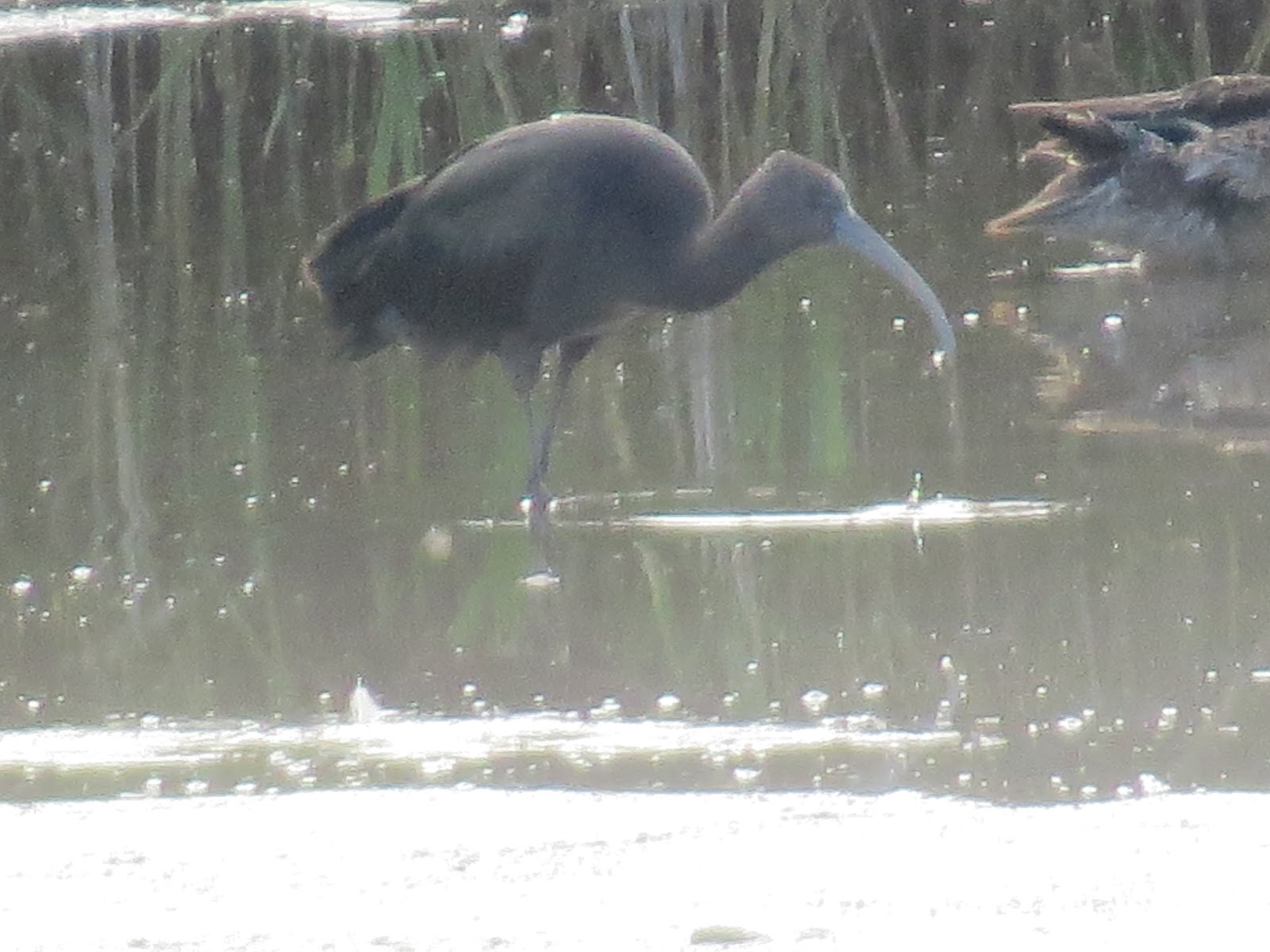
| Glossy Ibis |
Time was ticking and I had to get to Reception Hide to start my shift. I left Tower Hide and was about half way along the river trail path, seeing a water rail on the way, when suddenly a twitcher from the Tower Hide caught me up and told me that the bird was out again. So, I made the walk back to the hide and there it was, a glossy ibis!! It was slightly distant, but I could see it very clearly feeding in the mud of a channel with its curved bill. Glossy ibises are Mediterranean birds, but in recent years, they have been visiting the UK in reasonable numbers. They are still considered a scarce visitor, but maybe in the not so distant future, they may become a regular breeding British species to join other birds like little egrets and spoonbills. This is the first time I've seen one at Strumpshaw, so it completely made up for my wet, tired feet.
 |
| Water Rail |
 |
| Jay having an ant bath! |
 |
| Bearded Tit |
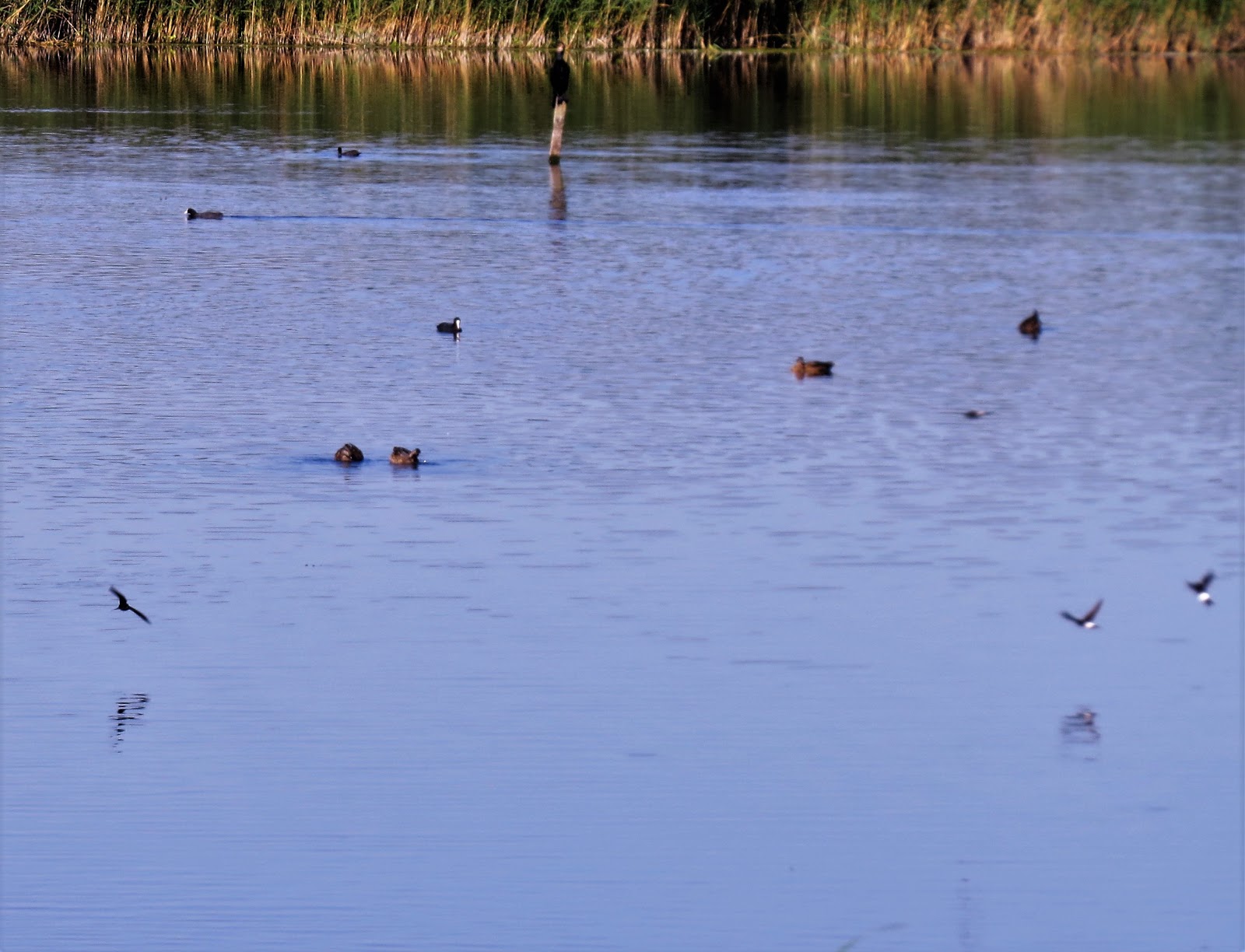
It was a very hot day today, an ice cream and a cool draft made the Reception Hide a great place to refuge from the heat. The bearded tits were active in the reed beds by the front of the hide as they have been in the last few weeks, providing fleeting, yet good views for the visitors who've never seen one before. Swarms of swallows and house martins were flying across the broad. They were fantastic to watch as they skimmed over the surface for a drink at speed. The great number of these species gathering together can only mean that the urge to migrate south to Africa is getting stronger. It won't be long until these birds begin their epic journey to avoid the approaching winter months. There was also a single garganey very briefly on the broad this morning, another bird that will be joining the swallows and martins on migration soon.
 |
| Reed Warbler |
 |
| House Martins and Swallows (with cormorant and ducks) |
 |
| Swallow |
 |
| Garganey |
 |
| Grey Heron sunbathing |

 |
| Common Blue Butterfly (37) |
Hold the press! What's this? Can it be! Yes, yes it is! You can stop rubbing your eyes now as I have indeed managed to finally find and photograph a common blue butterfly at Strumpshaw! Hurray!! I have been worried sick about these tiny butterflies since I have been unable to locate one all spring and summer. It has been quite a bad year for them in this country and I am relieved to see one at long last. Why has it been a bad year for them? It is still a mystery, but they are not the only ones. In fact, there has been a massive decline in all British butterflies for many years now. It could be due to pesticides, global warming, long spells of bad weather, habitat loss or a manner of other things, but whatever is the cause, it would be a tragedy to lose them. Let's hope next year is a better year for our common blues and other butterfly species. I have three more targets for my Strumpshaw 40 challenge to go.