|
| Moth Night |
It was moth night at Mousehold Heath last night. And what a great night it turned out to be. I even brought my home-made bug net along with me, which Will and I tested out to catch a few that escaped the lure of the light. The net worked perfectly! Not bad for a net curtain attached to a bamboo cane.
 |
| Will testing my net out |
 |
| Success! |
We were very pleased with the variety of moths we caught last night. We even added at least four new species to the site's all time tally. We are edging closer to a landmark total of 250 species, which is fantastic. But, when it comes to identifying moths, I am not very good at it at all. I can tell you some of the easier colourful ones, but when it comes to the brown jobs, their names just go right over my head. I can't remember what they are called at all. So this year, as part of my bug hunting year, I am going to attempt in learning some of them. I think the best way for me to do that is to get to know them a bit better. To learn their best features and what makes them different from the others. So, let's get started...
 |
| Lime Hawk-moth |
The biggest and most impressive species of last night was this lime hawk-moth. At around 23-39mm, we needed a big pot to contain it for us to get a better look at it. This is a very easy moth to identify with bands of pink and olive on it's characteristic shaped wings. They thrive in areas that have plenty of limes, elms, silver birches and alders.
 |
| Brown Silver-lines |
The most numerous moth of the night were brown silver-lines. It is simply a brown moth with two central silvery lines across it's middle and with a small dot between them. When it is at rest, the wings close up and the moth's appearance becomes more triangular. It is a moth of heathlands and it's caterpillars feed on bracken.
 |
| Brimstone |
One moth I can identify without much difficulty is this one. Brimstone moths are bright yellow with brown markings along the edges of the wings. They are extremely common and you can't really mistake it for anything else.
 |
| Common Swift |
Male common swifts are beautiful moths. When they settle, their wings close upright against their bodies like all moths from the swift family. But what sets it apart from the other species of swift moth are the white markings. These markings look like dots that appear to bleed into one, forming into a pair of bold white lines. Females are pretty dull in comparison as they are a dusky brown without any defining features or markings. You can find them from May to July.
 |
| Light Emerald |
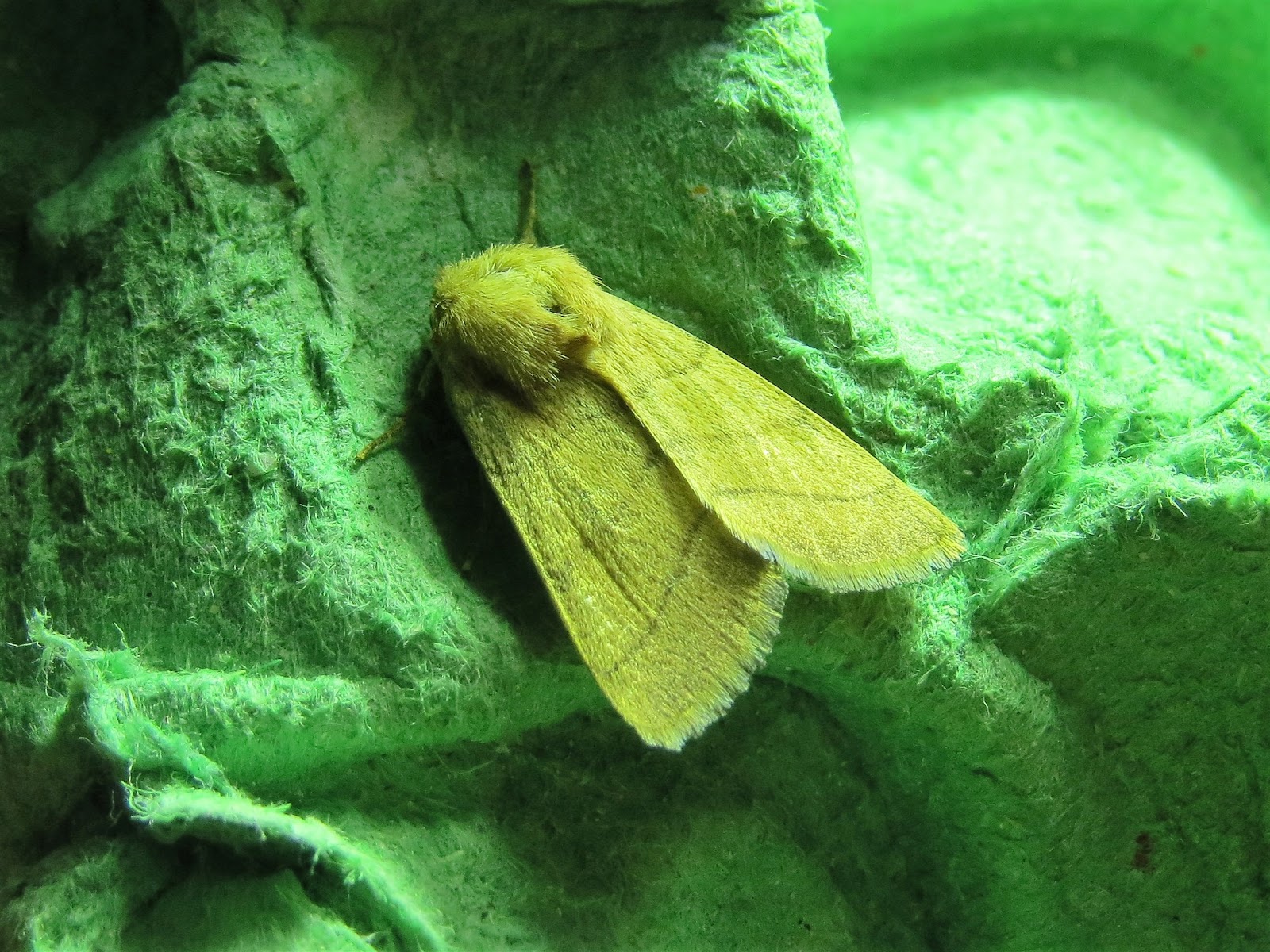
The light emerald moth is another of those species that are easy enough to pick out of the moth crowd. This is a pale light green moth with a couple of pale white stripes across the middle of the wings.
 |
| Spectacled Moth |
Spectacled moths are so called because of the grey markings at the front of the thorax looks like it's wearing a pair of spectacles. Other than that, they are brown-grey with a dark centre with spots and stripes that, to me, resembles an owl's face if you look at it this way round.
 |
| Top view of a Spectacled Moth |
 |
| Pale Tussock |
This next moth had us baffled. It had it's wings open when we caught it and we had no idea what it was. But then when this pale grey moth settled down, it closed it's wings and placed it's front legs in front of it's head. This meant that it was one of the tussock moths and with it's pale colour, we decided it was a pale tussock. It also had a pair of orange-brown antennae, which means this is a male.
 |
| Pale Tussock with wings open |
 |
| Alder Moth |
Another moth that had us scratching our heads was this chap. No wonder as it turned out to be a new species for Mousehold. This was eventually identified as an alder moth. It is mostly grey with black in the centre and a black stripe going across the middle, which I think resembles a chunky, upside down crossbow with an arrow at the bottom.

 |
| Heart and Dart |
Heart and dart moths are one of the most common visitors to any moth trap. It is named after the heart-shaped splodges on it's wings with the two dark lines above them resembling darts. Fairly simple, but be warned, these moths vary in colour with some being darker or lighter than others, but the pattern remains the same.
 |
| Treble Lines |
This moth is called a treble lines. This is another moth that is named after it's appearance, which makes things easier for me to remember. It is usually this pale brown colour (though it can be darker) with three thin lines across the wings. They appear from May until early July.
 |
| Pale Oak Beauty |
I think these two moths are mottled beauties. I am not completely sure, but they are definitely from the Geometridae family (that's the scientific name for moths that have wide wings with geometric patterns). There are many similar looking species in this family, that it can be very hard to tell them apart. I believe these are mottled beauties because the pattern kind of matches the ones pictured in my ID books. [Edit: Apparently, these were pale oak beauties, which were new to the site.]

 |
| Meadow Grey micro moth (I think) |
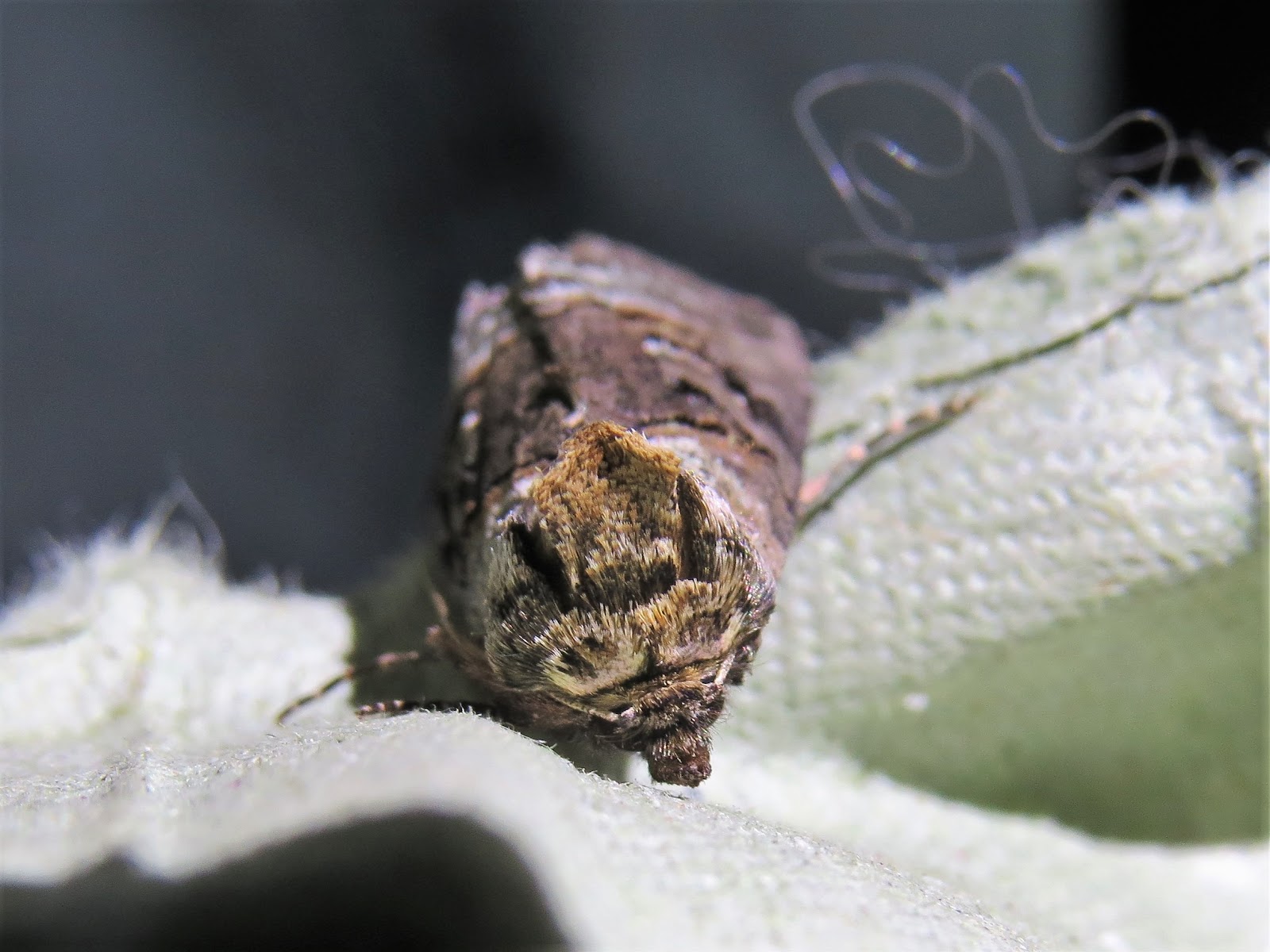
Finally is this micro moth, which is a meadow grey. At least that's what I've been told it was. Micro moths are very tiny moths. Most of them look very similar to one another. And worst of all, there are hundreds more species to choose from compared to the bigger moths that I have been focusing on up until now. I think I'll leave these micro moths to the experts, I'm having difficulty remembering the names of the bigger ones as it is.