Wednesday, 11 July 2018

July 11th Strumpshaw Fen

Black-headed Gulls, a Little Egret and a Grey Heron
Who else is anxious and excited for England's world cup semi final game against Croatia to start tonight? I am! That one song has been playing in my mind for over a week now and I can't help but think about the outcomes of the remaining games every minute of the day. I have caught football fever and there's only one cure and that is for England to become world champions! But to keep my mind at ease while I eagerly await kick off, I'm at Strumpshaw for my weekly shift.


Grey Heron
This morning was a bit of a damp start as thick grey clouds threaten to rain. There were spits and spats here and there, however it wasn't enough to even soak the skin. Eventually the sun came out and made a gloomy scene more cheerful. With this dull start, the insects were grounded (apart from the bity ones of course) and it was the birds that dominated Strumpshaw once again. The herons and little egrets in particular were especially numerous than usual today. While I was at Fen Hide, I believe I counted at least 10 herons popping in or flying by and a further 5 or more appearing at Reception Hide. There were also the odd visit of a kingfisher and a surprisingly large gathering of black-headed gulls, young and old loathing around the broad outside the Reception Hide. What brings such large numbers of such birds to this part of the reserve all of a sudden after weeks of being absent? Not sure, but it seems the water in the broad is more appealing now that most of the slimy yellow algae has dispersed from the surface.

Grey Heron with Little Egret
Little Egret
Kingfisher
Black-headed Gull
Juvenile Black-headed Gull
Lesser Black-backed Gull
Shoveler
Mute Swan Cygnet
Small Red-eyed Damselfly
As soon as the sun came out half way through my shift, it was like hitting a light switch. When those glorious warm rays of sunshine burst down from the heavens, up came the butterflies and dragonflies. I heard that the silver-washed fritillaries and white admirals were still showing at the bramble patches in the woods, but I did not go look for them this time. However, if you take a very short walk to the pond beside the Reception Hide, the small red-eyed damselflies are out sitting on the pond weed. These tiny damselflies are now at there best with those striking red eyes staring right back at you. Definitely a real highlight of my day. Now let's hope England provide another and actually win a place into the final of the world cup! Football is coming home!

Purple Loosestrife


Hemp Agrimony
Hedge Bindweed


Tufted Vetch
Great Willowherb
Ragwort
Meadowsweet


Marsh Sowthistle


Milk Parsley

Saturday, 7 July 2018

July 7th Norwich

Male Vapourer Moth
While preparing myself for the big match today, I had my friend David make an unexpected visit to my flat. He had a couple of goodies to show me that he had found at his house and wanted me to ID them. First up was this smart looking vapourer moth with his feathery antennas and white spots on his brown wings. I've seen the caterpillars plenty of times, but never seen an adult male before. The females, on the other hand, are wingless and require a lot of searching to find one of them.

What is this beetle?
The other creature that David brought over for me was this beetle. He believed it could be a lesser stag beetle, but I have seen lesser stag beetles before and this was definitely not one. I'm not really sure what it is, but I'm thinking it has a body shape to be one of the 83 species of scarab beetles. If you have any idea what this is, please let me know.


Wednesday, 4 July 2018

July 4th Strumpshaw Fen

Silver-washed Fritillary
What's the best way to recover from a night of watching England win on penalties for the first time ever in a World Cup against a thuggish Colombian side? By making another attempt in photographing my first silver-washed fritillary at Strumpshaw of course. The majority of the bramble flowers may have now been pollenated, but they are still drawing in these bright orange butterflies as well as white admirals along parts of the woodland trail. It wasn't until my second attempt of the morning that one actually perched on a flower long enough for me to get what I wanted at long last. I felt as if I had scored a penalty of my own after a second year of trying.

This magnificent butterfly, the third largest in the UK I believe, is a newcomer to Strumpshaw. How they got here is probably controversial and not natural, as if secretly released by someone with a collection, but these butterflies were once native to Norfolk until they mysteriously became extinct to the county. So it is nice to see them back again and even seeing them performing an aerial courtship dance. When a male meets a female, he does this wonderful loop-the-loop dance in which he flies round her like a Ferris wheel while she continues to fly straight, following her by a tail of irresistible pheromones that she produces. It is a flight of fancy in the summer sun. A welcoming sight after many years of absence.
Gatekeeper
Ringlet
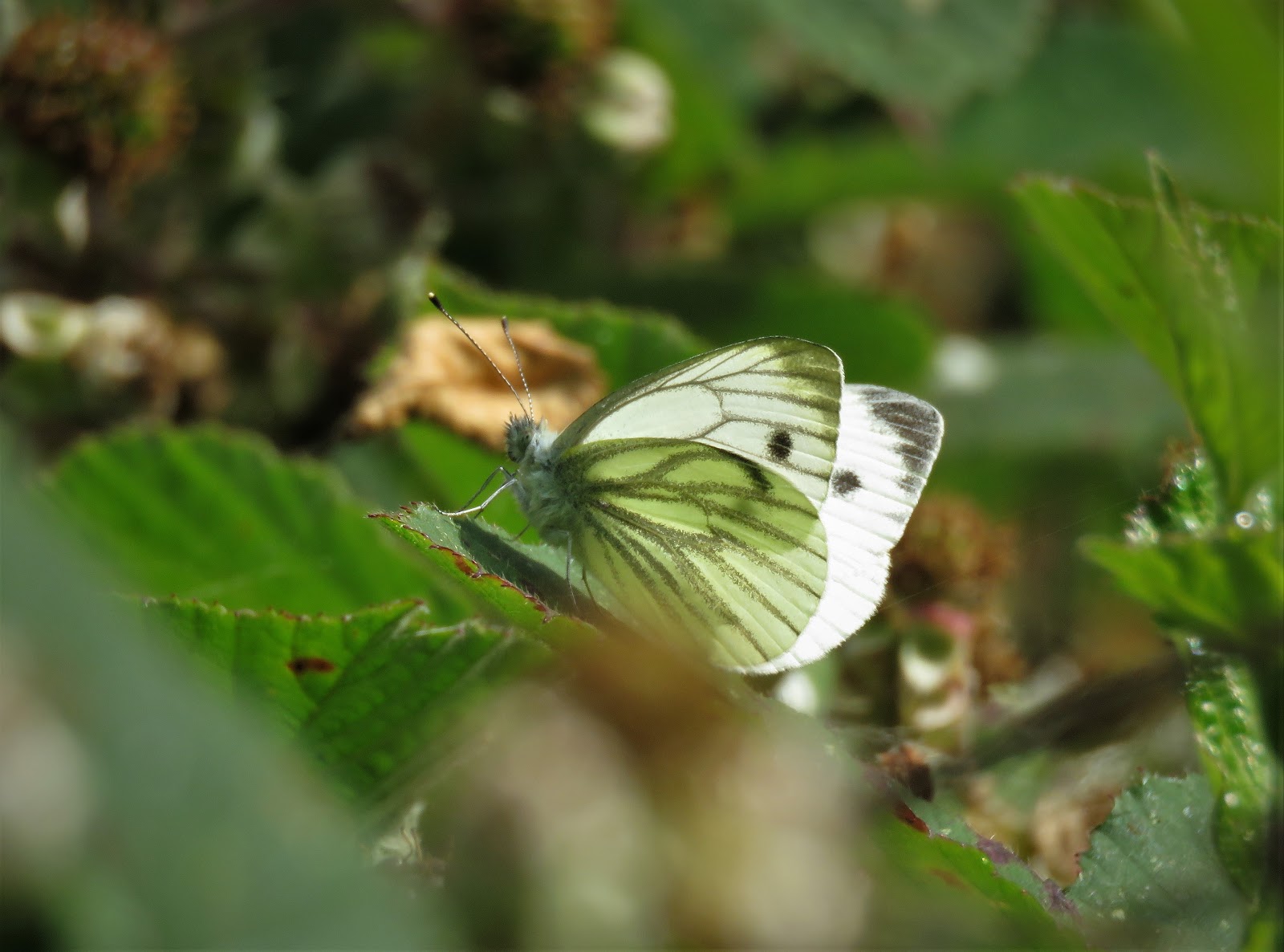
Green-veined White
Hoverfly
Dark Bush-cricket
Small Red-eyed Damselfly
Yellow Loosestrife
Reedmace (typha latifolia)
Kingfisher
It feels like another lazy summer's day at Strumpshaw this morning. The birds are not as active in their daily chorus as they once were and many of them have young that have fledged many days ago or are at the start of their annual moult. The insects have more or less taken over, including the nasty biting ones. The colour purple resonates through the reed beds as purple loosestrife, thistles and many other flowers are now in bloom in the warmth the summer heat. A flash of electric blue of the occasional kingfisher visit adds a bit of excitement to the lazy scenes, while the swifts, swallows and house martins swoop over the broad to quench their thirst and to fill their stomachs on the mosquitos buzzing above it. The passing of a sparrowhawk with a small bird in its talons had these hirundines in a panic for a short moment and there were also views of marsh harriers and buzzards as well as a little egret at Fen Hide. 
Mute Swan
Grey Heron
Cormorant
Black-headed Gull
Mallard in its eclipse phase plumage
Mallard hybrid
Gadwall
Shoveler

Tuesday, 3 July 2018

July 2nd Ranworth Broad

Sydney Long Ears
A giant creature can be seen at Ranworth Broad this summer. Yesterday (July 2nd), I went to see it. And what exactly is it that I've come to see? A hare. A large sculpture of one to be precise. Throughout the next 11 weeks, up until September 8th, the charity Break has placed 68 of this hares across Norfolk, each one painted by local artists. 50 of these hares are located around the city of Norwich (which I've done already) and 18 more are dotted all over the county. And Ranworth happens to have one outside the visitor centre. This one is called Sydney Long Ears and painted by Beverly Gene Coraldean.


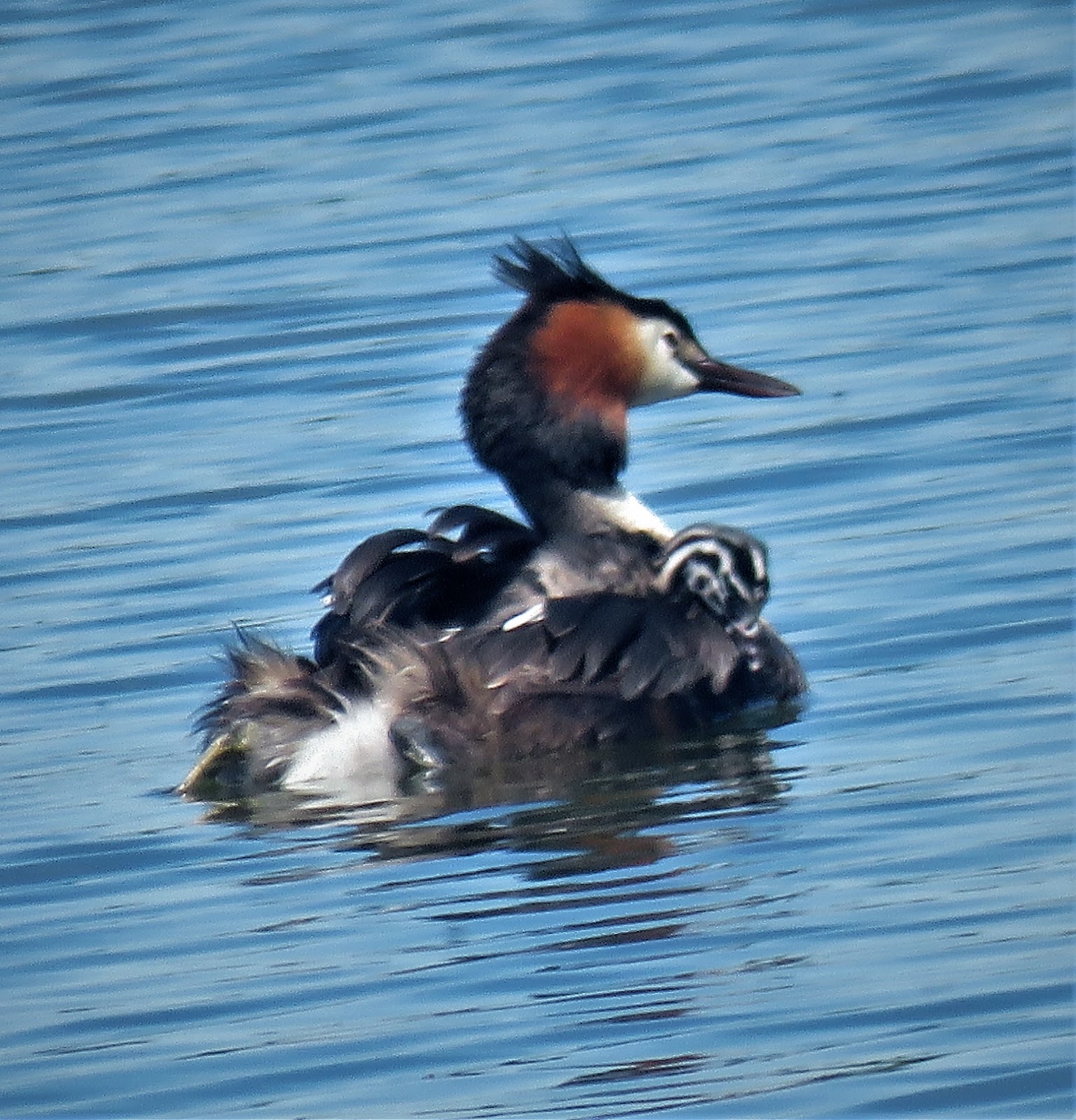
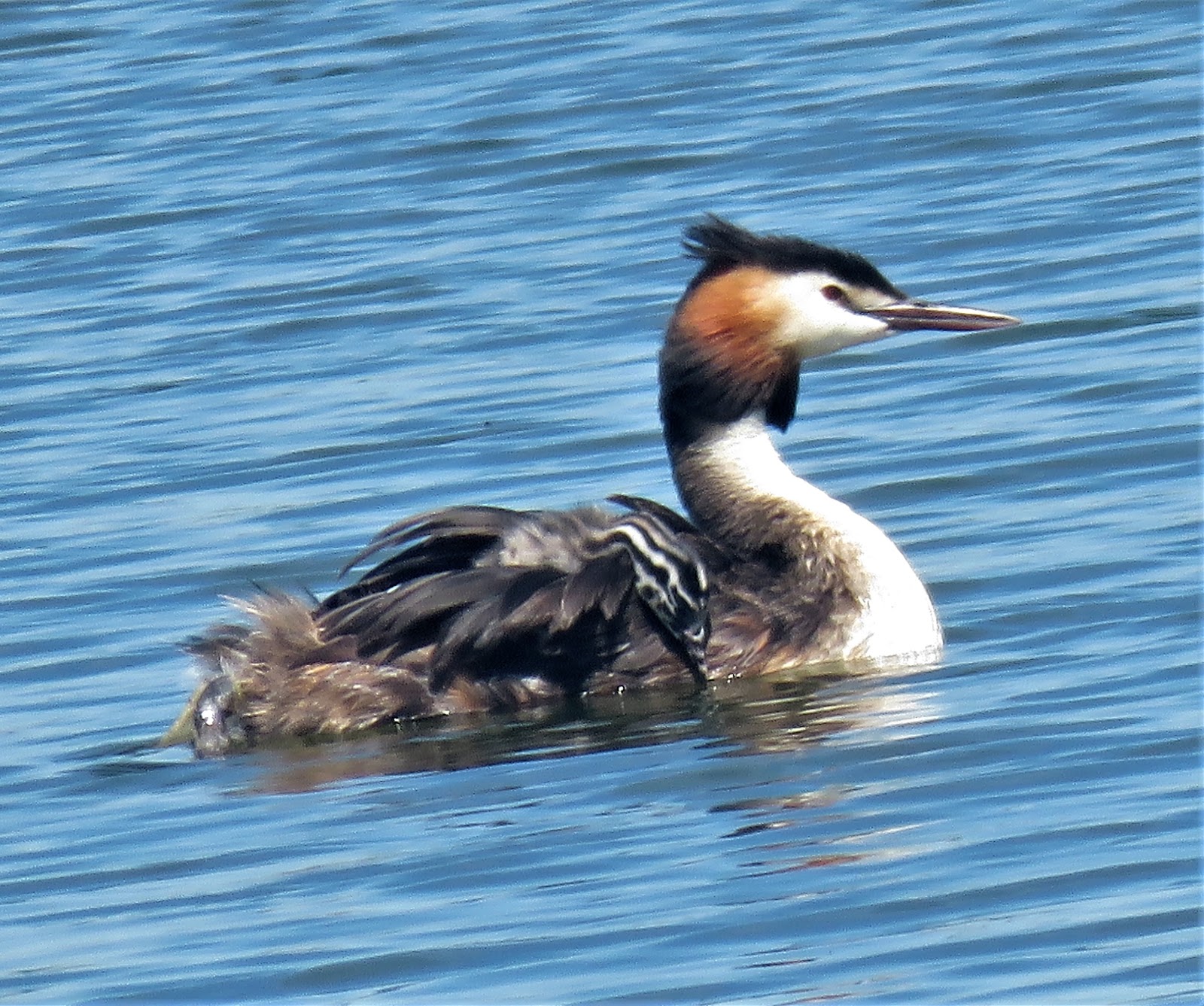
Great Crested Grebe with chick


While the hare was the main point of coming here, I did have a bit of time to spare for a quick peek over the broad. The main highlight during this whistle stop visit was a family of great crested grebes with one of the adults giving its only chick a ride on its back. We also saw plenty common terns and swallows, too.

Common Tern


Southern Marsh Orchids
Royal Fern?