Tuesday, 1 August 2023

Searching In The Dark


 July 3rd Strumpshaw Fen & Buxton

A bit windy, but still an ok morning to kick off my first shift in July 2023. I was looking for the fen raft spiders at the meadow trail. There was sadly no sign, but I did hear the grasshopper warbler reeling while I was searching from the bridge albeit briefly. I then visited the woods where it was a lot more sheltered from the wind. It was like a mini oasis of warm sunlight, exactly what the butterflies visiting the brambles needed, that included a silver-washed fritillary.

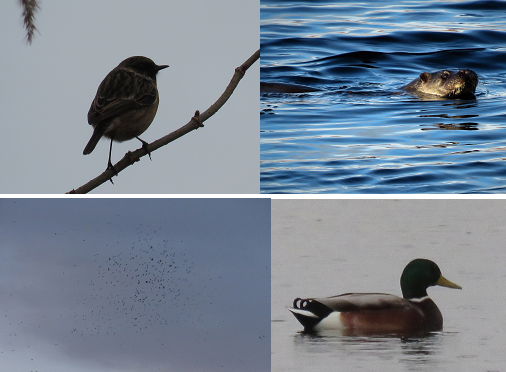
A bittern was sunning itself in the reedbeds left of the broad outside the Reception Hide and an otter later made an appearance after a visitor was just asking about where to see one. It was busy hunting, causing the many mallards that couldn't fly due to moulting to swim around the broad. The otter was elusive to spot, but I was happy as I believe this is my first sighting in a while.

Snail-killing Fly (Sepedon sphegea), Silver-washed Fritillary,
Silver-studded Blue, Dodder,
Marsh Fragrant Orchid & Heath Spotted Orchid (July 3rd)

After my shift, I went home. However, I wasn't done yet. I was going on a hunt for a nightjar! As afternoon became evening, Tricia picked me up and we made our way to Buxton Heath. After meeting up with Tricia's friend, Christine, we had a little walk around the site before it got dark enough to wait for the nightjars to emerge. During our walk, we discovered that the heather was covered in many roosting silver-studded blue butterflies clinging on to the branches. Lots of them! It was a spectacle in itself.

We also found many orchids, including common spotted, heath spotted, marsh fragrant and marsh helleborines. The best find during our walk, though, was a patch of dodder. This is a parasitic plant that has no leaves, small white flowers and just looks like a mass of red strawberry laces or spaghetti covering the heather. The steam of the dodder taps into the heather and sucks the nutrients from its leaves until it looks brown and dead.

Eventually, the light faded and around 9:45pm, the nightjars emerged. There was enough light to see them and at least two of them were flying around us. A male (with white patches on the wings and tail) and a female (has no such markings at all). The male serenaded us with his eerie churring song accompanied with the occasional wing clap, which is part of his display. It was one of the best nightjar evenings I've ever experienced. That is until it suddenly started to rain! We were forced to leave to avoid a complete soaking. On the way out, we looked for glow-worms, but there was no sign.

July 8th Strumpshaw Fen

My search for a glow-worm has taken me to Strumpshaw. My parents have joined me in my search. It was Saturday and there was nothing on TV anyway. Besides, we arrived early before it was even dark as we had something else in mind to see first. News of long-eared owls showing well at Strumpshaw had attracted quite a crowd. These owls are high on the top of my wish list of birds that I've never seen before. So when I heard the news and seen the photos of one perched on the sign by the feeder area, I was incredibly jealous and wanted to see it myself.

As soon as we entered onto the reserve, there were already many people gathered by the picnic benches beside the nectar garden. I didn't need to say a word to ask if they had seen it or not as they immediately told me where it was at that moment. I went round the corner at the start of the trail and another crowd greeted me with two volunteers keeping an eye on them. The owl was currently sitting in a tree beside the fence. You had to apparently crouch down in order to see it, but I could not spot it at all. A couple of people then sneaked closer (too close in my opinion) to sit on a nearby log and I tried to join them, but the owl decided to fly off. That was all I saw of it! My first ever long-eared owl encounter was over in mere seconds. All I saw was a blur passing by me.

It was incredibly noisy at Strumpshaw as two raves were going on in the area. One sounded like it was coming from the river playing old school and modern party hits and the other was coming in the direction of Buckenham and was the loudest and was just a racket of unbearable noise! Amazingly, the grasshopper warbler's reeling somehow managed to break through their noise. When it was finally dark enough, we managed to spot two glow-worms, though they were hidden deep within the vegetation to get a good look at them. If it wasn't for their bright green glowing abdomens, I wouldn't have been able to spot them, though, saying that, we were surprised how much the stones along the Sandy Wall path glowed in the dim evening light and that often made us confused them for the real deal. I may not have gotten a photo (or made a video), but I can safely tick them off my list.

July 9th Cley & Morston

It was time to make my monthly visit to Cley. The long-billed dowitcher had returned to the reserve and was out on Pat's Pool along with several spoonbills and little egrets, 2 little ringed plovers, ruff (a few males in their colourful plumages), black-tailed godwits, oystercatchers, avocets, lapwings, shelducks and redshanks with chicks.

Long-billed Dowitcher, Spoonbill,
Six-banded Clearwing & Sea Lavender (July 9th),
Resin Bee (July 10th) & White Admiral (July 17th)

We then had lunch tucked behind the visitor centre, sneaking a picnic where we weren't suppose to (café use only in that spot). Then a NWT man appeared. We thought he was only going to kick us out, but he ended up showing us a rare moth, a six-belted clearwing feeding on the flowers behind our heads. Never heard of it before, but it was pretty interesting as it looked like a wasp.

After lunch, we made our way to Morston which was a place I was told that sea lavender was at its best. Sea lavender is a new addition to my displays and spectacles challenge list. To see the coastline covered in soft purple is the main reason I wanted to add it and I wasn't disappointed. It was a little different from the regular kind of lavender that I saw last month at Heacham as it was more clumpy and seemed to lack any scent. It grows in salt marshes too, so it thrives in the salt rich mud that would normally kill other lavender species. This landscape of purple was also alive with oystercatchers and other birds.


July 10th Strumpshaw Fen

I returned to Strumpshaw hoping to see 3 things. First was for the long-eared owl. I was once again not the only one doing so as another crowd of people were waiting around for it. That included one guy who had just arrived from Bristol after driving all night on his motorbike and had to drive all the way back the same day. However, there was no sign of it. Possibly a couple of claims, but it ended being unverified. 

Next, I looked for marsh helleborine in the meadow trail, but just like a year ago, there is no sign of one anywhere. Then, I peered over the bridge over the ditch for the fen raft spiders. Sadly, they were no where to be seen and I wonder if the claim that they were here was a mistaken identity. I, however, did find A spider, but not THE spider I was after. It was close though. It was like a fen raft in the fact it was moving on floating aquatic vegetation, but much rounder in appearance. It was a different species. It meant that I had failed to find any of the three I was hoping to see.

What I did see, however, was a great spotted woodpecker, marsh harriers and a colony of resin bees that were buzzing around the log in the nectar garden. Apparently, these tiny bees arrived in Norfolk in the early 2010's.

July 17th Strumpshaw Fen

It was a blustery day, but not a bad one, just not that interesting. The owl was now seemingly gone and so were the crowds and the hype. The meadow trail was fairly empty, but I could hear the grasshopper warbler nearby, though it never showed itself. I popped into Fen Hide and only saw marsh harriers and, on the way out, some bearded tits flew over me along the path outside and a brown hawker posed for me.

A quick visit to the bramble patch in the woods was next, where a small crowd were watching the butterflies. They were once again very active in this sheltered spot away from the wind and that included silver-washed fritillaries, white admirals, gatekeepers and ringlets. I then stopped by to the office before my shift. I opened the gate in the fence and I was startled when a hare (equally as startled) ran out from the trailers in the courtyard close to where I entered from.

At Reception Hide, three of our wardens were busy strimming the front of the hide. It got a bit noisy to say the least. So not much to see other than swallows, house martins, many mallards, a great crested grebe, mute swans with 5 large cygnets and, after the strimming work was done, a muntjac deer. Also seen were small red-eyed damselflies and an emperor dragonfly in the pond behind the feeder area and southern hawkers and commas in the wood.

Near the end of the shift, it started to rain out of nowhere. Not that hard though. Returning to Norwich, though, I had just made it back when a thunderstorm started chucking it down with torrential rain!

July 24th Strumpshaw Fen

The Moody Mondays seemed to have returned. It was a dull, grey, drizzly morning with more threatening showers here and there. I went to the boardwalk by the Lackford Run to study the milk parsley for swallowtail caterpillars. Unfortunately, it seems that they were sheltering deep within the damp vegetation as I could not find any. 

I had to then backtrack after a family of swans blocked my way further down the Lackford Run. So I ended up heading to Fen Hide with young marsh harriers, a heron, a stock dove and a brief bearded tit for company. The same were seen from Reception Hide along with a bittern, a great white egret, a common tern, swifts, many mallards and a pied wagtail. Besides that, it was a fairly quiet day all round.

July 29th Titchwell

Mum and I decided to visit Titchwell to check out what's about. There happened to be plenty out on the freshwater pool such as avocets, black-tailed godwits, common terns, redshanks, oystercatchers, a dunlin, shelducks and many gulls and ducks. The main highlights though were 10 spoonbills, a curlew sandpiper, a snipe and a bearded tit. We also saw a migrant hawker that landed and spooked a lizard that was behind it, a curlew, and a few sandwich terns flying over the sea. I may have glimpsed a stoat flash across the main path as well.

Brown Hawker & Muntjac Deer (July 17th),
Great White Egret (July 24th), Curlew Sandpiper (July 29th),
Garganey (July 31st), Sand Wasp (July 29th)
& Otter (July 31st)

July 31st Strumpshaw Fen

Yet another Moody Monday, but it wasn't that bad. It was raining on the way to the reserve, but it did ease off when I arrived. Fen Hide was a little uninteresting despite seeing marsh harriers and common terns, so I made the long walk to Tower Hide. There were a lot of ducks, mostly mallards and shovelers, but there was also an eclipse-phased garganey looking smaller than the other ducks, though the two little grebes were smaller. 

At Reception Hide, an otter made a short and sudden appearance, spooking the hundred or so mallards out on the broad. The family of swans and heron, however, didn't seem to be worried at all. Outside, there was a small gathering as they awaited a sponsored fundraiser to arrive. There was a man cycling to every RSPB reserve to raise money for statue of RSPB founder Emily Williamson to be built. Check out emilywilliamsonstatue.com for more information. When the fundraiser arrived, he brought out a small statuette of what the statue will look like before setting off again to his next destination, which I think was Titchwell.


Saturday, 1 July 2023

Fields Of Red & Purple


June 5th
 Strumpshaw Fen

It was another moody Monday at Strumpshaw. It seems that every Monday when I'm at Strumpshaw it is either raining, windy, etc with very little to see. The first Monday of June 2023 appeared to be going the same way. It was overcast and chilly. It was just too cold for swallowtails. I did hear a grasshopper warbler and saw a family of great spotted woodpeckers, marsh harriers, swifts, a heron, cormorants, reed buntings, a brief glimpse of a bearded tit, swans with cygnets, but nothing out of the unusual or even an otter or bittern to break the dullness.

June 10th Strumpshaw Fen

Determined to see a swallowtail and to avoid what I expect would be yet another moody Monday, I decided to visit Strumpshaw on a Saturday in the hope of getting a photo of one of these seemingly elusive butterflies. As luck has it, it was a swelteringly hot sunny day. Perfect weather for one to show up. In the end though, I only caught a fleeting glimpse of one swooping by the toilet block without anyone else noticing.


Bumblebee on Caper Spurge (June 5th), Wasp Beetle &
Norfolk Hawker (June 10th), Scarce Chaser,
Bittern & Bee Orchid (June 12th)


I also missed the chance of seeing the cranes and their chick that had moved away from the reed beds and had since travelled all the way to Buckenham. [Update: A week after this visit, there was some sad news. The chick suddenly disappeared and was presumed dead. I was heartbroken when I heard about this.] However, I did get to see a wasp beetle in the nectar garden alongside ruby-tailed wasps. I haven't seen a wasp beetle here in some time, so I was very happy. Also seen were: Norfolk hawkers, red-eyed damselflies, banded demoiselles, 4-spot chasers, a female black-tailed skimmer, a wall brown butterfly, brimstones, holly blues, marsh harriers, tufted ducks, shovelers swallows and heard a cuckoo.

June 12th Strumpshaw Fen & Norwich

Another scorcher of a day, no moody Monday this time. It was also a fairly good one. While walking to the reserve, a barn owl flew in front of me and there were 2-3 hares on the fields. Then, when I arrived, a bittern was sitting in the reeds at the back of the broad from Reception Hide sunning itself.

I then went for a walk through the woods, to pumphouse, along the river and back. I sat by the toe-dipping platform and caught a glimpse of a water vole swimming across the ditch! There were plenty of dragonflies too, including scarce chasers, Norfolk hawkers, black-tailed skimmers, 4-spot chasers, red-eyed damselflies and banded demoiselles. As I made my way back, a grasshopper warbler was reeling in a bush by the ramp along Sandy Wall showing really well, but vanished by the time I got my camera on to it.

The action did not stop during my shift at Reception Hide as I had many bittern sightings. I saw it at least 4-5 times, most of the time flying over, but a couple of times were poking out of the reeds. Other highlights included; a hobby, marsh harriers, a common tern, swallows, reed buntings, and even a swallowtail flying over the broad. The only disappointment was that these butterflies did not show up at the nectar garden for a photo.

Back in Norwich, I went to check out the Big Yellow Storage building opposite Carrow Road where they left their grassy verges to grow. These verges contained at least 26+ bee orchids from what I could count.
 
June 17th Hickling Broad

I still could not get a swallowtail to pose for me for a photo. So far, all I've been getting were fleeting glimpses. Swallowtails were eluding me! This time, I went with my parents to Hickling Broad, where I've been told that they were more frequent. After a long walk and plenty of searching, we were at the end of our loop around the reserve when we eventually found one on the final stretch back to the visitor centre on some brambles. It was flighty, but thankfully, it did settle for a couple of photos. Challenge complete.

During our search, there were other highlights including a tiger moth caterpillar crawling across the path, a great white egret flying over, a flock of bearded tits, marsh harriers, a great spotted woodpecker, a swallow on a nest in one of the hides, reed buntings, sedge, reed and Cetti's warblers, many dragonflies and a pheasant taking a dust bath and refusing to leave it as we had to walk by it.
Garden Tiger Moth Caterpillar, Dust Bathing Pheasant &
Swallowtail (June 17th), Poppy field (June 19th),
Grasshopper Warbler & Leech (June 26th)

After lunch, Dad and I walked down to Stubb's Mill, finding a sleepy spoonbill out on the pools as well as lapwings and little egrets and 3 cranes that were seen flying in the horizon from the raptor roost viewpoint platform. However, we couldn't linger here for too long as we had a boat to catch! We had booked a ride out on the broads, but that meant we had to walk from the mill at one end of the reserve to the jetty on the other side in 30 minutes!

A little shattered from the pace and the heat, we eventually boarded the boat and it took us out onto the open water of the broad, navigating around large groups of swans and through narrow passage ways of reed beds. We also saw marsh harriers, great crested grebes, coots, common terns and many black-tailed skimmers and Norfolk hawkers. We were then taken to Swim Coots Hide, accessible only by boat. From the hide, we could see 6 little egrets, 2 avocets, lapwings, a bearded tit and shelducks. On the way back, I spotted a hooded x carrion crow hybrid. 

June 19th Strumpshaw Fen & Hayden

I decided to enter Strumpshaw from the Lackford Run to seek out the marsh cinquefoil that was reported near the boardwalk recently. I couldn't find it, sadly, but there were several southern marsh orchids. 

After a boring, longwinded walk along the Lackford Run, I took a break inside Tower Hide. There were many mallards here plus common terns, marsh harriers and great crested grebes. The grasshopper warbler was still in his bush as last week and continued to photo shy of my camera. I also noticed common spotted orchids by the sand cliff area and a cuckoo was calling from somewhere near the river. Another action-packed day of bittern sightings awaited me at Reception Hide as well as a hobby, 2 sparrowhawks having an aerial scrap, emperor dragonflies and a Chinese water deer

A kind regular asked I wanted to go somewhere after my shift. I decided to accept his offer and went to seek out a field of poppies as part of my displays challenge. I was informed that there were two fields of them at the small village of Hayden. We were not disappointed. Two fields of red as promised! I didn't expect this part of my challenge to be as tricky to locate as it was. I had to ask around many times for anyone who had seen this kind of display. But I'm glad it eventually paid off. And I like to thank Trevor for taking me there.


June 26th Strumpshaw Fen

A fen raft spider had been located in the ditches of the meadow trail since my last shift at Strumpshaw. Back in 2012, many of these endangered spiders were released at a secret location near Cantley as part of a reintroduction project. Since then, they were slowly increasing in number and their range year by year. And now they have arrived at Strumpshaw for the first ever time. During this morning, I peered over the bridge in the meadow trail 3 separate times, but saw nothing. The best I could find was a large leech, which was fascinating to watch slither across the top of the aquatic vegetation in its self. 

The grasshopper warbler was yet again in his favourite bush and this time was more obliging to be photographed. At Reception Hide, a hobby was swooping over the broad a few times and I saw swifts, house martins, marsh harriers, reed buntings and had a very brief flash of a swallowtail. It was a bit windy this week, so it didn't really settle.

June 28th Cley

Another week off from work and another visit to Cley. Not the most memorable of visits, but there were at least 10+ spoonbills lounging around at Pat's Pool, several little egrets, redshanks, avocets, 3 common ringed plovers, sedge warblers, a whitethroat, a red kite and some sandwich terns flying over the sea.

Spoonbill (June 28th), Fulmar,
Lavender, Silver-Y Moth,
Some Kind of Bee & Leaf-cutter Bee (June 29th)

There was an American golden plover on the reserve, but you had to walk to the viewing point by the beach to see it. By the time I got there, however, it had vanished! Apparently, it had since moved to the central pools where I was earlier! Unfortunately, I couldn't go back to the hides there as Mum wanted to leave. Oh well!

June 29th Hunstanton & Heacham

It was a horrid start to my day out with Dad as it was raining. We decided to go to Hunstanton to escape the rain or at least we knew we'd have some shelter if necessary. Once we arrived there, though, the sun came out and it improved into a nice day.

We stopped at a café for a while which overlooked the sea and you could see fulmars soar and glide over from the cliffside. After our little café break, we went down to see them and they were everywhere along the cliff. I spotted at least 4 on a single small ridge alone! They were calling a lot but for some reason my app refused to pick it up besides the calls being loud enough. Along the shoreline, I was able to spot 2 sandwich terns and black and bar-tailed godwits and curlews.

Next up, we went to the place we came up to north Norfolk for. We wanted to see the lavender at Heacham. The fields were not accessible to the public right now, but the display by the café was in full bloom. This was enough for me to tick off from my challenge list. It was a fantastic area of purple and in various shades due to the showcase of lavender varieties (including a white one). The sweet perfumed scent of the lavender attracted many species of bees and other insects such as a silver-y moth, red admirals, meadow browns and a leaf-cutter bee. I also tasted a bit of lavender cake. It tasted like fancy soap. Yuck! Dad had the rest.    

Thursday, 1 June 2023

Displays & Surprises

 May 1st Strumpshaw Fen

Another wet bank holiday Monday, though it wasn't as bad than the previous one last month (mostly grey cloud than actual torrential rain).Undeterred of the gloomy weather, I went to Tower Hide, though there wasn't much to see. I did hear a cuckoo and a common sandpiper along the river and a grasshopper warbler from the top of Sandy Wall was reeling away. Cetti's warblers were also shouting into my ears with their loud calls and gave fleeting and obscured views. A lapwing was displaying at Fen Hide and a Chinese water deer was grazing the stubble. I also noticed a couple of twayblade leaves sprouting in the woods.

From Reception Hide, I was able to spot a distant cuckoo calling atop of the trees and shrubs a few times and a grey wagtail was catching insects from the front of the hide. I saw my first common tern pair at the reserve this year as well as plenty of swallows, house martins and swifts (my first for 2023), a marsh harrier trying to catch a duckling and there were many reed buntings in the reedbeds. There were still many ducklings and goslings around.

May 5th Winterton Dunes

It was time to attempt to find one of my hardest spectacle on my list; the night song of the Natterjack toad. These incredibly rare amphibians produce one of the loudest sounds to attract a mate in a chorus of croaks that can apparently be heard from quite some distance. They breed around April to June in shallow ponds that dry up. I was told Winterton had some Natterjack pools on the dunes. So, for one night only, I met up with my friend Tricia and went to stake out these pools in the hope in hearing them.

After a meal of fish & chips and a mile or so walk on the dunes, we finally reached the ponds. Along the way, we saw some stonechats, yellowhammers, linnets and red-legged partridges.

Sunset At Winterton (May5th), Grey Wagtail
& Red Mason Bee (May 8th), Lesser Whitethroat
& Common Tern (May 14th) & Little Owl (May 15th)

We waited for it to get dark as the toads were nocturnal. As we waited, the sound of nightjars churring began to start up as daylight began to dim, sounding pretty close by and I could hear a kestrel and a whimbrel that flew above us in the darkness a lot later that night.

Sadly, despite it being a clear night and the rain from hours earlier seemingly passed completely and it being a full moon, we failed in hearing a single toad. Maybe it was a bit cold for them to come out? We were left to walk back in the pitch blackness with only a torch to guide us and the hoot of a tawny owl to send us off on our way to Tricia's car.

May 7th Buxton Heath

It was International Dawn Chorus Day and so, Dad and I woke up early and went to experience it at Buxton Heath for the first time. We were lucky that the rain that plagued the coronation all day yesterday had cleared away and it became a bit misty over the heathland.

Though not as lively as my dawn chorus walk at Strumpshaw last year, but it was still good. The highlights included a cuckoo, a brief of a tree pipit, yellowhammers, stonechats, linnets, garden warblers, whitethroats and, best of all, a few wood larks. I never expected to hear a wood lark perform their wonderful display song here as they rise to the air and then parachute back down to the ground in sync with their song.


We also saw several roe deer, a buzzard and heard a red-legged partridge, pheasants, blackcaps, willow warblers, chiffchaffs, mistle and song thrushes, crows, blackbirds, blue, coal and great tits, robins, wrens, chaffinches and woodpigeons.

May 8th Strumpshaw Fen

Another bank holiday Monday (an extra day due to the King's coronation) and it was a nice day. I went to look for spotted flycatchers in the woods and had 4 together by the bluebell corner (which was lacking of bluebells this year, likely gobbled up by a plague of muntjac deer, which seemed to have eaten the twayblades too), chasing each other in the canopy.

At the pumphouse, I could hear a lesser whitethroat singing on the other side of the river. From Sandy Wall, a grasshopper warbler was reeling and I found a lizard basking on the side of the path. I heard a cuckoo calling near the river and a marsh harrier was bringing in nesting material at Fen Hide.

From Reception Hide, at least 4-5 hobbies were hunting high up in the clouds alongside swifts. I also saw swarms of swallows and house martins, a few tufted ducks, 2 grey wagtails, reed buntings, mute swans with 7 cygnets, greylags, gadwall, mallards with ducklings, red mason bees, brimstones, orange-tips and peacock butterflies. 

May 14th Titchwell

It turned out to be a nice sunny day, a perfect day to visit Titchwell. While my parents enjoyed a cup of coffee before we set off on our walk together, I decided to pop over very quickly to Patsy's Pool where a lesser whitethroat had been reported. I went to check it out and I was delighted not to just hear and see it, but I actually finally got my first ever lesser whitethroat photo. I've never seen one so obliging before as they normally are either well hidden or move around too much for me to get the shot. It was a new bird for my photo collection.

I re-joined my parents and made our way to the beach. The first half of our walk pass the freshwater pool was pretty good. Highlights include; a red kite, marsh harriers, brent geese, a little gull, avocets, common terns, little ringed plovers, many goslings and ducklings, redshanks, oystercatchers, shelducks, 2 Chinese water deer and many, many noisy black-headed gulls.

Moving on towards the sea was less eventful, but we did have a common tern hovering by the path and catching a fish as well as seeing 2 little terns, a little egret, linnets and displaying meadow pipits. The tide was in and I didn't see much other than the odd sandwich tern flying over the waves.

On the way home, we popped by Chosley Barns where a dotterel had been reported in a field, but when I got there, all I could see were hares.

May 15th Strumpshaw Fen

As I made my way for another morning at Strumpshaw, something caught my eye as I walked down the country road leading to the reserve. Sitting within a clump of trees bordering a ploughed field was a little owl! It sat there on a branch like a round lump of feathers with two yellow eyes looking right back at me. We looked at each other for about a couple of minutes and even when a car drove pass me, it was still there. Eventually, it left its spot and flew by me across the field into one of the single standing row of oak trees behind me.

Tower Hide was my intended destination during my pre-shift walk this week. A cuckoo was singing from a distant tree, but what really got my interest was seeing a pair of cranes in the same clearing I saw one a month ago. It was clear that we have a nest here. A few days later (May 17th), it was later confirmed that they had a chick, the first ever for Strumpshaw!

It was a windy day with one patch of rain, though the sun did try to come out. At Reception Hide, it was a bit chilly inside, but outside, there was plenty to look at to make you forget about the cold. There were swarms of swallows, house martins and swifts swooping around the broad, a pair of grey wagtails, a hobby, marsh harriers, buzzards, greylags, Canada geese, a common tern, a heron and a pair of Egyptian geese.

May 16th Sheringham Park

I was off work this week as was Dad, so we decided to go out together to Sheringham Park to check out the rhododendrons as part of my displays challenge. Sadly, most had already finished and had lost their blooms to form the large display I was hoping for. However, there was still enough to satisfy me with various colours ranging from pinks, reds, whites, yellows and one that was like fried eggs.

Crane (May 15th), Cowslips,
Snowdrop Tree, Handkerchief Tree,
Rhododendron & Buttercups (May 16th)  

There was also a field of buttercups, which is another one of my challenges I can tick off. The area was bright yellow with the sea in the horizon. We also heard a firecrest or two, a distant cuckoo, a yellowhammer, a small display of cowslips, bluebells and on the way home, a field of red campion.

We did a lot of walking and visited the viewpoints, Weybourne station and watched the steam trains and we went to see the snowdrop trees and handkerchief tree. However, Dad did get us lost on the way back from the train station, making us walk further than necessary. He owed me a cake afterwards when we eventually found our way back to the visitor centre.

May 17th New Buckenham Common & Ashwellthorpe Wood

There were another 2 displays I wanted to see before my week off was over. As they were roughly close by to one another, Dad and I spent the afternoon to look for them both. First up was New Buckenham Common to check out the display of green-winged orchids. We were here in 2019, when I was ticking them off my orchid challenge, so we knew where about to look for them. It wasn't long until we stumbled upon them, a lot of them.

Green-winged Orchids,
Orchid Display & Ramsons (May 17th)
& Temminck's Stint (May19th)


We were surrounded by orchids. Most of which were purple, but there were a few pink ones and I even found a rare white one. It was an amazing sight as the field had patches everywhere. Many of them! And that wasn't all as buttercups covered other parts of the field in a carpet of yellow and there was a pond full of water crowfoot which covered the pond edges in a mass of white.

Our 2nd display that I wanted to see that day was a woodland covered in wild garlic (a.k.a ramsons). When we were at Ashwellthorpe Wood looking for wood anemones last month, I remembered seeing the leaves had sprouted everywhere, but the flowers weren't out yet. I wanted to revisit the site for a quick look to check on them. It was worthwhile as they were definitely in bloom now. White globes poke out on tall stalks above the carpet of their large green leaves across a large part of the woodland floor. Hundreds of them! There was a smell of onions in the air too. It was not just a spectacle for the eyes, but for the nose as well!

May 19th Cley

It was time for what seems to be a monthly visit to Cley and it was a rather warm and sunny one. Mum and I started at Bishop's Hide, but it was rather crowded inside. We decided to leave for the other hides instead. While leaving, I caught a glimpse of a bearded tit and then a bittern flew right beside us low over the reeds towards the hide we just came out of!

Avocet chick & Swallow (May 19th),
Spotted Flycatcher & Hornet (May 22nd),
Hare & Sedge Warbler (May 29th)

At the other hides, I saw at least one Temminck's stint, possibly a little stint, a few little and common ringed plovers, little egrets, lapwings, many redshanks, shelducks and avocets (with chicks) and swallows and sand martins. We also had marsh harriers, several little terns flying over the sea, oystercatchers, a couple of godwits and heard a lesser whitethroat. No sign of the wood sandpipers that were apparently around. The only sandpiper I could find was a common sandpiper.

May 22nd Strumpshaw Fen

An overcast morning with a bit of a strong breeze. It felt a little chilly. Not the best of days for a swallowtail to emerge. Not too many highlights to talk about either, except for about 5 spotted flycatchers in the bluebell-less bluebell corner of the wood. I also heard a cuckoo and saw marsh harriers, the swarm of swifts, swallows and house martins, a heron, Egyptian geese, a great spotted woodpecker (on the feeders), a pied wagtail (no grey ones though) greylags and Canada geese. We also rescued a hornet sitting in the door way of the Reception Hide.

May 29th Strumpshaw Fen

It was the same weather conditions as last week, though the sun did try to come out towards midday. It wasn't likely that swallowtails would emerge today either. It also happened to be another bank holiday Monday and the steam rally at the Strumpshaw Steam Museum down the road was on for its final day and you could hear it going on from the reserve.

I did an early walk to Tower Hide before my latest shift began. On the way, I encountered a hare along Sandy Wall, heading towards me before moving into the scrub to my left. The great crested grebe was still on its nest at Tower Hide and I saw marsh harriers, gadwall, greylags and many swifts, swallows and house martins. At Fen Hide, just a couple of shovelers, coots and more marsh harriers. as well as hearing the odd ping of a bearded tit.

It was pretty quiet for the most part at Reception Hide. No sign of the great reed warbler that spent the day here on May 25th. I did see though, a common tern, a pair of swans with 6 cygnets, a female mallard with 11 tiny ducklings and the usual marsh harriers, greylag and Canada geese and the swarm of swifts and hirundines (swallows and martins). When the sun did show itself around lunch time, I did manage to glimpse a swallowtail very briefly, but was very fast to appreciate.

Monday, 1 May 2023

Carpets Of Stars & Bells

 April 2nd Foxley Wood, Swanton Novers, Sparham Pools & Broadland Country Park

My quest for this month was to search for a display of wood anemones. I have always wanted to experience walking through a carpet of these star-like white flowers. The sad thing is, displays of this plant is in decline. There aren't many places in Norfolk to experience it either. If there was any place in the county that is bound to have them, then surely Foxley Wood, the largest remaining ancient woodland in Norfolk, should have an amazing display. Joining me on my search was my former Reception Hide partner, Tricia.

It was very muddy on some sections and it took quite a bit of searching until we finally were seeing wood anemones. Unfortunately, it appeared we were a little early as most of them weren't in bloom yet to form any kind of display I was hoping for. It was getting there, but there were too many large gaps between the flowers to call them a display. The search will have to continue another day. At least it was a nice walk (other than the mud), with treecreepers, blackcaps, chiffchaffs and other woodland birds singing their hearts out. We even saw a brimstone and a few bluebells emerging.

Roe Deer (April 2nd), Gadwall (April 3rd),
Wood Anemones & Greater Stitchwort (April 16th),
Crane & Mallard Ducklings (April 17th)
Giving up on the anemones for now, we moved on to the Swanton Novers raptor viewpoint for lunch. We ate our pack ups in the car while facing the viewpoint in case we could see something soar above the tree line in the horizon. Several buzzards circled in the distance, looking like distant specks, while skylarks and linnets were calling at a much closer range.

Our next destination was Sparham Pools. We walked around one of the pools, seeing cormorants, great crested grebes, teal, gadwall, shoveler, greylags, mute swans, tufted ducks and heard little grebes, siskins and my first willow warbler of the year.

Finally, we investigated the Broadland Country Park. It was a new place for both of us, full of pine trees and heathland. Perfect for nightjars in the summer. The highlight was seeing 3 roe deer (2 does and a buck) run through the woods and into the open field beyond the border of the park.

April 3rd Strumpshaw Fen

It was a beautiful sunny day with plenty of sunshine. It was still fairly muddy heading to Tower Hide, but at least it was drying up. From the hide, there several greylags, tufted ducks, a pochard, gadwall, 2 little grebes, marsh harriers and shelducks. The reserve was alive with the sounds of willow warblers, blackcaps, chiffchaffs and even a booming bittern.

It was a very busy day at Reception Hide due to it being the Easter holidays and lots of families arriving with noisy active children running around looking for dinosaur eggs (not real ones, obviously). While they were occupied in the woodland trail, I was busy watching sky dancing marsh harriers and a pair of pied wagtails.

April 10th Strumpshaw Fen

The bright and glorious sunshine over the Easter weekend was instantly forgotten upon arriving at Strumpshaw this Easter Monday as it was a bit of a washout. It rained all morning. I sheltered inside Fen Hide before my latest shift and it was surprisingly eventful. A lapwing was displaying in front of the hide, flying in many loops, calling and doing aerial acrobatics as it did so. Swarms of swallows and house martins didn't seem to care about the rain as they swooped across the sky for a meal. I also spotted 2 redshanks, a snipe, a Chinese water deer, greylags, a shoveler, a distant marsh harrier, 2 meadow pipits, flying shelducks and some gadwall.

The rain continued at Reception Hide, but there were a few decent sightings such as a red kite, an otter (which I missed), more swallows, 2 pied wagtails, shelducks, gadwall, a pochard, a little grebe, reed buntings and the sounds of sedge and willow warblers, blackcaps and chiffchaffs. The first ducklings and coots chicks were also exploring the reserve for the first time. However, the shift dragged towards the end as the sightings dwindled with only the rain left to watch.

After my shift, the sun came out and I was on my way to Carrow Road to watch Norwich play out a dull 0-0 draw with Rotherham. Along the way to the stadium, Dad and I discovered a display of few-flowered garlic by the roadside near Cary's Meadow. An unexpected sight which was a mini carpet of small white flowers that smelled of onions. It was better than watching the match itself.

April 16th Ashwellthorpe Wood

I wasn't done with the wood anemones just yet. In fact, I had just learned about a new location to look for them. Ashwellthorpe Wood near Wymondham is a much smaller woodland compared to Foxley and is also very good to see all kinds of woodland plants, including anemones. I've never been here before, so my parents and I went to investigate.

Wild garlic grew everywhere, though weren't in flower yet. The smell was something else. The scent of onion was also accompanied by the odd minty smell of wild mint. It was a spectacle for the nostrils! It didn't take long until we spotted our first anemone. However, it took us until we found a coppiced clearing where we discovered many flowers by a wired fence. Though they weren't covering the woodland floor in hundreds and thousands like the snowdrops at Walsingham, it was going to be the best we were going to get. Unfortunately, the fence did get in the way for us to truly appreciate them, but I could still patches of white stars peaking through as far as I could see. 


This wood was a delight too with other plants such as stitchwort, lady's smock (or cuckooflower), lesser celandines, ground ivy and cowslips. But it was the wild garlic that really make me want to revisit again just to see them in flower. We also found orange-tips, bee-flies and heard green and great spotted woodpeckers (including one drumming), treecreepers and blackcaps.

April 17th Strumpshaw Fen

A beautiful day. I made my way to Tower Hide and the mud had all but dried up. On the way to the hide, I heard the unmistakable trumpeting honks of a crane! It was just a couple of honks, but it was enough to get me excited. It sounded pretty close too.

When I arrived at the hide, I actually found it standing at the back of the broad in a clearing. It stood tall above the surrounding reeds. This is a great sign as at least 2 had been reported landing on the reserve in recent days. Could we have nesting cranes at Strumpshaw? It would be a huge success story and the first in possibly a hundred or so years if they did.

It was another busy day at the Reception Hide due to it being a teacher training day and the schools were closed. Many families were visiting to do the Easter trail that was still running for an extra day. For me, I ended the day with an impressive list which included; marsh harriers, tufted ducks, shelducks, gadwall, mute swans, Cetti's warblers, lords and ladies arum, a muntjac, greylags, Canada geese, many ducklings, goslings and coot chicks, orange-tip, brimstone and peacock butterflies and red mason bees. I also heard bearded tits, sedge warblers, willow warblers, chiffchaffs, blackcaps and green woodpeckers.

April 22nd Ranworth Broad

News of an osprey at Ranworth got my mum interested in taking me to see it. We ended up going on a fine Saturday morning along with my dad before heading to Carrow Road once again to watch what was a 3-0 defeat against Swansea.

When we arrived to the floating visitor centre, a pair of men with scopes directed us to the osprey on the far side of the broad. Though very distant, we were instantly successful. It spent most of its time perched on a tree in the horizon near where a nest platform was built specifically for an osprey to take an interest in. It seemed to have worked, though despite being alone, the osprey was seen carrying sticks to build with.

Osprey & Great Crested Grebes (April 22nd),
New bench at the Pumphouse & Lords and Ladies (April 24th),
Whitethroat & Kingfisher (April 29th)

We had a the best views of it when we returned to the reserve with our lunch for a picnic overlooking the broad. As we were eating, the osprey suddenly took to the air and was calling as it flew around the broad with its large wings. It then flew right above us, carrying a stick. It seemed to be in the mood to breed. A shame there wasn't a partner in sight. We would have had the first ever breeding pair in Norfolk otherwise.

Also seen on the broad were many great crested grebes performing their beautiful courtship displays, many common terns that have recently returned, herons, a marsh harrier, a cormorant, a pair of oystercatchers, tufted ducks, a pair of gadwall, singing sedge warblers and heard a drumming great spotted woodpecker.

April 24th Strumpshaw Fen

It was a day of 4 seasons at once. Cold and wet one minute, warm and sunny the next. I still managed to get to the Tower Hide, then to the pumphouse (to check out the newly installed bench sculpted by chainsaw) and into the woods without too much problem. It was muddy, but not as bad as it was before.

There was plenty about in the rain. From Tower Hide; a pochard, 2 tufted ducks, greylags, shelducks, marsh harriers and swarms of swallows and house martins. Along the river; a green sandpiper, shovelers, herons, great crested grebes, and heard a garden warbler, a whitethroat, sedge, reed and willow warblers and possibly a rather faint grasshopper warbler. I also spooked some muntjacs and Chinese water deer.

At the Reception Hide, there were many ducklings and goslings everywhere and swarms of swallows, house and sand martins, several marsh harriers, buzzards and the usual mute swans, coots, etc. I also heard my first cuckoo of the year, though it was a single and muffled outburst.

April 29th Norwich

I did an early morning walk along the river Wensum into the city. I started from the Marriot's Way, finding a whitethroat. Then at the water mill, I discovered a pair of kingfishers nesting in a hole in the wall of the mill. Three grey wagtails were flitting around the bridge further up, catching flies together and calling away all the while. And at the cathedral, I could hear a peregrine, but only briefly saw it flying to the nest box. 

April 30th Hainford, Cley & West Runton

With the wood anemone display ticked off my challenge list, it was time to find the ultimate springtime woodland display; bluebells. Foxley Wood was top of my locations list for this part of my challenge as it is possibly the best place in Norfolk to see them. However, after watching the local news earlier this week which featured somewhere nearer and just as good, we decided to go there instead. The place in question was a small woodland in Hainford that was opening its gates for just this weekend and was accepting donations for charity. It seemed like a good cause, so my parents and I went to see it instead.

Bluebells,
Bar-tailed Godwit, Little Ringed Plover,
Long-billed Dowitcher & Wheatear (April 30th)

It wasn't the biggest display in the world and was a bit patchy here and there, but it was just enough to satisfy me enough to tick it off my challenge sheet. It was still a fantastic carpet of bright blue and the smell was an amazing! They were all English bluebells as the bells were only on one side of the stem and droops, unlike the invasive Spanish bluebell that has the bells on all sides of the stem, doesn't droop and comes in blue, pink or white. I only found one or two white individuals, which is much rarer in English bluebells. It was a short but pleasant visit, which ended with cake.


We were done with the bluebells, but we weren't done with our outing just yet. Next up was a trip to the coast as we visited Cley. It was such a nice day and though there wasn't as many birds as when I went with Barbara last month (no spoonbills for example), there was still plenty on offer. From the hides, we saw; avocets, black-tailed and bar-tailed godwits, little ringed plover, great and lesser black-backed, herring and black-headed gulls, swallows, house martins, Egyptian and greylag goslings, dunlin, redshanks, ruff and marsh harriers. While at East Bank, the long-billed dowitcher was still around and we saw meadow pipits, shelducks and pintails.

After a tea break at Kelling tea rooms, we stopped at West Runton where a hoopoe had been reported. Sadly, despite looking for it, I could not find it. However, I did find several wheatears in a paddock with livestock in it and a distant whinchat in a ploughed field. Not quite as scarce as a hoopoe, but still good all the same.

Friday, 31 March 2023

Four Seasons At Once

 March 6th Strumpshaw Fen

It was a very chilly start of the month, a sign of things to come. I began my first pre-shift walk with a stroll around the woodland trail, seeing redwings, scarlet elfcaps, siskins and a couple of primrose flowers. Then, after passing the pumphouse and along the muddy river path, I saw eye to eye with an otter that swam so close to my side of the bank that I thought it would climb onto the path with me. Sadly, it didn't, but it remained along the river edge partially obscured by the clump of reeds beside me. And then, it started to rain...

The rain was on and off for the remainder of the morning. It led to a rather dull day with very little about. There were fewer wildfowl on the broad than last month and the marsh harriers weren't very active either. However, another otter (or perhaps the same one) swam close to Reception Hide towards midday to make the day more worthwhile. During a dry spell, I went for a short look around the woods, hearing siskins and bullfinches. And when I returned, I missed a bittern!

Redwing & Otter (March 6th),
Brambling, Siskin,
 Muntjac & Some Jelly Fungus (March 11th)  

March 8th Whitlingham Broad

I was on a 2 week break, however, the weather decided to turn rather wintery. The temperature had dropped and snow was covering much of the country, though it hadn't reached Norfolk yet. With the fear of snow approaching, my parents decided that we stick to somewhere close by to avoid the worst of it. In the end, we went to Whitlingham Broad, hoping to complete the circuit before the snow arrived.

It was an ok walk with redpolls and siskins on the alders, tufted ducks, pochards, great crested grebes, gadwall, greylags, mute swans, Egyptian geese, mallards, Canada geese, coots, moorhens, a heron and a little egret. Halfway around the broad, we didn't escape the snow after all. It arrived in mini flurries, but it didn't really cover anything.

March 11th Lackford Lakes

It was my 37th birthday! And what better way to celebrate it than a day out with my parents to somewhere I rarely visit. We travelled over the Norfolk/Suffolk border to Lackford Lakes. I was hoping to find a lesser spotted woodpecker that I heard had been seen regularly here recently. Sadly, despite reported sightings during my visit, I was unable to see one. At least it was a nice sunny day.

The visit seemed rather disappointing at first glance. Nothing out of the unusual or that special that I haven't seen many times before. However, I did see enough to satisfy me on my birthday. You could say I left with a decent list which included; siskins, tufted ducks, pochards, wigeon, a lot of teal, several snipe, lapwing, Egyptian geese, Canada geese, greylags, great crested grebes, little grebes, oystercatchers, cormorants, a little egret, a heron, redwing, a brambling, reed buntings, rabbits and many muntjac deer. I also heard my first chiffchaff of the year. It wasn't a bad birthday outing in the end and we rounded the day off with a meal out.

March 13th Strumpshaw Fen, Buckenham Marshes, Breydon Waters, Filby Broad & Ormesby Little Broad

The bus was late! This forced me to catch a later train than usual. I then got to Strumpshaw with enough time for a short walk. It was a very windy day and to my surprise the colony of Clarke's mining bees were now out and very actively mating and digging holes. Amazing that they didn't all get blown away! In the woods, I saw siskins and amongst a flock of chaffinches was a brambling or two. 

I made my way back for my shift and as I reached Reception, I noticed a sign blocking my way that wasn't there earlier. The reserve was declared closed due to the 56mph gale force winds. For some reason though, the Reception Hide was to remain open. There wasn't much to see in this weather other than a few greylags, coots, 2 Canada geese, and the odd marsh harrier. However, there was a reward for staying at the end of the shift, as we had a female hen harrier surprising us out of nowhere and was being mobbed by some crows!

Tufted Duck (March 11th), Clarke's Mining Bees (March 13th),
Great Spotted Woodpecker (March 15th), Spoonbill
& Long-billed Dowitcher (March 17th)

After my shift, I went with my former Wednesday Reception Hide partner, Tricia, who asked me out on what was to be a very blustery mystery tour. First up was a visit to Buckenham. Wigeon, starlings, Chinese water deer, lapwing, a ruff and a distant flock of golden plover being spooked by a marsh harrier were the highlights here.

Next up, we made our way to an Asda car park in Great Yarmouth to climb up an embankment to try and scan the estuary of Breydon Water while trying to keep ourselves from being bowled over by the powerful gusts. The tide was in and it was hard to stand still while trying to look at the birds that were doing their best in sheltering from the wind, unlike us. We did manage to spot a pintail, large groups of curlew, dunlin, gulls and wigeon all huddling together for protection. 

Filby Broad was our next destination as a few ferruginous ducks had been overwintering here for a couple of months and Tricia wanted to see if we could find them. Unfortunately, we couldn't find them and the broad was as rough as the sea. It wasn't a complete waste of time as we did see some goldeneye, tufted ducks and a heron.

A short walk to Ormesby Little Broad on the opposite side of the road was a much calmer, sheltered  place to be compared to what Filby was like. No ferruginous ducks here either, but the place was full of great crested grebes, tufted ducks, a pair of gadwall and a great white egret that dropped into the reeds on the far side of the broad. Not the best of days, but it was still a nice adventure in the wind.

March 14th Catton Park

While I was out with Tricia, she introduced me to an app called Merlin. You make recordings with your phone and the app identifies bird songs and calls as it goes with a name and a picture of the bird popping up. It seemed interesting, so I installed it on my phone and, as it was a much nicer day, I went to test it out at my local park. You do need to rely on the phone's microphone range and noises such as traffic could prevent the app from picking up the bird sounds you want identified. But, with some patience, it actually works very well. It was able to capture the songs and calls of nuthatches, robins, blue and great tits, etc. Though at one point it, did pick up a short high pitched 'seep' of what it identified as a reed bunting. Kind of strange when I've never seen a reed bunting here before.

March 15th Sculthorpe Moor

It was a nice day and Mum was taking me out to Sculthorpe. On the way though, she accidentally knocked over a pheasant, traumatising me in the process. Poor thing! Not a sight I needed to start this outing with.

Once we got to the reserve, I was keen on showing Mum my latest app. It did well again, even though there was a sound of chainsaws that made the place a bit noisy as some work going on at the reserve. They were going to close off the reserve because of this work at 2pm, so we were now against the clock.

As well as the expected robins, chaffinches, wrens, blue and great tits, the app managed to record the sounds of bullfinches, siskins, redwings, coal tits, the drumming of a great spotted woodpecker, treecreepers, goldcrests and even an outburst of a blackcap that I didn't hear myself. As for actual sightings, we had; 2 red kites, bullfinches, a brambling, buzzards, a great white egret, muntjac deer, collard doves, a nuthatch, long-tailed tits, reed buntings and greenfinches.

March 17th Cley

My Aunt Barbara offered to take me out to Cley on her birthday and there were plenty of surprises to make her happy. The stars of the day had to be the spoonbills. We saw 7 in total. 4 flying on the way to the central hides, 1 at Pat's Pool (which gave us the best and closest of views) and 2 along East Bank.

Another highlight was the long-billed dowitcher, which was in front of two of the central hides, the first time I've seen it from these central pools. Also seen were avocets, snipe, lapwing, pintail, wigeon, teal, shovelers, shelducks, marsh harriers, a kestrel, curlews, dunlin heard chiffchaffs and bearded tits and my app identified a water pipit for me flying into an open area beside the East Bank, in which at that point it started to rain and rain hard. A very good day despite getting soaked at the end.

March 20th Strumpshaw Fen

No strong winds this time around to close Strumpshaw, but it was still a rubbish day as it was raining. But the rain did not stop me from walking to Fen Hide and in the woods to play around with my app a bit more. Through several recordings I made that day, it identified; chiffchaffs, nuthatches, greylags, Canada geese, marsh harriers, Cetti's warblers, treecreepers, goldcrests, marsh tits, redwings, a blackcap, a brambling and many other species. However, when I tried to record a large flock of several hundred siskins making a cacophony of twittering noise in the woods, the app struggled to single out the species, they were that noisy!

The rest of the morning was a bit of a washout with very little out of the ordinary. But then out of nowhere, the sun came out and was warm enough for the mining bees to emerge by the bench at the start of Sandy Wall and at the sand cliff area.

March 26th Honing

I decided to make a new addition to my displays and spectacles challenge as I realised that none of my selections were around in March. So, I decided to add a daffodil display to the list. I discovered that there was going to be a daffodil day at Honing, a place I never even heard of until I did my research. 


I went to see the mile long display down a road leading out of the small village with Barbara. If you wanted to, there was an option for the day to see them via tractor, but the best way was on foot. On either side of the road was daffodil after daffodil. Though these weren't wild or anything, it was still an enjoyable walk. The daffodils weren't exactly the ones I expected with the traditional long trumpets, but they were tall and there was a variety of yellows and whites forming two lines that led you down the mile. One side had more daffodils than the other, but it made me feel what Wordsworth wrote in his famous daffodil poem with the sound of skylarks and other birds in the background.

Daffodils (March 26th)
Redpoll
& Nomad Bee (March 27th) & Kestrel (March 17th)

March 27th Strumpshaw Fen

There was a chill in the air again. A few hail showers disrupted what was actually a nice day with the sun trying to warm things up. A late bus made me catch the later train again, which gave me very little time around the reserve as the opening hours to Reception Hide changed to 9:30am. I walked to the sluice gate, but it was very muddy and that was about it.

Siskins and redpolls were by Gnarly Oak and I heard chiffchaffs and a blackcap. The mining bees were still active and I found a nomad bee (which lays their eggs in the mining bee's nests) amongst them. Marsh harriers were putting on quite a show, performing their aerial displays. At least 7-10 males were stooping and rising back again and rolling around in the air together. I also spotted buzzards and a sparrowhawk up there with them as well as a red kite.


Tuesday, 28 February 2023

Snowdrops & Starlings

 Feb 5th Walsingham Abbey

The snowdrops at Walsingham Abbey were finally out and at their best. As seeing them was part of my displays and spectacles challenge, my parents and I were really looking forward to ticking this floral display off my list.

Snowdrops,
Hellebore & Mistletoe (Feb 5th),
Misty Morning & Reed Bunting (Feb 6th)

Snowdrops are one of the earliest flowers to bloom and though they had been popping up as early as mid-January. However, we decided to wait a little longer for the display to develop into something we expected to be something amazing before setting off to see them. So, when we finally visited on a beautiful sunny Sunday, the wait was completely worth it. The woodland trails around the abbey grounds were just breathtaking! It was like the place was covered in actual snow.


As well as the snowdrops, there were also the yellow flowers of winter aconites, some hellebores, clumps of mistletoe, the odd primrose and even one of the first daffodils of the year poking through.

Feb 6th Strumpshaw Fen

There was a chill in the air, but it was feeling rather spring-like as there was a pleasant warmth from the sun. The paths were actually drying out and I managed to get to Tower Hide without getting too muddy. While at the hide, I counted 130 greylags, 25 shelducks and smaller numbers of gadwall and shoveler.

Back at Reception Hide, there was to be a wildfowl bonanza here too with 60+ greylags, 25+ gadwall, a few mallards, 2-3 mute swans, 2 Canada geese, and the odd shoveler. Marsh harriers were also around (as was a sparrowhawk) and seemed to be sky dancing at times. 

Around the woods, the place was alive with hundreds of siskins and redpolls as well as the sound of drumming great spotted woodpeckers, trilling treecreepers and, for the first time I've seen at Strumpshaw for some time, a nuthatch! Scarlet elfcap fungi were looking vibrant on the woodland floor and snowdrops were now everywhere (though not as spectacular as the display at Walsingham), including in front of Reception Hide.

Feb 13th Strumpshaw Fen

An overcast morning, grey and rather quiet. I had to catch a later train than usual due to my bus having a alarm to go off and had to stop for a while for the engine to cool down. I couldn't wait, so I had to walk some way through the city to get to the station, bought a ticket, got on the platform just in time to see the usual timed train leave. I was so close! 

When I eventually arrived at the reserve, I still had time for a short visit to Fen Hide, seeing a Chinese water deer, 2 swans, a heron, 2 greylags and a marsh harrier. I then managed to squeeze in a quick walk in the woods where siskins continued to make a noise along with treecreepers, nuthatches and woodpeckers. 

The sun tried to come out during my shift at Reception Hide and the broad had a large number of greylags again as well as 2 shelducks, a few coots, and the odd gadwall and mallard. The marsh harriers were at their best and seems to be in full sky dancing mode.

Feb 15th Cley & Norwich

With Valentine's week off from work, Mum and I went out to Cley. It was a really good day for it and there was plenty of birds out on Pat's Pool. This included a whooper swan that sat in the middle of an island full of many lapwing before going on a tour around the pool.

Nuthatch & Scarlet Elfcaps (Feb 6th)
Siskin (Feb 13th), Whooper Swan,
Long-billed Dowitcher & Snow Buntings (Feb 15th)

Also at Pat's Pool were avocets, pintails, wigeon, teal, shelducks, black-tailed godwits and a marsh harrier. On the walk back to the visitor centre, a red kite flew over us and we had a stonechat perching on a bramble branch.

We then moved on to the East Bank. The long-staying long-billed dowitcher was here again and it was showing well. It was the closest I've ever gotten to this American wader and I finally got some decent photos of it. Many others crowded that one section of the bank to enjoy this  small godwit-like bird, though Mum lost interest fairly quickly and didn't know what all the hype was about.

We then made our way to the beach and joined another crowd. This time to see 20-30 snow buntings on the shingle mound. Unlike the dowitcher, Mum was showing a lot more interest this time. Who wouldn't? They are always a charm to watch.

After returning home, we spent some time at my flat before heading out again. While at Cley, we were given a tip-off that a mini murmuration of starlings has been occurring in the city. So this evening, Mum took me to an Asda store car park at Hall Road in Norwich to try and see it for ourselves so I could tick it off of my list.

It took a while until I saw the first 3 starlings arriving at around 5pm. Three became 20, which became 50 and so on until a ball of roughly a few thousand were swirling over us. It wasn't the biggest or the most impressive murmuration I've ever seen, but it was still quite an experience to have them whoosh over my head all the same. As a ball, they mainly went round and round the car park in the sky over and over. Sometimes a few would break off and rejoin, while other large groups would arrive from nowhere to join the main group to bolster the numbers. 


The sight of them circling many times did make me feel a little dizzy. Eventually, at about 5:50pm it was time to roost and they all suddenly poured into two tall larch trees near the supermarket's petrol station. And then it was all over. The trees was just filled with chattering starling noises. It was at this point that I noticed. They got me! Not only me, but also my mum and the car. There was a price to enjoying this marvel it seemed.

Feb 17th Minsmere

On my final day off that week, my parents (who both also had the day off) and I visited Minsmere. We began our walk to Island Mere Hide. From the packed hide, there were 3 snipe feeding in the stubble just by the front, several tufted ducks, a couple of mute swans, a few flying marsh harriers and curlews and a pair of goosanders (a male and a female). I don't see many male goosanders, so I was fairly happy.

Pintail & Starling Murmuration (Feb 15th),
Goosanders (Feb 17th) & Blossom (Feb 20th)

A walk in the woods produced marsh tits and the sounds of siskins and treecreepers. The Bittern Hide wasn't very interesting other than a couple more marsh harriers.

After lunch, we visited North Hide, seeing many, many curlew, wigeon, shovelers, a flock of goldfinches, lapwing and a little egret.

We then checked out the brand new boardwalk that bypasses the beach and takes you to East Hide. The walk seemed to be longer than it actually was as the path felt very open and exposed. It appeared to stretch on and on without much growing beside it to obscure the length of it. There was even a new elevated section that went round the old track that used to lead you up to the hide from the beach.

From the hide itself, there was a lot to see. I don't recall seeing so many pintail in one place in my life! Also seen here were; 3 avocets, a flock of dunlin, the odd turnstone, a pochard, gadwall, shovelers, teal, shelducks, herring gulls, lesser and great black-backed gulls and some distant marsh harriers.

Feb 20th Strumpshaw Fen

A beautiful sunny morning. I did a walk in the woods, to the pumphouse and to the sluice gates before heading back for my shift. I heard more than I saw with drumming woodpeckers, siskins, meadow pipits, a bullfinch, 5 buzzards soaring above my head, scarlet elfcaps, snowdrops and a single primrose that was in flower.

There was some excitement over the weekend it seems, as I read the sightings board for Sunday 19th. It stood out from the rest. Written there was; WHITE-TAILED EAGLE!!! Apparently, a tagged bird from the Isle of Wight reintroduction project had flown by the front of Reception Hide! I looked and looked and looked, but sadly I could not find it anywhere. The best I could muster was an otter, several displaying marsh harriers and buzzards, some fighting coot, around 60-70 greylags, 2 shelducks and a small tortoiseshell butterfly in which I rescued from inside the Reception Hide as it tried to escape but the window was closed.

Feb 27th Strumpshaw Fen

I woke up, boarded the bus and there was no rain. I got off the bus in the city and it was raining. Then it was sunny by the time I got off the train at Brundall. A very strange start to the morning. 

After a short visit to Fen Hide, seeing only a Chinese water deer, I decided to go to Tower Hide. Big mistake! The rain earlier must have dampened the way to the hide as it was very slippery and very muddy in places. It was awful. When I got to the Tower Hide, there wasn't anything too exciting other than 13 teal, 6 mallards, some greylags and a marsh harrier. Nothing worth treading through slippery mud there and back for.

On the way back to Reception Hide, I came across some siskins and heard bullfinches and drumming woodpeckers. During my shift, the broad was full of greylags, gadwall, coot, mallards, 2 shelducks, 2 mute swans and 2 Canada geese, while marsh harriers and buzzards were busy displaying. I watched one male harrier go up and down like a yo-yo. Other than that, it was fairly unexciting to end my final shift of the month.

Wednesday, 1 February 2023

A Brand New Challenge

Before I get started with my sightings from this month, I'd like to announce my brand new challenge. No, it isn't a bird list. This time it is something completely different. So for 2023, I want to see as many displays, spectacles and events as I can. That's as many flower displays, murmurations, roosts and other things I can think of that I can probably see in Norfolk. I may need some help on a few I'm not sure about, such as the Natterjack toad one, or maybe even give me a new idea to add for the checklist that I haven't thought of yet. Here's my checklist that I've made for this challenge. What do you think?


Jan 7th Cley

The first trip of the year 2023.After taking the rest of December off due to work and Christmas, I was itching to get back to birdwatching. Unfortunately, it was a very windy day at the coast with some rain. It was to be a rather rubbish visit to Cley, though Mum and I did see a buzzard, a hare and a red kite on the drive up.

Stonechat (Jan 7th), Otter (Jan 9th),
Rook Roost (Jan 14th) & Mallard x Shoveler Hybrid (Jan 16th)

There were skeins of pink-footed geese, golden plovers, many lapwing, a couple of marsh harriers, a curlew, shelducks, but no sign of the long-billed dowitcher that was still about from the last time I saw it, though it was distant and so well hidden that I couldn't find it while I was looking for it along the East Bank. I also had a nice encounter with a stonechat, but nothing really to make this outing that memorable other than cake and pasties at the café.

Jan 9th Strumpshaw Fen

My first shift at Strumpshaw. It started with siskins in the alders next to Reception Hide, which may have had a redpoll amongst them. I didn't really had the best light and they flew off before I could study the noisy large flock to verify. 

In the woods, I spooked a muntjac deer, while at Fen Hide, it was pretty empty other than 2 greylags and pink-footed geese. During my first shift of 2023, the main highlight was an otter right in front of the Reception Hide. It came as close as the measuring post. A great white egret arrived as soon as the otter left. There were also 32 greylags, 3 mute swans and a couple of marsh harriers along with many visitors at the reserve, the most I've seen in recent months.

Jan 14th Buckenham

I began my new challenge to see as many displays and spectacles during this year by visiting Buckenham to see the largest rook roost in the UK. Around 50,000 - 60,000+ rooks and jackdaws congregate to a set of trees near the church and have been recorded doing so since the Doomsday Book in 1086. I've seen it a few times before and it never ceases to amaze me.

Dad and I waited for dusk in the wind and the odd rainy spell by the edge of the field they normally gather at before heading for the trees to roost. However, they never arrived to the field. I guess the windy weather had put them off. We didn't get to see them perch along the wires either, in which their weight causes them to bend slightly.

They arrived at 4:20pm, at this point a large birding group joined us to watch them fly as the sun was setting. They swirled around the sky like a snow globe in the dark with black snowflakes. Thousands and thousands of them! Like a scene from Hitchcock's 'The Birds'! It was an incredible sight with an unbelievable sound as they cawed in unison. And then, before 5pm, they all slowly and gradually landed into the trees for the night. You couldn't have asked for a better way to start the new challenge off.


Jan 15th Norwich

The rook roost made me want to see another roost that's on my list. And the best thing was, I didn't have to travel miles to go see it either. All I had to do was walk into Norwich and wait at the bus station for dusk. You're probably wondering what I could possibly see at a bus station in the middle of a city. Well, I heard that hundreds of pied wagtails have been arriving here to roost most nights. Though not as large in number as the rooks at Buckenham, it will still be quite an interesting experience.

While everyone were more interested in catching a bus, I watched these small birds fly up onto the station's roof and up onto the surrounding buildings one by one, then in smaller groups. I was expecting the bus station roof was to be the final destination, but it wasn't.

They eventually moved away from the roof and I followed them down an alley behind the YMCA building and into a buddleia bush. They continued to arrive, decorating the bush like black and white baubles, possibly a few hundred of them. At first, there was a chorus of 'chessick' calls, but then as they settled down in the bush, I could hear strange click-y chattering noise. Was this their way of talking to each other? Just like the rooks, it was all over by 5pm.


Jan 16th Strumpshaw Fen

It was starting to spit with rain as I got to Strumpshaw this morning. By the time I got to Fen Hide, it was tipping it down! There was nothing but a soggy marsh harrier for quite some time. Then the rain temporarily stopped and a buzzard and a Chinese water deer appeared just before I made a dash for it between showers.

At Reception Hide, the weather was temperamental as it changed from rain to sunshine to rain accompanied strong winds. The wildlife was also very changeable. There was a great white egret one moment, then 32 mallards, 7 gadwall, 6 teal and 23 greylags the next and then an otter to spook them all off. Amongst the mallards was a mallard x shoveler hybrid, which had the head of a mallard and the body of a shoveler. I also saw a little egret and a great spotted woodpecker.

Jan 18th Sculthorpe Moor

I had 3 days off from work and what better way to spend the first day than with a trip out to Sculthorpe. Mum also had the day off, so it was like old times. Though, it was rather cold and icy as the reserve was still covered in frost and sheets of ice. It was like the Arctic!

We had a great haul with bullfinches, greenfinches, chaffinches, blue, great, coal, marsh and long-tailed tits, siskins, nuthatches, pheasants, a brambling, redwings, several muntjacs and a tawny owl that was snoozing at the front of an owl nest box in the woods (my 2nd ever in broad daylight!).

However, the real highlight was to be something I've always wanted to photograph and my first time seeing one in the day. We were making our way to the new lake hide, but a lady in a Hawk & Owl Trust uniform stopped us. 

"We've got a woodcock out at the moment. Do you want to see?" 

My heart skipped a beat! Of course I wanted to see it! So, she took us round the corner, walked up the ramp of the tower hide a little way, stopped a bench on a bend in the ramp, peered over the side and pointed down at the woodland floor below. And there, like some magical beast from mythology was the woodcock staring right back at me with one large black marble of an eye. It was very active, probing the ground for worms. I couldn't believe what an amazing view I was getting, seeing all its beautiful camouflage in great detail. I was blown away! Just wow! Eventually, the woodcock wandered back into the woods away from the ramp. 

Brambling, Tawny Owl,
Woodcock (Jan 18th), Fox,
Barn Owl & Sunset (Jan 19th)

After a slightly uneventful visit to the tower hide itself (other than goldfinches), we went to the lake hide (where beavers were introduced a year ago as part of a re-introduction project). It was so cold! The lake was frozen over. A great white egret stopped by, standing on the ice was the only thing to be seen. We had lunch, before feeling so cold that we decided to end the visit and head for the warmth of home.

Jan 19th St Benet's Abbey & Hickling Broad

For my 2nd day off and my 3rd tick for my challenge, I took my scope and a train and met up with former Reception Hide colleague, Tricia, at Brundall station to eventually see the harrier roost at Hickling. First though, she and her friend, Christine, took me to St Benet's Abbey near Ludham to kill some time. We were hoping to see the short-eared owls that had been visiting this place that I've never been to on a daily basis. Sadly, there were no short-eared owls in sight. However, we did see barn owls. Two of them. Not only that, but also 2 foxes hunting in the frosty long grass, a crane on the other side of the river, 2-3 kestrels, a buzzard, a pair of stonechats and some distant Bewick's swans in a distant field in the horizon.

It was getting towards sunset, so we made our way to Hickling. We navigated down a long, ice-covered path to Stubb's Mill. The platform there was already attracting an audience and the show was already unfolding in the field in front of us with a barn owl and a hen harrier (which I missed). The raptor roost was good but not as good as when I last here last year. However, we did roughly count around 25+ marsh harriers, 2-3 hen harriers (one being a male, which was the one out of three I did actually see myself swooping around like a pale ghost with black wingtips alongside the marsh harriers) and roughly 15+ cranes coming in for the night. Everything was very far away. Good job I brought my scope!


We also had a kingfisher perched above the ditch behind us and heard a bullfinch. It was all rounded off with a fantastic red sunset. The perfect way to end the night, even if we did have to navigate the same icy path again, this time in the dark!

Jan 23rd Strumpshaw Fen

The temperature dropped to -4°C and was absolutely freezing! However, it lead to the perfect conditions for my next challenge objective; hoar frost. Strumpshaw was transformed into a winter wonderland with every vegetation decorated in spikes of ice. Every leaf, branch, berry, reed head and even moss became crystallised, beautiful, temporary jewels. I marvelled at them all. Absolutely breathtaking!

Frosty Scenes,
Redpoll (Jan 23rd) & Fieldfare (Jan 30th)


All though the frost only lasted for a short while, there was another captivating sight (and also sound in this case) that lasted far longer. A flock of siskins were making a racket in the alders, hundreds of them! And within their flock, I managed to spot some redpoll. They almost blended in so well that I could have dismissed them as siskins as they appear very similar. Thankfully, the red patch on their foreheads gave them away. I enjoyed this flock so much, I revisited them a couple more times throughout the morning.

Also seen were; bullfinches, marsh harriers, fieldfares, water rail, Chinese water deer, scarlet elfcap fungi and lots of ice as all the broads, ponds and ditches were all frozen solid.

Jan 29th Norwich

It was the RSPB's Big Garden Bird Watch weekend and I went to my parent's house yet again to do it. Last year, my parents were out and I had to do the one hour survey alone. This time, Dad and my niece, Ava, was here to watch the birds with me. 

There was quite a good turnout this year as we even had a flock of gulls circling for the bread that Dad put out on the lawn. Only one black-headed gull was brave enough for me to count it in the garden. We started at 9:06am and during the hour we counted; 1 magpie, 2 blackbirds, 2 woodpigeons, 1 blue tit, 2 greenfinches, 2 robins and 1 dunnock. Our best haul in quite some time!

Jan 30th Strumpshaw Fen

A fairly quiet morning, except in the woods, where the many siskins and redpolls were making a lot of twittering. I also encountered a fieldfare and a muntjac deer, while at the Reception Hide were 3 swans, 6 greylags, several mallards and marsh harriers and buzzards very briefly before all of them disappeared and left me with a very empty scene for most of the morning. It was a bit windy out on the broad and 3-4 bearded tits braving the strong gusts to feed on the reed heads from the reedy islands, riding them like a rodeo horse, was the last thing I expected to see.